Start your journey of your organised home today! Book Now
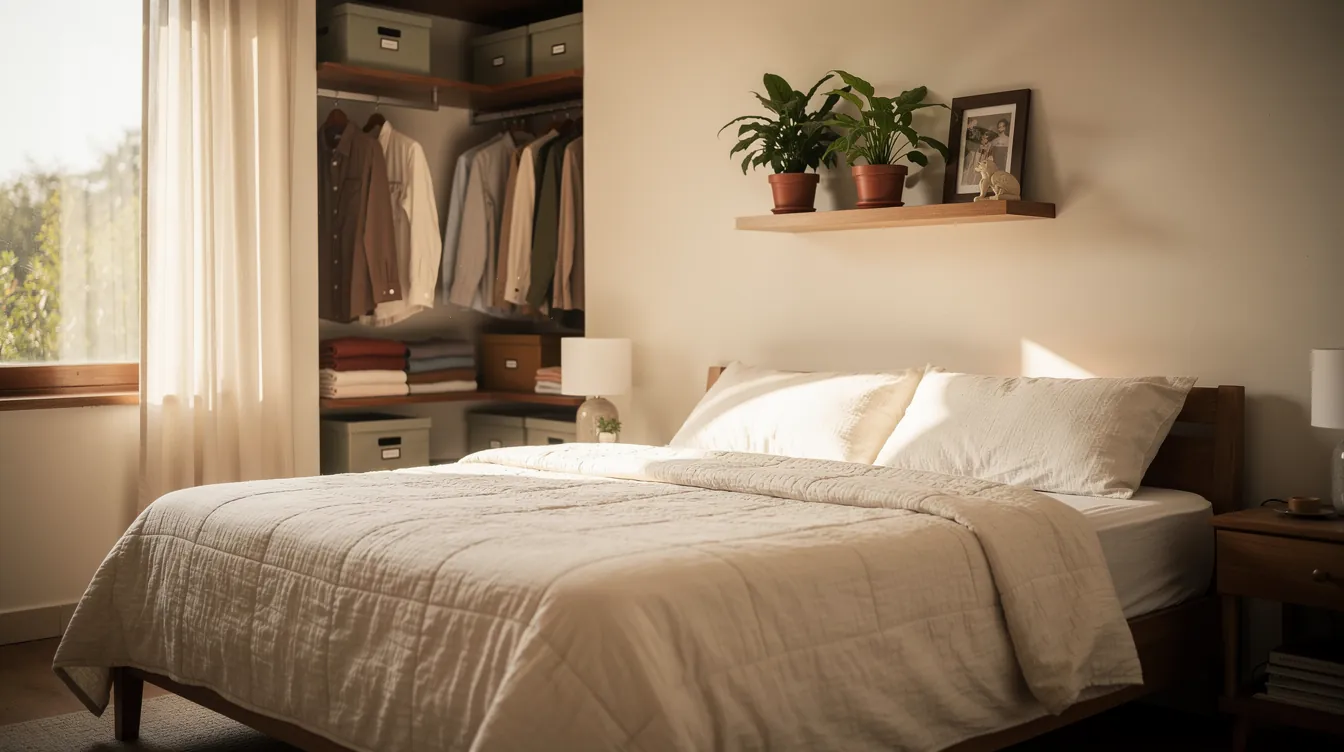
A serene, organized bedroom with natural light, neatly made bed, organized closet visible in background, plants on shelf, and calm color palette conveying peace and mental clarity — illustrating an organized room transformation
room organization home organization organizing tips decluttering storage solutions bedroom organization

How to Organize Your Room: Full Guide

Tidy Blueprints Team
Professional Home Organizers, Bangalore
May 17, 2026 20 min read
Jump to section

Why Organization Matters: The Mental Health & Stress Connection

Before we dive into bins, shelves, and folding techniques, let's talk about something more fundamental: why organizing your room matters for your mental health. It is easy to think of a messy room as just an aesthetic problem, but decades of research tell a different story.

The Science of Clutter: Understanding Cortisol and Stress

When researchers at UCLA's Center on Everyday Lives of Families studied how clutter affects people, they found something striking. Women living in cluttered homes showed elevated cortisol levels throughout the day — a hormonal pattern linked to chronic stress, anxiety, and even long-term health risks. Meanwhile, men in the same households did not show the same pattern, suggesting that women often carry a heavier psychological burden from household disorder.

A study published in the Personality and Social Psychology Bulletin found that cortisol elevations of 18 to 25 percent were common in people who described their homes as cluttered or disorganised compared to those who rated their spaces as restful and orderly. That is not a small difference — it is the kind of shift that affects sleep quality, focus, and emotional resilience.

Princeton University neuroscience researchers discovered that visual clutter competes with your brain's ability to pay attention. When your field of vision is filled with disorganised objects, your brain has to work harder to filter out irrelevant stimuli, which tires out cognitive functions over time. In other words, a messy room literally drains your mental energy.

Beyond Tidiness: How Organization Improves Your Daily Life

The benefits of an organised room go far beyond a clean floor. When your space is in order, you experience:

  • A stronger sense of control. Knowing where everything lives reduces the daily low-grade anxiety of searching for lost items. You start your mornings with clarity instead of chaos.
  • Better focus and productivity. Without visual clutter competing for your attention, your brain can direct its resources toward what actually matters — work, relationships, hobbies.
  • Improved mood and reduced anxiety. Organised spaces create a sense of calm. Many people report that a tidy room feels like "a weight lifted," and the research backs that up.
  • Healthier habits overall. Studies have found that people with messy homes are 77 percent more likely to be overweight or obese. Organisation often becomes a gateway habit — one positive change that triggers others.

Organising your room is not just about creating a photo-worthy space. It is a meaningful investment in your mental wellbeing, your daily productivity, and your quality of life.

The Room Organization Framework: Foundation Principles

Now that we understand why organisation matters, let's build a practical framework for how to do it. These three foundational steps apply to any room, any size, any budget.

Step 1: Declutter Ruthlessly (The KonMari Mindset)

The first and most important step is also the hardest: let go of what you do not need. Marie Kondo's philosophy — keep only what "sparks joy" — may sound simple, but its power lies in its discipline. Before you buy a single storage bin, you need to reduce.

Start by removing everything from the surfaces and storage areas you want to organise. Yes, everything. Pile it on your bed or floor. This feels chaotic in the moment, but seeing the full volume of your belongings in one place is essential — it forces you to confront what you actually own.

Now go through each item and ask:

  • Have I used this in the last year?
  • Does it serve a clear purpose in my life right now?
  • Would I buy this again today if I did not already own it?

Be honest. Sentimental items deserve a separate, intentional review — do not let them stall the first pass. Create three piles: Keep, Donate, and Discard. If you are unsure about an item, put it in a "maybe" box, seal it, and date it. If you have not opened it in six months, donate it without looking inside.

Step 2: Inventory and Sort Your Remaining Items

Once you have reduced, you need to understand what is left. Group like items together — all your books in one pile, all your electronics in another, all your accessories together. This step reveals patterns:

  • You might discover you own five nearly identical black t-shirts.
  • You might realise your "miscellaneous" drawer is actually just old phone chargers and dead batteries.
  • You might find that 80 percent of your surface clutter comes from just two or three categories (mail, jewellery, skincare products).

Sorting by category — not by location — is the key insight here. Do not organise one drawer at a time. Gather every item of a given type from across the entire room, sort them together, and then decide where they belong. This prevents the common trap of "organising" by simply moving clutter from one spot to another.

Step 3: Establish a Place for Everything

The organising mantra that changes everything: find a place for everything, and always put things back there. This sounds trivial, but most clutter problems are not about storage — they are about indecision. When an item does not have a designated home, it drifts. Mail ends up on the dining table. Shoes accumulate by the door. Chargers disappear into the void.

For every category you identified in Step 2, assign a specific, logical location:

  • Frequently used items (daily skincare, phone charger, keys) need the most accessible spots — top drawers, open shelves, surfaces near where you use them.
  • Seasonal or occasional items (holiday decorations, spare bedding, formal wear) can live in higher shelves, under-bed storage, or the back of the closet.
  • Sentimental keepers deserve protected storage — archival boxes, acid-free tissue — but should not occupy prime daily-access real estate.

The "A Place for Everything" rule only works if you follow it consistently. When you finish using something, return it to its home immediately. This single habit prevents 90 percent of re-cluttering.

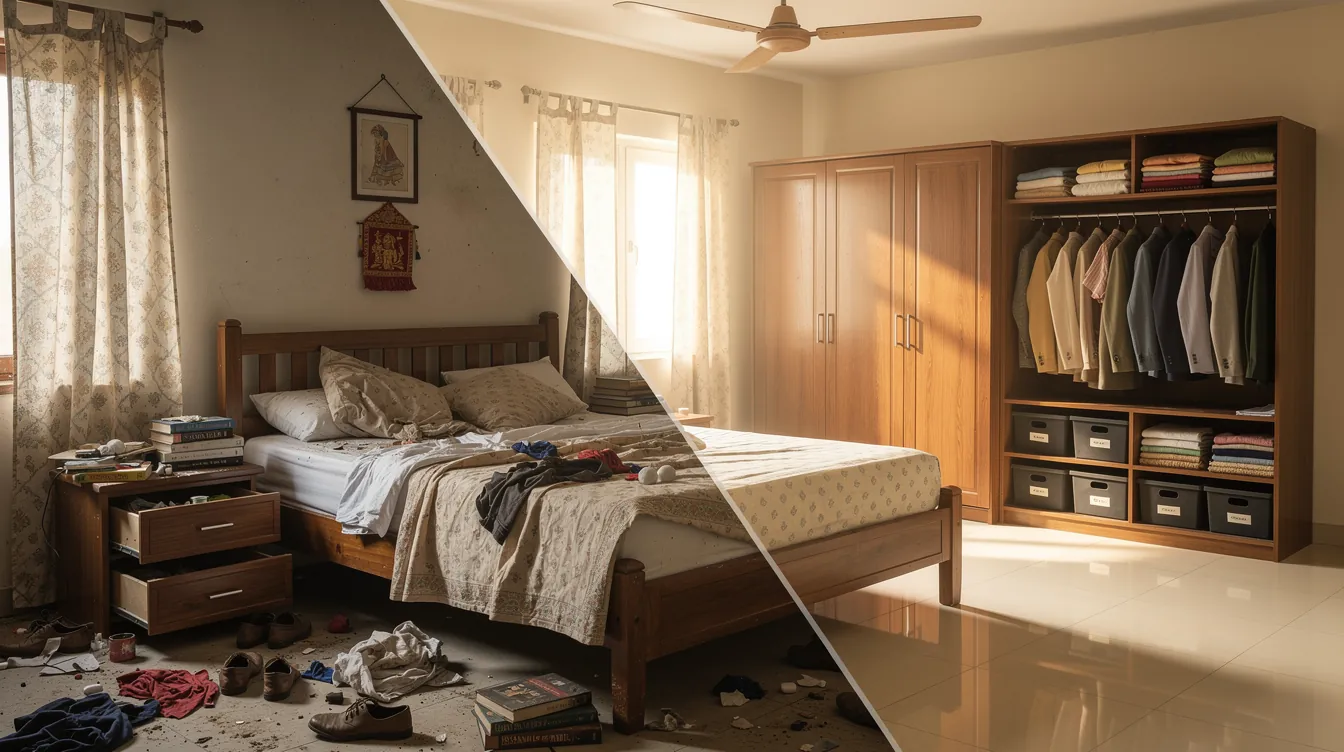
Before-and-after bedroom organization transformation: diagonal split showing a cluttered Bangalore bedroom on one side and the same room perfectly organized with labeled storage and clear surfaces on the other, warm natural daylight.

Storage Solutions and Furniture: The Building Blocks

With your belongings sorted and reduced, the next question is: where does everything live? The right storage solutions turn your decluttered room from a temporary clean state into a permanently organised space. The key is thinking in three dimensions — most people only use about 60 percent of their available storage volume because they ignore vertical space and under-utilise furniture.

Maximize Vertical Space: From Floor to Ceiling

In 2025, interior design trends have firmly embraced vertical-first storage as the primary strategy for space optimisation, especially in apartments and smaller homes. The logic is simple: your floor is limited, but your walls go all the way up.

Consider these vertical storage tactics:

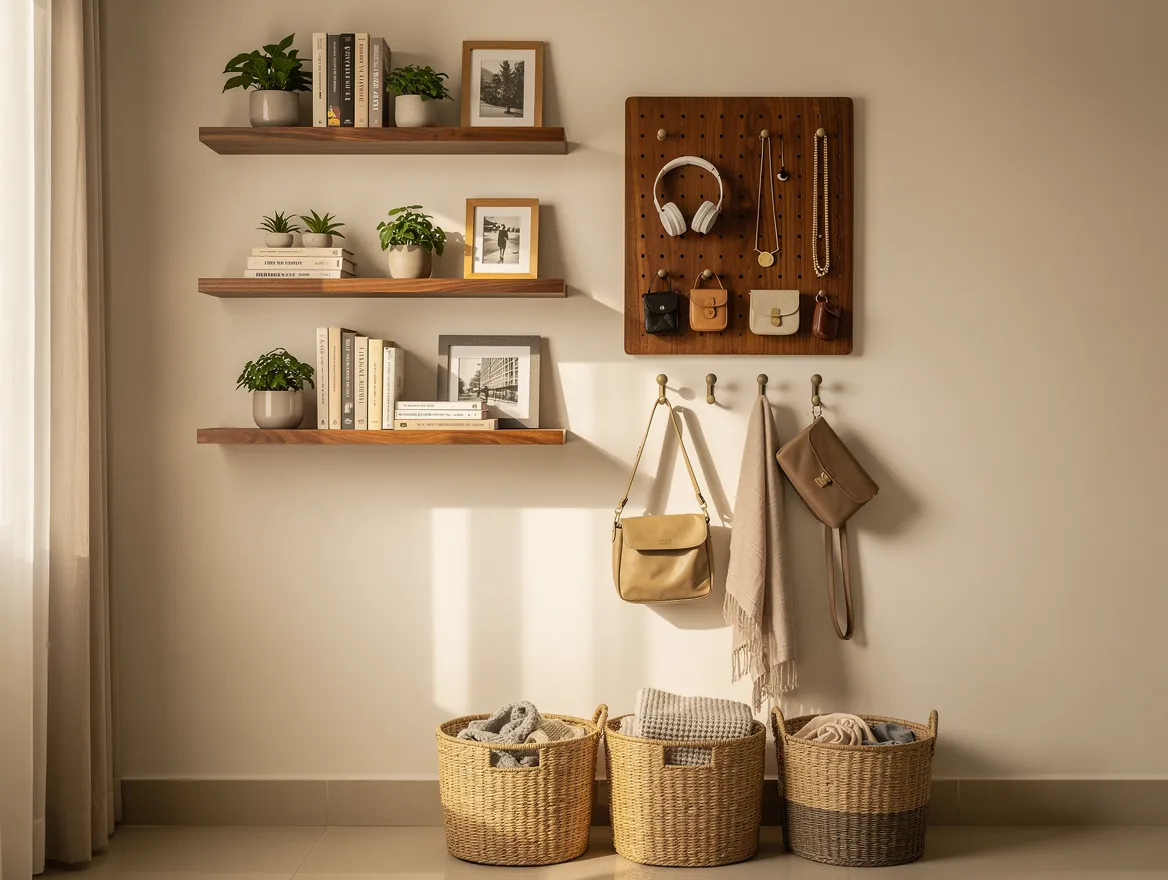
  • Wall-mounted shelving — Floating shelves above your desk, bed, or doorway create storage out of thin air. Use them for books, decorative items, or baskets of smaller belongings.
  • Pegboards — Once relegated to garages, pegboards are now a stylish organising solution for any room. Hang jewellery, accessories, office supplies, or even small plants. The modularity means you can reconfigure as your needs change.
  • Over-the-door organisers — The back of your bedroom door, closet door, or bathroom door is prime real estate. Clear pocket organisers hold shoes, accessories, cleaning supplies, or toiletries.
  • Wall hooks and rails — A row of hooks at entry points catches bags, coats, and scarves before they land on furniture. In the kitchen, a wall rail with S-hooks keeps utensils within reach without consuming counter space.
  • Tall, narrow shelving units — A slim bookcase that reaches the ceiling stores far more than a short, wide unit with the same footprint. Think vertically when shopping for shelves.

The shift in mindset is crucial: stop treating walls as decoration boundaries and start treating them as storage real estate.

Choose Multi-Functional Furniture

Every piece of furniture in your room should earn its footprint. If it only does one thing, ask whether there's a version that does two. Multi-functional furniture is the single highest-leverage investment you can make in a small or medium-sized room.

Look for:

  • Beds with built-in storage — Drawers underneath for off-season clothing, extra bedding, or shoes. If your bed frame doesn't have storage, add rolling under-bed bins.
  • Storage ottomans and benches — Seating that opens to reveal hidden storage for blankets, books, or electronics. Place one at the foot of your bed or against a wall.
  • Trunks and chests — A vintage trunk works as a coffee table, a bench, and a storage unit simultaneously.
  • Rolling carts — A three-tier utility cart can serve as a nightstand, a bathroom organiser, or a craft supply station — and it moves wherever you need it.
  • Desks with drawers and hutches — Vertical storage above your work surface keeps supplies accessible without consuming desk space.

Storage Containers and Bins: Types and Best Uses

Not all storage containers are created equal. Matching the container to the contents — and to your room's aesthetic — makes the difference between "organised" and "just hidden."

  • Stackable clear bins — Best for items you need to see at a glance: craft supplies, seasonal accessories, electronics. The transparency means no label is strictly necessary, though labels still help.
  • Woven baskets and hampers — Ideal for textiles (throws, pillows, laundry) and items you want concealed but accessible. Natural materials like water hyacinth, seagrass, and bamboo add warmth to a room's aesthetic.
  • Drawer dividers — The unsung hero of organisation. Expandable bamboo or acrylic dividers turn a chaotic drawer into sections for socks, underwear, accessories, or office supplies. Without dividers, drawers inevitably become junk zones.
  • Fabric storage cubes — Lightweight, collapsible, and available in endless colours. Perfect for open shelving units where you want a cohesive look without rigid containers.
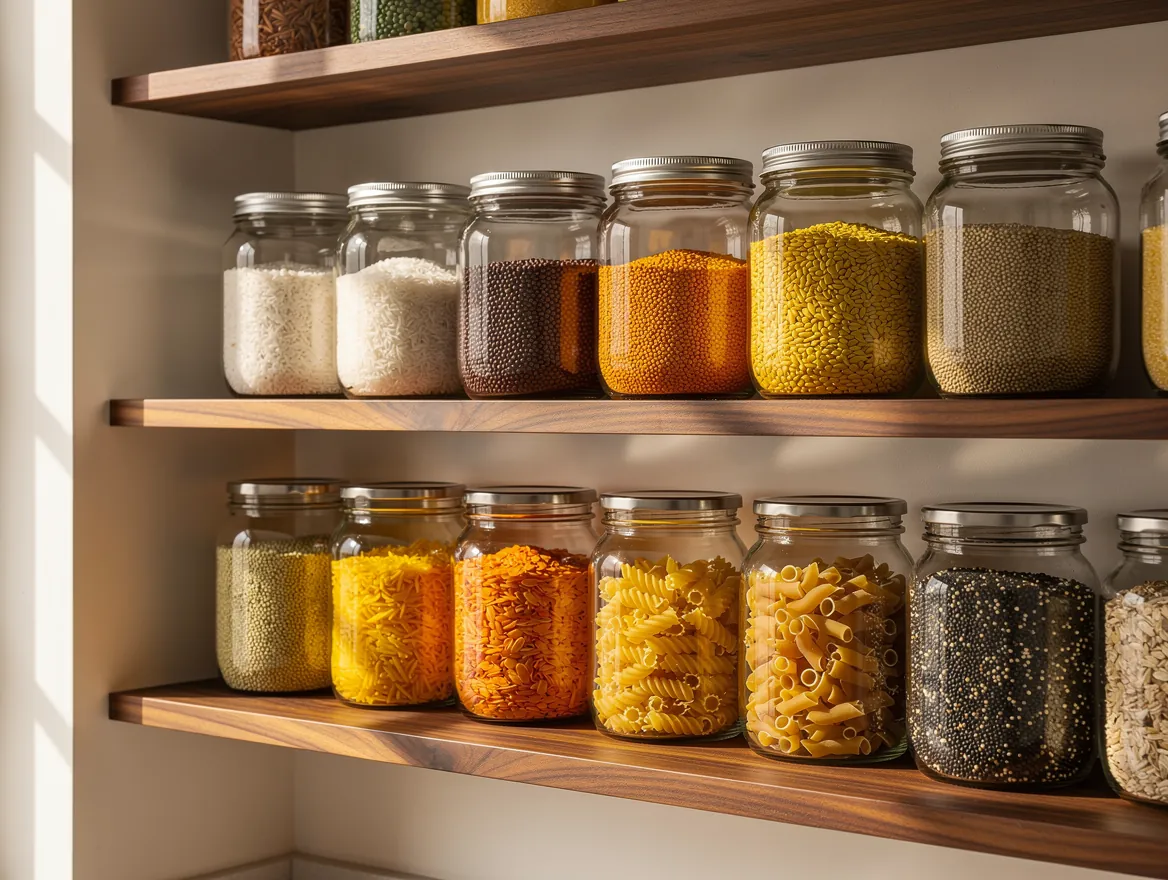
  • Glass jars and canisters — In the kitchen or bathroom, clear glass containers for staples (pasta, grains, cotton balls, bath salts) are both functional and visually pleasing.

Sustainable materials worth considering: Bamboo organisers, recycled plastic bins, and natural fibre baskets are increasingly popular — 37 percent of consumers now prefer eco-friendly organising materials according to recent market research. Choosing sustainable storage is a small decision with a meaningful environmental impact, and it often produces a warmer, more natural aesthetic than mass-produced plastic.

Wall-mounted storage with floating shelves, pegboards with neatly organised items, basket storage, and wall hooks holding accessories in organised fashion

Room-by-Room Organization Strategies

Every room in your home presents unique organising challenges. What works in the bedroom does not necessarily translate to the kitchen, and a bathroom demands different solutions than a home office. This section walks through tailored strategies for each major space.

Bedroom Organization: The Personal Sanctuary

Your bedroom should be the most restful room in your home — a space that promotes calm and recovery. Organisation here starts with the largest pieces and works inward.

Closet and wardrobe mastery. A well-organised closet changes how you start every day. Divide your closet into zones: hanging clothes on one side, folded items on shelves in the middle, shoes at the bottom, and accessories on hooks or in clear bins at eye level. Use matching hangers — slim velvet hangers save up to 30 percent more space than plastic or wood — and hang clothes by category (shirts together, trousers together, dresses together) and then by colour within each category.

For folded items, the KonMari vertical fold method lets you see every t-shirt, sweater, or pair of jeans at a glance, eliminating the "out of sight, out of mind" problem that buried stacks create.

Under-bed storage. The space beneath your bed should not be a dust-collecting void. Low-profile rolling bins or purpose-built under-bed drawers are perfect for off-season clothing, extra bedding, shoes you wear infrequently, or sentimental items you want to keep but not display.

Nightstand management. Your nightstand should hold only what you need within arm's reach at night: a lamp, a book, a glass of water, your phone charger. If it has a drawer, use a small divider to separate essentials (lip balm, hand cream, sleep mask) from random debris. The surface should be clear enough that you could set down a cup of tea without rearranging anything.

Kitchen Organization

The kitchen is the hardest-working room in most homes and the one most prone to disorganisation. Prioritise workflow: items should live as close as possible to where they are used.

Pantry zones. Group pantry items by category — baking supplies, grains and pasta, canned goods, snacks, oils and vinegars — and give each category a dedicated shelf or bin. Decant staples (rice, flour, sugar, pasta) into clear glass or airtight plastic containers with labels. This not only looks cleaner but also lets you see at a glance when you are running low.

Drawer systems. Kitchen drawers become chaotic fast. Use expandable bamboo or metal dividers to create sections for utensils, gadgets, and tools. A dedicated knife block or magnetic strip keeps sharp knives accessible and safe. The junk drawer is inevitable, but it should be a single drawer, not three — and it should get a divider system too.

Under-sink storage. The cabinet under the kitchen sink is awkward space, but a two-tier sliding shelf or a tension rod for hanging spray bottles transforms it. Keep cleaning supplies in a caddy you can lift out as a unit.

Home Office and Documents

Paper clutter is uniquely stressful because it represents unfinished tasks — bills to pay, forms to submit, decisions to make. A clear desk is a clear mind, but the real challenge is what lives in the drawers and file cabinets.

File systems that work. Use a three-category system: Active (bills due this month, forms in progress — keep on your desk or in a desktop file sorter), Reference (insurance policies, warranties, tax documents — file in a cabinet or binder), and Archive (old records you are legally required to keep — store in a labelled box in a closet or high shelf).

Cable management. The visual chaos of cables under a desk is a constant low-grade stressor. Use adhesive cable clips, a cable management box, or a simple Velcro wrap to bundle cords. Label both ends of each cable so you know what plugs into what without tracing.

Desktop organisation. Your desk surface should hold only what you use daily: your computer, a notebook, a pen cup, and perhaps one personal item that makes you happy. Everything else belongs in drawers, on shelves, or in a rolling cart beside the desk.

Bathroom Organization

Bathrooms are small spaces with an unusually high density of small items. The core challenge is keeping surfaces clear in a room where every item seems to need immediate access.

Medicine cabinet optimisation. Use the inside of the cabinet door — adhesive magnets hold tweezers, nail clippers, and bobby pins. Small clear bins on the shelves group items by category: first aid, dental care, skincare, medications. If your cabinet is deep, add a small riser shelf so you can see items in the back.

Under-sink storage. Stackable drawers or sliding bins make the most of the vertical space under the sink. Keep a caddy of daily-use products on the counter only if you genuinely use them every morning; otherwise, they live in the cabinet.

Makeup and toiletry organisation. Acrylic organisers with divided compartments keep makeup visible and accessible. Brushes go in a separate cup or holder — never loose in a drawer where bristles get crushed. For toiletries, a lazy Susan inside the cabinet lets you spin to reach items at the back without knocking everything over.

If your bathroom storage is truly minimal, consider an over-the-toilet shelving unit or a narrow rolling cart that fits between the sink and the wall. These add significant storage without requiring permanent installation.
Kitchen pantry shelves with clear glass containers of staples including pasta, rice, and grains, white labels with printed text, organised bins, and neat arrangement

Organize on a Budget: Zero-Cost and Low-Cost Hacks

Professional organising does not have to mean professional-grade spending. Some of the most effective organisation solutions cost nothing at all — they just require a shift in how you look at everyday objects. Research from Pinterest and home organisation communities shows enormous demand for budget-friendly solutions, especially among renters, students, and young families who want organised spaces without major investment.

Repurpose What You Already Have

Before you buy anything, walk through your home and look at what you already own through an "organising lens." Common household items that make excellent organisers:

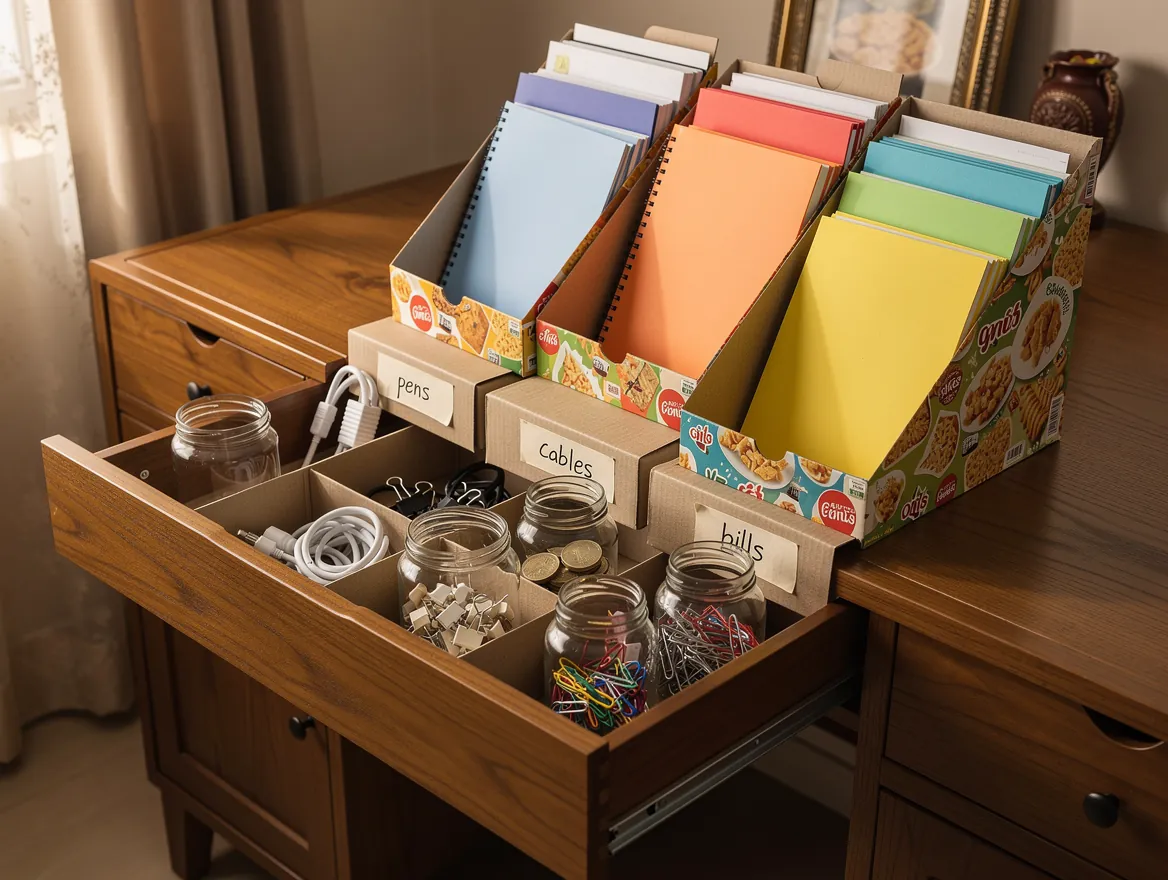
  • Shoeboxes — The original free drawer divider. Cover them in wrapping paper or fabric for a finished look, or leave them plain inside drawers where no one sees them. Use them to separate socks, underwear, scarves, cables, or office supplies.
  • Glass jars — Pasta sauce jars, jam jars, and pickle jars, once cleaned and de-labelled, become beautiful storage for pantry staples, bathroom essentials (cotton balls, Q-tips, bath salts), desk supplies (pens, paperclips, rubber bands), or craft materials.
  • Cereal boxes and cardboard packaging — Cut them down to drawer height and they become instant dividers for files, folders, or clothing. A cereal box cut diagonally creates a magazine file that costs nothing.
  • Muffin tins and ice cube trays — Inside a drawer, a muffin tin organises small items like earrings, rings, paperclips, or sewing supplies. Ice cube trays do the same for beads, screws, or tiny craft components.
  • Tension rods — A five-rupee tension rod under the kitchen sink creates an instant hanging rack for spray bottles. In a closet, tension rods create dividers for handbags or scarves. In a cabinet, they corral cutting boards or baking sheets vertically.

DIY Drawer Dividers and Container Solutions

Drawer dividers can be expensive, but DIY versions cost nothing and work just as well:

  • Cut sturdy cardboard to drawer depth and length, notch the pieces so they interlock in a grid pattern, and you have a fully custom drawer organiser.
  • Small cardboard boxes (phone boxes, gift boxes, shipping boxes) trimmed to height make perfect drawer compartments.
  • Baskets you already own — that fruit basket, that gift basket, that basket that came with a bath set — can be repurposed onto shelves for categorised storage.

Free or Minimal-Cost Organization Tips

  • Use your walls before buying shelving. Adhesive hooks, nails, and Command strips cost a fraction of a shelf unit and hold a surprising amount of weight.
  • Stack vertically within existing furniture. Add risers inside cabinets so you can see items in the back row. Shelf risers for kitchen cabinets cost very little and double your usable surface area.
  • The "shopping your home" exercise. Before buying a storage bin for the bathroom, check if there is an empty bin in the office you are not using. Often the right container already exists in the wrong room.

The point of budget organising is not to be cheap — it is to prove that organisation is accessible to everyone. Once you have experienced the mental clarity of an organised room using zero-cost hacks, you may decide to invest in more permanent solutions. Or you may find that the DIY approach works perfectly well and keep the money in your pocket.

Sustainable Organizing: Making Conscious Choices

The home organisation industry generates significant plastic waste — think of all those clear bins, plastic drawer units, and polyester fabric cubes. But a growing segment of consumers is pushing back. Market research shows that 37 percent of consumers now prefer eco-friendly organising materials such as bamboo, recycled plastic, natural wood, and glass. Organising your home does not have to come at the planet's expense.

Choosing Eco-Friendly Materials

When you do invest in storage products, opt for materials with a lower environmental footprint:

  • Bamboo — Fast-growing, renewable, and surprisingly durable. Bamboo drawer dividers, shelf risers, and storage boxes bring a warm, natural look that plastic cannot match.
  • Recycled plastic bins — If you need the durability of plastic, look for bins labelled as made from post-consumer recycled (PCR) material. They perform identically to virgin plastic but divert waste from landfills.
  • Glass containers — Infinitely recyclable and free from the chemical concerns some plastics raise. Glass jars and canisters work beautifully in pantries, bathrooms, and on visible shelving.
  • Natural fibre baskets — Water hyacinth, seagrass, jute, and rattan baskets are biodegradable, handcrafted in many cases, and add organic texture to a room. They are perfect for storing throws, toys, laundry, or magazines.
  • FSC-certified wood shelving — If you are installing shelves, look for Forest Stewardship Council certification to ensure the wood comes from responsibly managed forests.

Reduce Consumption Through Organization

Here is a counterintuitive benefit of an organised home: you buy less. When you can see everything you own — when your pantry jars tell you exactly how much rice is left, when your closet shows every shirt at a glance — you stop buying duplicates. You stop buying new black sweaters because you forgot you already owned three. You stop buying pasta because you could not see the half-empty bag behind the cereal boxes.

Organisation reduces consumption. That is the sustainable organising philosophy in one sentence: know what you have, use what you have, and stop acquiring what you do not need.

Organization by Category: Specific Item Solutions

Some belongings defy generic storage advice. Clothing, jewellery, makeup, children's toys, and documents each need their own approach.

Clothing and Accessories Organization

Jewellery storage that works. The biggest jewellery organisation mistake is putting everything in one box where chains tangle and earrings disappear. Instead:

  • A wall-mounted spice rack with hooks holds necklaces tangle-free and doubles as wall art.
  • A towel bar with S-hooks or shower curtain rings organises bracelets and watches.
  • Ice cube trays or acrylic compartment boxes keep earrings paired and visible.
  • A corkboard with pushpins displays and organises necklaces while keeping them accessible.

Makeup organisation. Acrylic organisers with clear drawers let you see every product. Group by category — lip products together, eye products together, face products together — and store daily-use items in the most accessible compartments. Brushes should stand upright in a holder (a glass jar or a dedicated brush holder) with bristles up so they keep their shape.

Scarves, belts, and accessories. Shower curtain rings looped over a hanger hold scarves without creasing. A belt hanger or a row of hooks on the closet wall keeps belts visible and accessible. Hanging organisers with clear pockets are excellent for clutches, wallets, and small bags.

Kids' Room and Toy Organization

Children's rooms have a unique organising challenge: the user of the space does not naturally organise. The system has to be so simple that a four-year-old can participate.

  • Toy storage at child height. Low open bins, labelled with pictures instead of words for pre-readers, let kids see what goes where and put things back independently.
  • Rotate toys. Keep a portion of toys in a closet and swap them out every few weeks. Fewer available toys means less mess, and the "new" toys that reappear feel exciting.
  • LEGO and small-parts storage. Drawer units with small compartments or hardware organisers (the kind used for screws and nails) are perfect for sorting LEGO by colour or type. Clear stacking containers let kids see the contents.
  • The donation habit. Involve children in a pre-birthday or pre-holiday donation round. "We are making space for new things by passing on toys you have outgrown." This builds generosity and prevents accumulation.

Document and Paper Management

Paper is the silent clutter culprit in most homes. It arrives daily — mail, receipts, school forms, bills — and accumulates because no one has designed a system for it.

  • Process paper immediately. When mail enters your home, it goes to one of three places: Action (bills, forms — goes to your desk), Recycle (junk mail, envelopes — goes straight to recycling), or File (important documents — goes to your file system). Do not create a "deal with later" pile.
  • Go digital where possible. Scan important documents and store them in cloud storage with clear folder names. Opt for digital bills and statements from banks, utilities, and service providers.
  • A simple file box. You do not need a full filing cabinet. A portable file box with hanging folders for the essential categories (tax, medical, insurance, home, auto, personal) covers most households' needs.

The Power of Labels and Visual Organization

Labels are the difference between a system that works for one week and a system that works for years. They remove ambiguity, enforce consistency, and help everyone in the household — not just the person who set up the system — maintain order.

Labeling Systems That Stick

  • Label makers produce clean, durable labels that adhere well to plastic, glass, and metal. Worth the investment if you are organising a pantry, a craft room, or a garage with many identical-looking containers.
  • Handwritten labels on kraft paper tags, washi tape, or chalkboard stickers add a personal, crafty feel. Perfect for baskets, fabric bins, and visible shelving where you want warmth over precision.
  • Colour coding adds an instant visual layer: blue labels for bathroom items, green labels for kitchen, yellow for office supplies. This is especially effective in shared households where not everyone memorises the system.
  • Picture labels for children's spaces or shared laundry rooms. A photo of socks taped to the sock bin is universally understood.

Visual Organization: Organizing by Colour

Colour-based organisation is both functional and beautiful:

  • Rainbow bookcases — Arranging books by spine colour creates a striking visual feature while making it easy to spot when a book is in the wrong place.
  • Colour-coordinated closets — Within each clothing category, arrange items from light to dark. This is not just aesthetic; it makes it much faster to find the specific shirt you are picturing in your mind.
  • Matching containers — Using the same colour or material of container throughout a room creates visual calm. Even inexpensive bins look intentional when they share a colour palette.

Visual organisation works because it taps into the brain's fastest processing system — pattern recognition. Before you can read a label, you can see that the red bin is out of place on the blue shelf.

Drawer or shelf showing creative DIY organisation: shoeboxes as dividers, glass jars holding small items, cereal boxes cut and repurposed as file dividers, baskets filled with organised supplies, and natural bamboo and woven materials

Staying Organized Long-Term: Habits and Systems

The most beautifully organised room in the world will revert to chaos within weeks if there are no habits supporting it. This is the chapter most organising guides skip — they give you the "before and after" but not the "and after that." Maintaining organisation is actually simpler than achieving it, but it requires a few deliberate systems.

Building Organizing Habits That Stick

Start with the smallest possible version of the habit:

  • The one-minute rule. If a task takes less than a minute — hanging up your coat, putting a book back on the shelf, dropping mail into the recycling bin — do it immediately. Do not negotiate with yourself. One minute of action prevents hours of accumulated mess.
  • The "put it back" reflex. Every time you finish using something, return it to its designated home before moving on to the next thing. Cooking dinner? Put the spices back in the cabinet before you sit down to eat. Trying on outfits? Hang rejects back up before leaving the room. This single reflex, practiced consistently, prevents nearly all surface clutter.
  • The nightly reset. Spend five to ten minutes before bed doing a quick sweep of your main living spaces. Put stray items back in their homes, fluff cushions, clear surfaces. Waking up to an organised room sets the tone for the entire day.

Weekly Check-Ins and Monthly Purges

  • Weekly: Spend fifteen minutes on a weekend morning walking through your space with a "clutter basket." Anything out of place goes in the basket; at the end of the walk, empty the basket by returning every item to its home.
  • Monthly: Pick one category or zone — the pantry, the bathroom cabinet, the desk drawer — and do a quick declutter pass. Has anything crept in that does not belong? Are the labels still accurate? Tidy up the system.
  • Quarterly: Do a light version of the original decluttering process. Open every storage area and ask: "Am I still using everything in here?" Donate anything that has been untouched for a season.

Seasonal Organization and Deep Cleans

Seasonal transitions are natural prompts for deeper organisation:

  • Spring and autumn are ideal for wardrobe rotation — swap warm-weather and cold-weather clothing, wash and store off-season items, and donate anything that no longer fits or suits your style.
  • Pre-holiday (Diwali, Christmas, or any celebration that brings new items into your home) is the time to do a pre-emptive declutter. Make space before gifts arrive, not after.
  • Annual review: Once a year, spend a full afternoon going room by room with the original three-pile system (Keep, Donate, Discard). By the second year, this annual review gets dramatically faster because the daily and weekly habits prevent deep accumulation.

The Donate Bin: Maintaining Organization as a Lifestyle

Keep a dedicated donate bin or bag in an accessible spot — inside your closet, in the laundry room, or near the front door. Whenever you come across something you no longer need, drop it in immediately. When the bin is full, take it to a donation centre or schedule a pickup. This turns decluttering from a dreaded annual event into a continuous, effortless background process.

The goal is not a permanently perfect room. The goal is a room that is easy to reset — a space where organisation is the default state and clutter is a temporary visitor, not a permanent resident.

When to Call the Professionals: Your Room Organization Partner

You have read several thousand words of DIY organising advice. You now know the framework, the storage solutions, the budget hacks, and the maintenance habits. But here is an honest truth: some rooms, some homes, and some life situations call for professional help — and that is not a failure. It is a smart decision.

Signs You Are Ready for Professional Organizing Consultation

How do you know when DIY has reached its limit?

  • You feel overwhelmed before you start. You have read the guides, you have bought the bins, but every time you look at the room you want to close the door and walk away. Overwhelm is real, and a professional organiser can break through it in hours — not weeks.
  • You have complex storage challenges. Awkward room layouts, custom-built wardrobes that waste space, a kitchen with insufficient cabinetry — these are design problems, not willpower problems. A professional sees spatial solutions that most people miss.
  • You are tackling a multi-room project. Organising one room is manageable on your own. Organising an entire home, especially after a move or a major life transition, benefits enormously from an experienced project manager who can sequence the work and keep momentum.
  • You have specialised item categories. Wardrobes with hundreds of pieces, extensive makeup and cosmetic collections, document archives, children's toy rooms — these categories benefit from someone who has organised them dozens of times before.
  • You simply do not have the time. Organisation takes focused hours. If your work, family, or health commitments make those hours impossible to find, hiring a professional is not a luxury — it is a practical solution.

How Professional Organizers Add Value

A professional organiser brings more than an extra pair of hands:

  • Expert space assessment. Within minutes of entering a room, a trained organiser sees storage opportunities — the wall that could hold shelving, the furniture that could be rearranged, the dead space that could become functional — that homeowners overlook after years of living in a space.
  • Personalised systems. Off-the-shelf organising advice is generic. A professional designs systems around your habits, your belongings, and your daily routines. The result is not just an organised room — it is a room that stays organised because the system fits your life.
  • Specialised expertise. Wardrobe styling, kitchen workflow design, IKEA furniture assembly and customisation, document archiving, kids' room zoning — these are distinct skills that professional organisers develop through training and repeated experience.
  • Accountability and momentum. A project that might take you six weekends of stop-start effort can be completed in one or two focused sessions with a professional leading the way.

At Tidy Blueprints, we are a professional home organising service based in Bangalore, serving clients across the city from our base in Carmelaram. Our team specialises in wardrobe organisation, makeup and cosmetic storage, kitchen organisation, kids' room setup, document management, shelf and cupboard organisation, and IKEA furniture assembly. Whether you need a single-room refresh or a whole-home transformation, we design systems that work for your space, your budget, and your lifestyle.

If you have read this guide and feel inspired but unsure where to start — or if you have already started and hit a wall — book a consultation with our team. We would love to help you create the organised, peaceful home you deserve.

Frequently Asked Questions About Room Organization

How do I start organizing my room when I feel completely overwhelmed?

Start with the smallest visible win. Pick one surface — your nightstand, your desk, a single drawer — and clear and organise just that one area. Completing a small task builds momentum and confidence. Then follow the three-step framework: declutter ruthlessly, sort by category, and assign a designated home for everything. If the overwhelm is paralysing, consider a professional organiser who can break through the initial barrier in a single session.

Do I need to buy expensive storage products to get organised?

Not at all. Some of the most effective organising solutions cost nothing — shoeboxes as drawer dividers, glass jars from your kitchen for bathroom or desk storage, cereal boxes cut to size as file organisers, and tension rods for hanging spray bottles or handbags. Start with what you already own. You can invest in matching bins or professional-grade organisers later, once you know exactly what you need and where it will live.

How can I keep my room organised long-term after the initial clean-up?

Long-term organisation depends on habits, not willpower. Adopt the one-minute rule (if it takes less than a minute, do it now), build the "put it back" reflex after using anything, do a five-minute nightly reset, and keep a dedicated donate bin accessible so decluttering becomes continuous rather than a dreaded annual event. Weekly quick sweeps and monthly spot-checks prevent gradual re-cluttering.

What are the best sustainable or eco-friendly storage options?

Look for bamboo drawer dividers and shelf organisers (fast-growing and renewable), recycled plastic bins made from post-consumer material, glass containers (infinitely recyclable and chemical-free), natural fibre baskets (water hyacinth, seagrass, jute), and FSC-certified wood shelving. Choosing sustainable materials also tends to create a warmer, more natural aesthetic than mass-produced plastic.

When should I hire a professional organiser instead of doing it myself?

Consider professional help when you feel consistently overwhelmed by the scope of the project, have complex storage challenges (awkward layouts, custom cabinetry that wastes space), are tackling a multi-room or whole-home project, have specialised categories that need expert handling (extensive wardrobes, large cosmetic collections, dense document archives), or simply lack the time to dedicate focused hours to the work. A professional organiser can often complete in one or two sessions what might take you weeks of stop-start effort on your own.

Ready to Transform Your Space?

Whether you want to tackle it yourself with the ideas in this guide or would like a professional partner to design a system that fits your life, we are here to help.