Kitchen Pantry Organisation: A Step-by-Step Guide
Save time, reduce food waste, and create a pantry system that actually works.
Jump to section
Why Pantry Organization Matters
A disorganized pantry isn't just a visual problem—it's costing your family real money. Food that expires unnoticed at the back of a shelf is money thrown away. Beyond the financial impact, pantry chaos creates friction: endless searching for spices, duplicate purchases, expired items hidden in the back, and the constant frustration of "I know we have that, but where is it?"
When you take time to organize your pantry thoughtfully, the payoff compounds. You'll spend less time meal planning and shopping, reduce food waste dramatically, make cooking more enjoyable, and keep your kitchen feeling calm instead of chaotic.
Save Money on Wasted Food
Every packet of food that goes uneaten is money thrown away. Much of that waste happens because items get lost, expire unnoticed, or are forgotten in the back of a shelf. A well-organized pantry makes everything visible—you know what you have, you use items before expiration, and you shop smarter.
Reduce Time Spent Meal Planning and Shopping
When you can see your inventory at a glance, meal planning becomes faster. You're not standing at the pantry door wondering if you have pasta or rice. You know. This clarity also prevents impulse purchases and reduces shopping trips. Imagine shaving 15 minutes off your weekly shopping routine just because you know exactly what's in stock.
Make Cooking Easier and More Enjoyable
A chaotic pantry makes cooking feel like a treasure hunt. A well-organized one makes it feel effortless. You grab what you need, find it immediately, and focus on cooking rather than foraging.
2026 Pantry Trends: Why This Matters Now
Pantry organization is evolving beyond pure function. In 2026, homeowners and designers are treating pantries as lifestyle-driven spaces—places that matter aesthetically as well as practically. Trends like integrated LED lighting, full-height custom cabinetry, and design integration (making the pantry match your home's aesthetic) are no longer luxuries reserved for Pinterest-perfect homes. They're becoming standard expectations.
This matters because it means investing in pantry organization now positions your kitchen (and your home) as modern and thoughtful, whether you're living in Bangalore or planning a renovation. Even a modest organized pantry with clear containers and consistent labeling transforms how your kitchen feels.
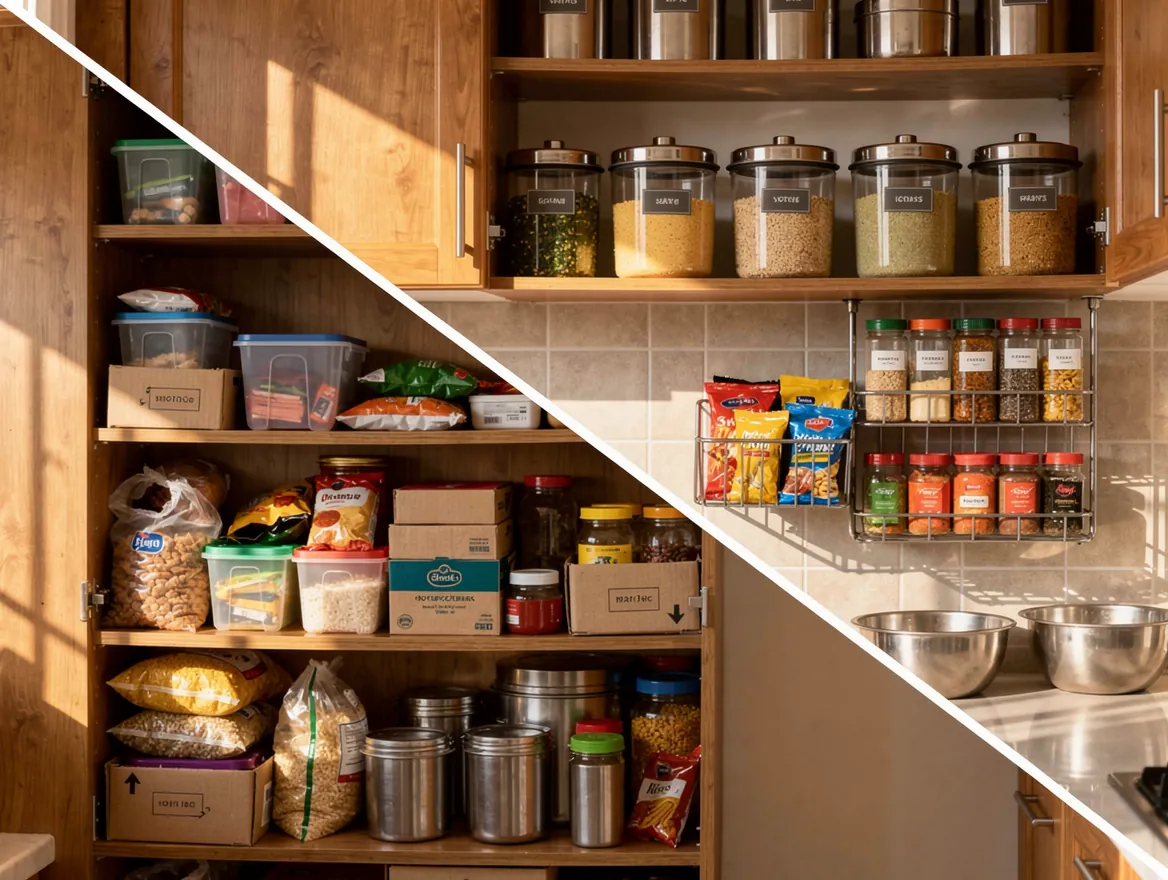
Getting Started: Assess Your Pantry and Plan Your System
Before you buy a single container or label maker, take time to understand what you're working with. This assessment phase takes an hour but sets you up for success.
Take an Honest Inventory
Empty your pantry completely (one shelf at a time if you have limited space). As items come out, group them by category: baking, breakfast items, cooking staples, spices, snacks, canned goods, etc. This isn't just an exercise—it's your first glimpse of what you actually own versus what you thought you owned. Many families discover they have three boxes of pasta, five half-used jars of peanut butter, and more spices than they'll use in a lifetime.
Identify Problem Areas
As you sort, note the pain points:
- Items that are hard to find (spices buried in the back?)
- Expired or nearly expired food
- Duplicate purchases (a sign your system isn't giving you visibility)
- Items taking up valuable shelf space without being used
- Moisture or pest issues in specific areas
Measure Your Space
Take measurements of your pantry shelves—height between shelves, depth, width. Note any awkward corners, door-mounted storage, or vertical space you're not using. In Bangalore's climate, you'll also want to assess humidity levels and whether you need moisture-control solutions for certain items (spices, grains, baking ingredients).
Step 1: Plan Your Organization System
Define Your Zones
Zones are the foundation of a sustainable pantry. Rather than random placement, group items by how you use them:
- Baking zone: flour, sugar, baking soda, vanilla extract, chocolate chips, etc.
- Cooking zone: oils, vinegars, sauces, canned tomatoes, broths
- Breakfast zone: cereals, oats, jam, honey, instant coffee or tea
- Spice zone: all spices together, organized alphabetically or by cuisine
- Snacks zone: crackers, nuts, dried fruit, granola
- Canned goods: stacked safely, organized by type
Zoning reduces the cognitive load—you're not searching randomly; you know exactly where to look.
Choose Your Storage Style
You have many options, and the best choice depends on your space, budget, and preferences:
- Clear plastic or glass containers: Best for dry goods (grains, pasta, flour). You can see contents and expiration dates at a glance. Airtight containers protect against moisture and pests.
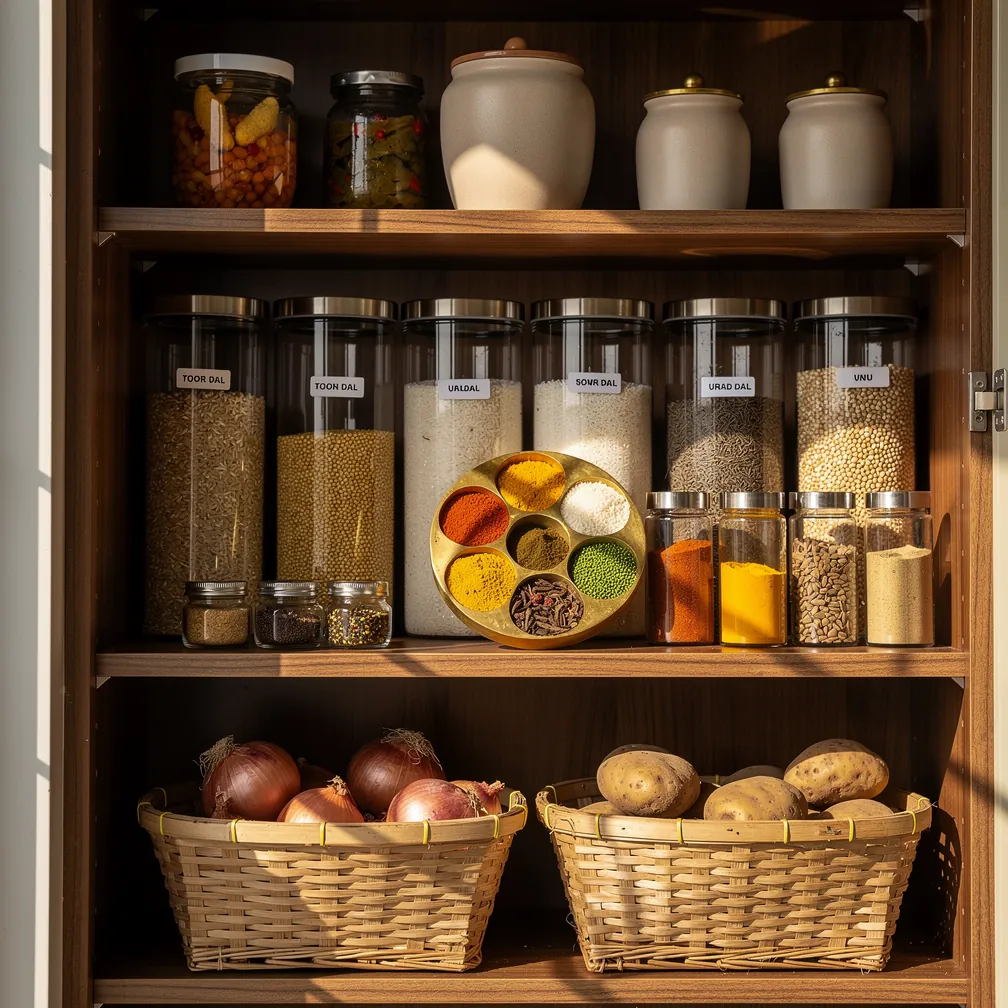
- Baskets or woven bins: Good for snacks or grouped items (breakfast bars, tea packets). They add visual warmth and work well for items you don't need to see constantly.
- Wire or metal shelving risers: Maximize vertical space without taking up extra shelf depth.
- Over-the-door racks: Ideal for spices, small jars, or oil bottles in Bangalore homes where space is often tight.
- Lazy Susans: Perfect for spice zones—rotating access saves time and prevents items from getting lost in the back.
Account for Bangalore Climate and Available Products
Bangalore's humid monsoon season requires special attention. Moisture-control is essential:
- Sealed containers are non-negotiable for spices, grains, flour, and baking ingredients—open shelving works aesthetically but won't protect your pantry items.
- Clear, airtight plastic containers are widely available in Bangalore (brands like Milton, Signoraware, or even basic tupperware work fine).
- Consider adding silica gel packets or moisture absorbers in containers holding spices and dry goods during monsoon season.
- Ventilation matters—ensure air can circulate to prevent mold and dampness in dark corner pantries.
Conservatively speaking, you don't need boutique organizers or expensive systems to organize your pantry effectively. Smart container choices and thoughtful zoning matter far more than the brand or premium price tag.
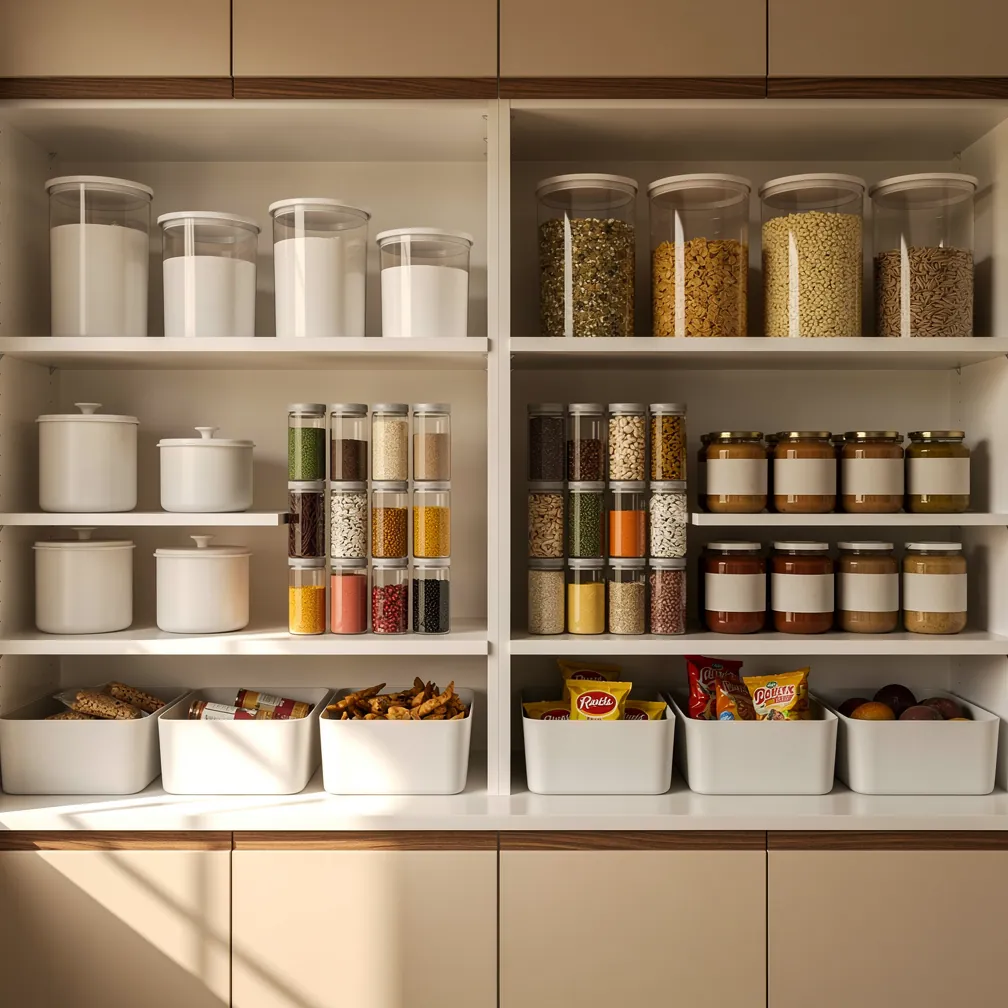
Step 2: Declutter and Clean
Remove Everything from Shelves
Yes, everything. Dust settles, shelf liners get grimy, and you can't truly assess what you have if items are still in place. Pull everything out section by section (if your pantry is small) or all at once (if you have space to work). Group items as you go into the zones you defined in Step 1.
Check Expiration Dates
Here's where real clarity happens. Many people misinterpret expiration dates—and it's not your fault. Manufacturers use different date labels, and the terminology is confusing:
- "Best If Used By" — a quality label, not a safety label. Food may taste less fresh after this date, but it's usually safe.
- "Sell By" — guidance for retailers on how long to display the product. It's not a safety deadline for consumers.
- "Use By" — the closest thing to a hard safety deadline, but even this is manufacturer discretion.
Understanding these distinctions prevents throwing away perfectly good food and keeps unsafe food out of your kitchen.
Common shelf-life guidelines (general food-safety guidance):
- Canned goods: 3–5 years (often safe longer if the can isn't dented or rusted)
- Pasta, dried grains, flour: 6–8 months (store in airtight containers)
- Spices: 3–4 years in sealed containers (older spices lose flavor, not safety)
- Cooking oils: 1–2 years (store away from heat and light)
- Baking soda, baking powder: 6–12 months
Donate or Discard Expired Items
Once you've identified what's past its prime:
- Truly expired items (safety concern) go in the trash.
- Items that are no longer useful or are taking up space can be donated (if unexpired and sealed) to a local food bank or neighbor.
- Items you realize you don't eat (that jar of specialty sauce you bought and forgot)—decide to use it, gift it, or donate it. Clearing these mental clutter items makes a huge difference.
Clean the Shelves
Wipe down every shelf, the walls, and any exposed surfaces. Vacuum out corners. This is your fresh start.
Step 3: Implement Your Organization System
Arrange Items by Zone
Now, place items back into their zones. Keep frequently used items at eye level or easy reach. Less frequently used items can go higher or lower. In Bangalore homes with limited shelf space, think vertically—use risers, stackers, and wall space.
Implement Labeling
Labeling is the single most important habit for long-term pantry maintenance. Without labels, family members won't know whether a container holds flour or sugar. Moisture gets introduced. Systems fall apart within weeks.
Labeling options:
- Label maker (Dymo or budget alternatives available in Bangalore): Creates professional, easy-to-read labels. Worth the investment if you're serious about pantry organization.
- Chalkboard or whiteboard labels: Reusable and flexible. Good for items you rotate frequently.
- Handwritten labels with waterproof tape: Budget-friendly but less durable long-term.
- Printed labels: If you have printer and label paper at home.
On each label, include the item name and the expiration date (if relevant). This transforms your pantry from a guessing game into a system.
Set Up FIFO Rotation for Longer Shelf Life
FIFO (First-In-First-Out) is the gold-standard inventory method for reducing waste. Here's how it works:
- New purchases go to the back of the shelf or container.
- Older items position toward the front for first use.
- Monthly rotation: When you restock, move newer items behind older ones.
This simple discipline ensures older items get used before expiration, dramatically reducing the food waste that costs your family money every year. It's especially important for items with shorter shelf lives (oils, certain spices, opened containers).
Optimize Vertical Space
Bangalore pantries are often compact. Vertical space is your secret weapon:
- Stackable containers: Store multiple smaller containers in the footprint of one large one.
- Wire risers or shelving: Create a second tier on existing shelves.
- Over-the-door organizers: Perfect for small jars, oil bottles, or frequently used spices.
- Magnetic spice containers: Mount on the inside of a pantry door or a metal rack to free up shelf space.
- Tiered shelf organizers: Stair-step arrangement lets you see everything without stacking items too high to reach.
Common Pantry Organization Mistakes to Avoid
Mistake 1: Misunderstanding Expiration Dates
As mentioned above, many families throw away perfectly good food because they think "Best If Used By" means the food is unsafe. Others keep items way past safety. Understanding the actual meaning of food labels prevents both mistakes and saves money.
Mistake 2: Over-Buying Before Organizing
Don't fall into this trap: "I'll organize as soon as I buy better containers." That's backwards. Organize first, then buy containers to fit your actual pantry space and contents. You might realize you don't need those three boxes of pasta that convinced you to buy a fancy organizer.
Mistake 3: Systems Too Complex to Maintain
Over-elaborate systems fail. If your pantry organization requires color-coding each item, maintaining a spreadsheet of inventory, or a system so intricate only you understand it, it will collapse within weeks. Stick to zones, clear labels, and FIFO rotation. Simple systems survive.
Mistake 4: Wasting Vertical Space
Many Bangalore homes have narrow pantries. Neglecting vertical storage (shelving risers, stackers, wall hooks) means wasted potential. Every inch of height is an opportunity to store more without taking up shelf depth.
Mistake 5: Not Labeling or Labeling Inconsistently
A pantry without labels is a pantry destined to fail. Family members won't know what's in unlabeled containers. Moisture seeps in. Items expire silently. Make labeling non-negotiable and maintain it as new items enter the pantry.
Maintaining Your Organized Pantry
Organization is not a one-time project—it's a system you maintain.
Monthly Inventory Check
Once a month (or when you do a major grocery shop), spend 15 minutes reviewing your pantry:
- Check for any items nearing expiration.
- Ensure items are in their zones and items are visible (not pushed to the back).
- Verify labels are still in place and readable.
- Note any duplicate purchases (a sign that you're not aware of what you have).
This small habit prevents chaos from creeping back in.
Rotating Stock (FIFO Method Maintenance)
Every time you restock a category, apply FIFO:
- New pasta goes behind existing pasta.
- New oil bottles go behind the one that's half-used.
- Newer spice jars position behind older ones.
This discipline is the difference between a system that cuts your food waste and one that doesn't.
Seasonal Adjustments
In Bangalore, monsoon season affects how you store items. During rainy months:
- Increase moisture-control measures (add silica packets to spice containers, ensure sealed lids are tight).
- Check for signs of moisture in dark corners.
- Rotate items more frequently in high-humidity zones.
Post-monsoon, reassess and adjust as needed.
Family Communication and Training
If you're the only one maintaining the system, it will fail. Teach family members:
- Where items belong (zones matter).
- How to apply FIFO (new items go to the back).
- The importance of labels and how to read them.
- How to put things back immediately after use (not on a random shelf).
A 10-minute conversation prevents weeks of re-organizing.
Budget-Friendly Pantry Organization Ideas
Professional organizers and trendy design blogs sometimes make pantry organization seem expensive. It doesn't have to be.
Low-Cost Options from Local Stores
Basic plastic containers from discount stores serve just as well as premium brands. In Bangalore, you can find affordable options at local stores—the key is choosing airtight containers that protect against moisture and pests, not the brand name.
- Small plastic containers: ₹30–100 for basics
- Label maker or label tape: ₹100–300
- Wire risers or shelf organizers: ₹200–500
- Over-the-door shoe organizer (repurposed for spices): ₹300–600
Total for a complete DIY system: ₹1,000–2,000, a one-time investment that keeps saving your family money on food waste.
DIY Solutions
- Repurpose glass jars: Jam jars, pasta sauce containers, and other glass vessels work perfectly for storing dry goods. Wash thoroughly, dry completely, and label.
- Shop your home: Before buying containers, check what you already have—old baskets, small boxes, or bins that could serve as dividers or storage.
- Newspaper or kraft paper as dividers: Create shelf divisions for different zones without buying pricey organizers.
- Tape labeling: Waterproof tape + handwritten labels cost almost nothing and are durable enough.
When Investing in Quality Containers Pays Off
There are moments when spending a bit more makes sense:
- Large airtight containers for frequently used staples: Flour, sugar, rice, and pasta see constant use. Investing ₹500–1000 in a few quality large containers that stack neatly and seal tightly reduces moisture issues and lasts for years.
- Spice containers with pour spouts: For ₹50–100 per container, spice jars with measured pour spouts reduce mess, prevent moisture seepage, and last for years. Over a lifetime, this tiny investment pays dividends.
- A good label maker: A Dymo or budget equivalent (₹500–1500) creates labels that last through humidity and handling, unlike handwritten or tape-based labels.
Small Pantry? No Problem
Small Bangalore apartments often have tiny pantries or no pantry at all. These strategies maximize limited space:
Vertical Storage Strategies
- Use every inch of height. Tall, narrow containers stack vertically better than wide, shallow ones.
- Install a second rod or shelf if your pantry allows.
- Use slim, stackable containers that fit into tight spaces.
Door and Wall Utilization
- Pantry-door racks hold enormous amounts of spices or frequently used small items.
- Wall-mounted magnetic spice containers turn a blank wall into functional storage.
- Narrow shelves on the inside of the pantry door (if there's room) expand capacity without taking up floor or main-shelf space.
Multi-Purpose Containers
- A single tall container holds multiple smaller items (tea packets, spice jars) in one compact footprint.
- Drawer organizers with dividers work inside larger containers to separate different spices or items.
- Vacuum-seal bags compress grains or pasta significantly, freeing space for other items (though airtight containers are better for frequent access).
When to Hire a Professional Organizer
Some pantry situations benefit from expert help.
Signs You Need Professional Help
- Complexity: Your pantry layout is awkward, small, or involves structural constraints that make DIY organization feel overwhelming.
- Time constraints: You're too busy to take on a full decluttering and organization project.
- Large household: Multiple family members have different dietary needs, allergies, or shopping habits, making the system harder to maintain.
- New home or major renovation: Moving or redesigning your kitchen is the perfect moment to get professional input on pantry layout and storage solutions before you move in.
- Significant food waste: If you're consistently throwing away spoiled food despite your best efforts, a professional can identify what's broken in your system.
- Recurring chaos: You've organized before, but it fell apart. A professional can design a system specifically matched to your habits and household.
What a Professional Organizer Does
A professional organizer like those at Tidy Blueprints doesn't just arrange your items neatly. We:
- Assess your space, habits, and constraints (Bangalore climate, family size, cooking frequency, dietary restrictions).
- Design a custom system that works for your life, not Pinterest's life.
- Declutter with you, making honest decisions about what stays and goes.
- Implement the system with proper containers, labels, and zoning.
- Train you and your family on how to maintain it long-term.
ROI of Professional Organization
The cost of hiring a professional depends on your pantry's size and the scope of the work; book a free online consultation to discuss your project. The return includes:
- Time saved: Faster meal planning, shopping, and cooking—easily 15+ minutes per week.
- Food waste prevented: Less food expires unnoticed, so less of your grocery budget ends up in the bin.
- System sustainability: A professional-designed system maintained properly lasts 6+ months without degradation (versus DIY systems that fall apart in weeks).
- Stress reduction: A calm, organized pantry feels good every time you open the door.
- Ripple effects: Organization often inspires similar systems in other areas of your home (wardrobes, kids' rooms, drawers).
For families stretched thin, the professional investment can pay for itself over time through food waste reduction.
Finding a Qualified Organizer in Bangalore
When looking for a professional organizer in Bangalore:
- Check credentials: Certifications like CPO (Certified Professional Organizer) aren't required in India, but look for organizers with proven track records and client testimonials.
- Specialize in residential kitchen organization: Not all organizers have expertise in food storage, pantry systems, or moisture control in humid climates.
- Ask about Bangalore-specific knowledge: An organizer familiar with humidity management, local product availability, and apartment-style kitchens is invaluable.
- Request before/after examples: Photos of real pantry transformations show their skill and aesthetic.
- Discuss long-term support: Some organizers offer follow-up visits or maintenance coaching to ensure your system thrives.
Tidy Blueprints specializes in Bangalore home organization across all rooms, including kitchens. We understand the climate, space constraints, and family dynamics of Bangalore homes. Contact us for a free online consultation to discuss your pantry's unique challenges.
Pantry Organization for Special Situations
New Home Setup (For Renters or Recently Moved)
If you're renting or just moved, you might not know your pantry's idiosyncrasies yet:
- Start with a flexible, reversible system (no permanent shelving or modifications).
- Use removable shelf liners, tension rods for dividers, and containers you can take with you.
- Observe your household's eating habits over a month before committing to specific zone sizes.
- This temporary system prevents over-investing in a rented space while you learn the space.
Once you've lived with your pantry for 4–6 weeks, you can upgrade to a more permanent system.
Organizing for Large Families
Large households have higher inventory turnover and more varied preferences:
- Expand your zones: Instead of one "snacks" zone, separate kid snacks, adult snacks, and healthy snacks.
- Increase container quantities: You'll go through pasta, rice, and flour faster. Invest in larger bulk containers and refill more frequently.
- Label by family member (if relevant): Older kids' lunchbox items in one section, toddler snacks in another, reduces confusion.
- Use FIFO even more strictly: With higher turnover, older items can get truly lost if you're not consistent.
- Consider a pantry inventory system: A simple notebook or phone reminder list helps track items you're running low on, preventing the "I didn't realize we were out of pasta" moment.
Managing Food Allergies and Dietary Restrictions
Households with allergies need extra clarity:
- Separate allergen items physically: Use a dedicated shelf or container for allergen-containing items, clearly marked and isolated from safe items.
- Label aggressively: Include allergen information on every container (e.g., "Contains peanuts", "Dairy-free", "Gluten-free").
- Color-code if helpful: Red tape for allergen items, green for allergen-free, etc. This creates a visual safety net.
- Educate everyone in the household: Especially children old enough to grab their own snacks, everyone must understand allergen items and their locations.
- Review and update regularly: When allergens are first diagnosed or when the household changes, update your system accordingly.
Pantry Organization and Meal Planning Integration
Your organized pantry becomes the starting point for meal planning:
- Before meal planning, review your pantry: Knowing what you have prevents duplicate purchases and inspires meals using items on hand.
- Shop based on what's low: Meal plan around items nearing empty or expiration rather than always buying the same things.
- Use FIFO as inspiration: Items at the front of your pantry (older purchases) should inform next week's menu.
- Rotate seasonally: Bangalore's monsoon (July–September) might influence your pantry's focus—fresh items harder to keep, so adjust your meal plans and stock accordingly.
This integration transforms your organized pantry from a storage container into the engine of efficient, waste-reducing meal planning.
Frequently Asked Questions About Pantry Organization
How long does it take to organize a pantry from scratch?
Most pantries take 4–6 hours to fully organize, depending on size and how much decluttering is needed. Breaking it into two sessions (assessment and planning in one session, implementation in another) makes it more manageable.
What's the best container type for flour, sugar, and other dry goods?
Airtight plastic or glass containers work best. They protect against moisture (especially important in Bangalore's humid climate) and pests. Clear containers let you see when you're running low. For frequently used items like flour, larger containers minimize refilling frequency.
How do I understand 'Best If Used By' vs. 'Use By' dates?
"Best If Used By" is a quality label—food may taste less fresh after this date but is usually safe. "Use By" is the closest to a safety deadline, though even this is manufacturer discretion. When in doubt, follow the storage instructions on the pack or FSSAI guidance for that food. Organized pantries prevent confusion by making dates visible.
Can I use my pantry for non-food items?
Pantries are designed for food storage. Non-food items (cleaning supplies, medications) should be stored separately, especially in homes with children or pets. Mixing them introduces contamination risks. Keep your pantry dedicated to food and beverages.
What's FIFO and why does it matter?
FIFO (First-In-First-Out) means new purchases go to the back, older items positioned toward the front for first use. This simple rotation prevents expiration and reduces food waste. It's the most effective inventory method for home pantries.
How do I organize spices in a small pantry?
Use wall-mounted magnetic spice containers, over-the-door racks, or a lazy Susan on a single shelf. Alphabetical order makes finding spices faster. Airtight spice jars (with pour spouts if possible) keep contents fresh in humid climates and take up minimal space.
Do I need a professional organizer, or can I do this myself?
Most people can organize their pantry themselves following a clear system (zones, labeling, FIFO). Hire a professional if you have structural constraints, significant complexity, multiple household members with different habits, or if your DIY attempts have failed. A professional investment often pays for itself through reduced food waste.
How much should I spend on organization products?
You can organize a pantry for ₹1,000–2,000 using basic containers and labels from budget stores. Premium organizers and designer systems cost more but don't necessarily work better. Start simple, invest in quality where it matters (airtight containers, label maker), and avoid over-complicating the system.
How often should I maintain my organized pantry?
Spend 15 minutes monthly doing a quick check: verify items are in their zones, check for expired items, ensure labels are in place. FIFO rotation happens each time you restock. This small habit prevents your system from degrading and keeps organization sustainable.
Key Takeaways: When to Call a Professional
An organized pantry saves time, money, and stress. If you're ready to transform yours, here are the main benefits you'll experience.
Waste Less Food
Visibility and FIFO rotation prevent spoilage, so groceries get used before they expire instead of being thrown away.
Spend 15 Fewer Minutes Per Week Shopping
Knowing your inventory prevents duplicate purchases and confusion. Meal planning becomes faster when you can see what you have.
Create a System That Actually Lasts
DIY systems often fail within weeks. Professional design ensures your pantry stays organized 6+ months without degradation.
Reduce Stress and Create Calm
A chaotic pantry creates daily friction. An organized one feels peaceful and makes cooking more enjoyable.
Ready to Transform Your Kitchen Pantry?
Whether you want to organize on your own or need professional guidance, Tidy Blueprints is here to help. Our Bangalore-based organizing experts understand your space, climate, and lifestyle. Book a free online consultation to discuss your pantry's unique needs.