Home Organization Ideas for Every Room
Expert room-by-room tips, storage solutions, and professional strategies from Bangalore's trusted home organisers.
Jump to section
Why Home Organization Matters & Where to Begin
The Real Impact of Clutter on Your Daily Life
Clutter is more than an eyesore — it costs you time, money, and peace of mind. The average person spends 2.5 days per year searching for misplaced items. Getting rid of clutter eliminates approximately 40% of housework in the average home. And 7 in 10 people believe a clutter-free home leads to a more successful, productive life.
Only 20% of what we own is actually used — the other 80% sits idle, taking up space and mental bandwidth. Whether you're in a compact Bangalore apartment or a spacious family home, disorganization compounds: the more you have, the harder it is to find what you need, and the more likely you are to buy duplicates of things you already own.
Organization is not about having a picture-perfect home. It is about creating systems that make your daily life easier — mornings that run smoothly, evenings that feel calm, and weekends you actually enjoy instead of tidying up.
Home Organisation vs. Decluttering: What's the Difference?
These two terms are often used interchangeably, but they are distinct steps in the same journey:
- Decluttering is the process of removing items you no longer need, use, or love. It answers the question "What am I keeping?"
- Organising (or organizing) is creating sustainable systems for everything that remains. It answers the question "Where does this live, and how do I keep it there?"
Decluttering must come first. You cannot organise clutter — buying bins and dividers before purging just means you'll have beautifully contained items you do not need. Professional organisers focus on building systems that work for your lifestyle, not a generic template. The goal is not a showroom; it is a home that supports how you actually live.
Common Organising Mistakes to Avoid
Even well-intentioned organising attempts fail when they overlook a few fundamentals. Here are the most common mistakes — and how to avoid them:
Buying storage before decluttering. Bins, baskets, and dividers are tools, not solutions. Declutter first, then measure your space, and only then buy organisers that fit both your items and your shelves.
Focusing on aesthetics over function. A pantry full of matching glass jars looks beautiful on Instagram, but if your family cannot maintain the system, it fails within weeks. Prioritise function — labels, accessibility, and ease of use — over looks.
Trying to do the whole house at once. Organising an entire home in one weekend is overwhelming and unsustainable. Start small: one drawer, one shelf, one category. Momentum builds from small wins, and a single completed zone teaches you what systems work for your household.
Keeping 'just in case' items. If you have not used it in 12 months, do not have a specific plan to use it in the next 3, and would not buy it again today — let it go. The space it occupies has real value.
Not labelling. Labels are not just for looks — they are visual cues that tell every family member where things belong. Without labels, even the best organising systems degrade as items drift to convenient but wrong spots.
Ignoring daily maintenance. An organisational system is only as good as the habits that sustain it. Build a 5-minute evening reset into your routine — return items to their zones, clear flat surfaces, and set yourself up for a smooth morning.
Room-by-Room Home Organization Ideas
The most effective home organisation starts with tackling one room at a time. Each space has its own challenges, storage needs, and flow — what works in the kitchen will not necessarily work in the bedroom. Here is a room-by-room breakdown of professional-grade organising ideas you can implement today.
Kitchen Organization: Countertops, Cabinets, and Pantry
The kitchen is the hardest-working room in any home, and in Indian households especially, it handles tremendous variety — from daily dal-chawal to elaborate festival cooking. Start by creating zones: a cooking zone near the stove (spatulas, oils, spices), a prep zone near the counter (cutting boards, knives, mixing bowls), a storage zone for dry goods, and a cleaning zone under the sink.
- Countertops: Keep only daily-use items out. Mount spray bottles and dish soap on a tension rod inside the sink cabinet door. Use a tiered stand for frequently used spice containers.
- Cabinets: Stack pots and pans with pan protectors; store lids vertically in a file organiser. Use shelf risers to double storage in tall cabinets.
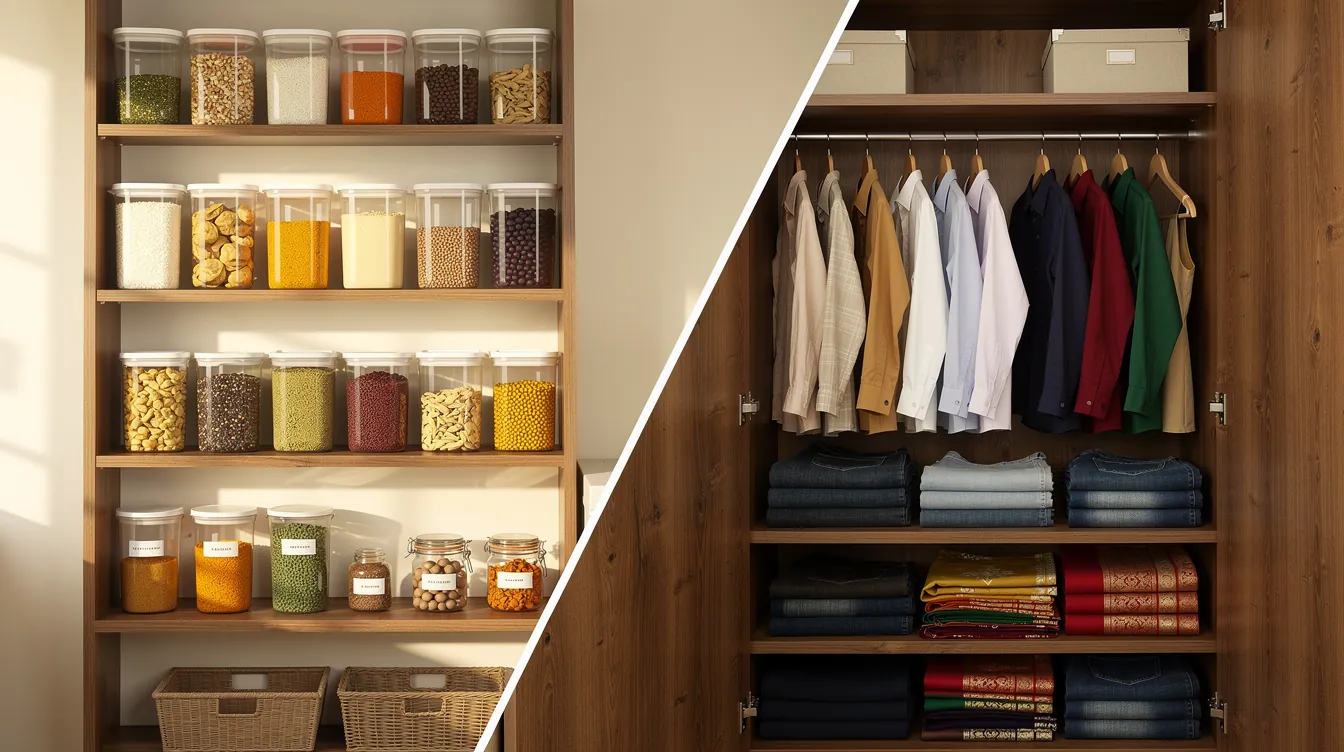
- Pantry: Decant dry goods into clear, airtight containers — they stack better and let you see inventory at a glance. Group like items: all baking supplies together, all snacks in one zone, all grains on one shelf. For Indian kitchens, a dedicated masala dabba keeps everyday spices at your fingertips, while larger airtight containers hold whole spices, dals, and rice.
Wardrobe & Closet Organisation That Lasts
A well-organised wardrobe saves you time every single morning. The professional approach starts with the hanger trick: turn every hanger backward. When you wear something, rehang it the right way. After six months, any still-backward hanger holds an item you have not worn — those are your donation candidates.
- Hangers: Switch to slim velvet hangers. They grip clothes better and take up half the space of plastic or wooden hangers.
- Shelf dividers: Prevent stacked clothes from toppling. Use them for sweaters, handbags, and folded jeans.
- Category grouping: Hang all shirts together, then sub-sort by colour. Group trousers, dresses, and traditional wear separately. This makes outfit selection intuitive.
- Seasonal rotation: Store off-season clothes in vacuum-sealed bags on the top shelf or under the bed. Rotate twice a year — before summer and before winter.
Bathroom Organization for Every Size
Bathrooms are typically the smallest room in the house and the most clutter-prone. The key is using vertical space and keeping counters clear.
- Behind the door: An over-door organiser or adhesive hooks hold towels, robes, and hair tools without consuming floor space.
- Under the sink: Stackable drawers or a two-tier riser turns this awkward space into organised storage for cleaning supplies and spare toiletries.
- Drawers: Use acrylic dividers to create compartments for cosmetics, skincare, and dental items. Group by routine — morning products on the left, evening products on the right.
- Shower: A corner tension-pole caddy or hanging organiser keeps bottles off the floor and prevents mildew buildup.
Living Room & Entryway: First Impressions Count
The living room and entryway are the first things you and your guests see — and the first places clutter accumulates. The entryway is a drop zone by nature: keys, mail, shoes, bags, and umbrellas all land here. Design a drop zone that works with human behaviour rather than fighting it.
A console table with a tray for keys and mail, a basket for shoes, wall hooks for bags and coats, and a small bin for junk mail creates a complete entry system in under one square metre. In the living room, use decorative boxes or lidded baskets to contain remote controls, charging cables, and board games. A coffee table tray keeps surfaces tidy — when the tray fills up, it is time to put things away. For media and books, keep only what you genuinely reference or rewatch. A curated shelf looks intentional; an overstuffed one looks chaotic.
Bedroom Organization for Restful Spaces
Your bedroom should be a sanctuary for sleep, not a storage overflow zone. The first rule of bedroom organisation: nothing under the bed except intentional storage. Under-bed space works well for off-season clothing in flat, labelled bins or spare bedding — but random piles of forgotten items create visual clutter even when hidden.
- Nightstands: Manage cord clutter with a cable management box or a nightstand with built-in charging. Keep only essentials on top — a lamp, a book, a glass of water.
- Dressers: Use drawer dividers to separate categories: undergarments, socks, accessories. Folding clothes upright like files lets you see everything at a glance.
- Linen closet: Store sheet sets inside one of their own pillowcases so they stay together. Label shelves by room or sheet size.
Kids' Room Organization That Kids Can Maintain
Kids' rooms face the most turnover of any space — toys, clothes, and interests change rapidly. The goal is creating systems that children can help maintain independently.
- Toy rotation: Keep 30–40% of toys out at a time. Store the rest in labelled bins in a closet. Rotate every 2–3 weeks — old toys feel new again, and the room stays manageable.
- Accessible storage: Open bins at child height, labelled with pictures for pre-readers, make cleanup intuitive. Use cubby-style shelving where each bin holds one category (building blocks, cars, dolls).
- Books: Forward-facing book ledges let kids see covers rather than spines, making reading more appealing. Swap out titles periodically.
- Art supplies: Store in a portable caddy or over-the-door shoe organiser with clear pockets — easy to grab for craft time and easy to put away.
Storage Solutions & Smart Systems That Last
Great organisation is built on two foundations: the right storage tools and the right daily systems. Hardware without habits fails; habits without hardware frustrate. This section covers both.
Vertical Storage: Using Walls, Doors, and Height
In Bangalore apartments where floor space is at a premium, vertical storage is not optional — it is essential. Every wall, door, and vertical surface is potential storage real estate.
- Floating shelves above doorways and windows add storage without consuming floor area. Use them for books, decorative items, or folded linens.
- Over-door organisers with pockets work in bathrooms (toiletries), bedrooms (accessories), pantries (spice packets), and kids' rooms (small toys).
- Pegboards in kitchens, home offices, and utility areas keep frequently used tools visible and accessible. Paint them to match your wall colour for a built-in look.
- Tension rods create instant dividers inside cabinets — stack cutting boards vertically, separate pot lids, or create a second shelf under the sink.
Multi-Functional Furniture for Dual-Purpose Spaces
When rooms serve multiple functions — a bedroom that doubles as a home office, a living room that is also a play area — furniture must work twice as hard. Look for pieces with built-in storage:
- Storage ottomans and benches provide seating plus hidden storage for blankets, toys, or shoes.
- Beds with under-storage — either built-in drawers or a lift-up mattress platform — eliminate the need for a separate dresser in compact bedrooms.
- Fold-down desks (Murphy desks) create a workspace that disappears when the workday ends.
- Nesting tables give you extra surface area when guests visit and tuck away when you need floor space.
Bins, Baskets, and Dividers: How to Choose the Right Organisers
Not all organisers are created equal. The right choice depends on what you are storing and where:
- Clear acrylic bins are ideal for pantries, bathroom drawers, and anywhere you need to see contents at a glance. They stack neatly and wipe clean.
- Woven baskets (rattan, seagrass, bamboo) add warmth to living rooms and bedrooms while hiding visual clutter. They align with the 2026 trend toward natural, sustainable materials.
- Plastic bins with lids work best in garages, storage lofts, and under beds — anywhere dust and moisture are concerns.
- Drawer dividers (bamboo or acrylic) keep small items from becoming a jumbled mess. Always measure your drawer depth and width before buying.
Labelling Systems That Actually Stick
A label is the difference between a system everyone follows and a system only you understand. The most effective labelling approaches:
- Label both the bin and the shelf. When someone removes a bin, they still know exactly where it returns.
- Use a label maker for clean, consistent text. Hand-written labels work too — the key is readability, not perfection.
- Label by category, not contents. "Baking Supplies" works better than "Flour, Sugar, Cocoa, Baking Powder, Vanilla" — categories accommodate change.
- Picture labels for kids' bins empower even pre-readers to participate in cleanup.
The Zone Method: Grouping Like with Like
Professional organisers think in zones, not rooms. A zone is any area where a specific activity happens, and every item needed for that activity lives within arm's reach. Examples:
- Cooking zone in the kitchen: pots, utensils, oils, and spices together near the stove.
- Getting-ready zone in the bathroom or bedroom: skincare, makeup, hair tools, and accessories in one area.
- Work zone in the home office: laptop, charger, notebook, pens, and task light together on or near the desk.
Zone-based organisation reduces the distance you travel to complete a task, which reduces friction and makes it easier to put things back where they belong.
Daily Habits That Maintain an Organised Home
Systems are only as good as the habits that sustain them. Build these simple routines into your day:
- Morning reset (5 minutes): Make the bed, clear bathroom counters, start a load of laundry if needed.
- Evening reset (10 minutes): Return items to their zones, clear flat surfaces (counters, tables, desk), set out items needed for tomorrow morning.
- One-in-one-out rule: Whenever something new enters your home, something similar leaves. New t-shirt? Donate an old one. New kitchen gadget? Remove one you never use.
- Weekly zone check (15 minutes): Pick one zone each week and spend 15 minutes returning it to baseline. Rotate through zones so nothing drifts too far from organised.
Home Organisation for Indian Homes
Indian homes present unique organisational challenges that Western-centric guides rarely address — from masala-stuffed kitchens and silk saree collections to festival decorations that emerge once a year. This section covers strategies designed specifically for Indian households.
Organising the Indian Kitchen: Spices, Grains, and Utensils
The Indian kitchen is fundamentally different from its Western counterpart. We cook with dozens of spices, store multiple grains and dals, and use a range of specialised utensils — from pressure cookers and tawas to chakla-belans and multiple kadai sizes. Here is how to bring order to it all:
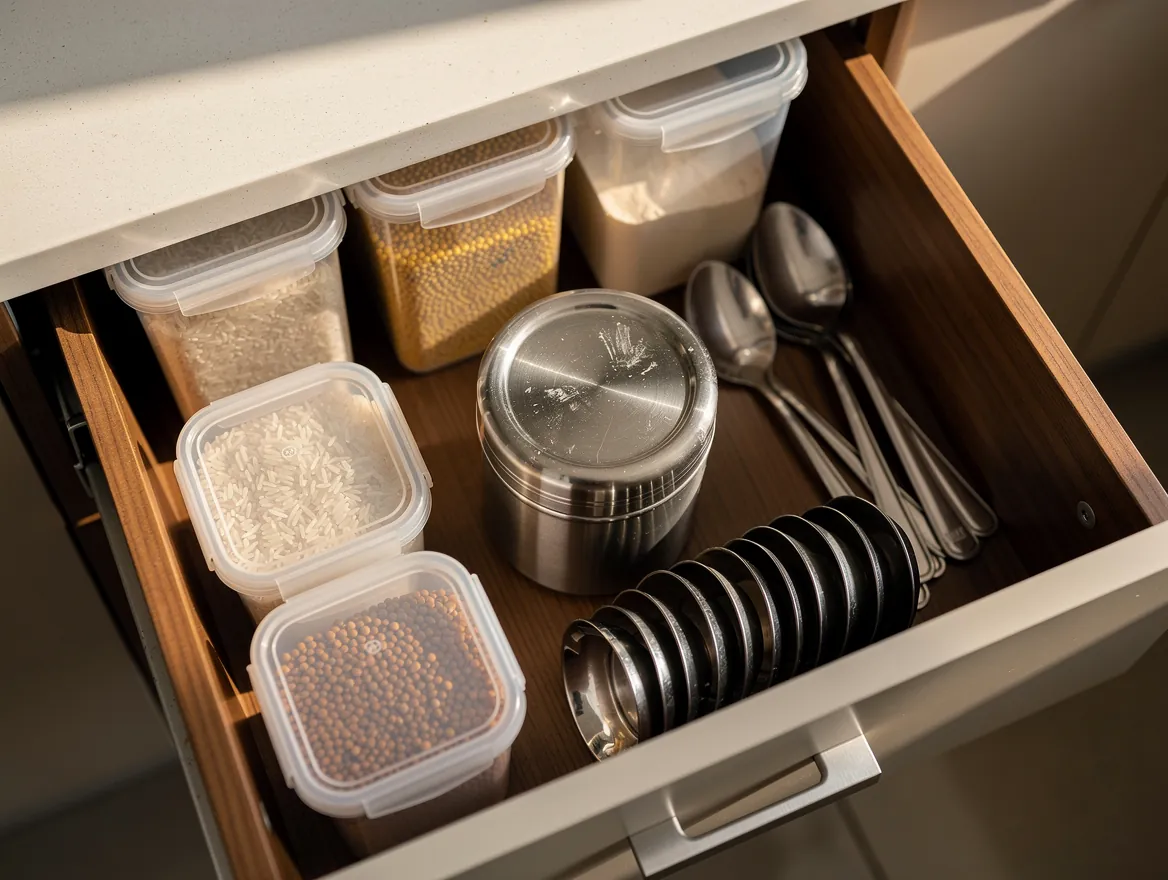
- Everyday spices (masala dabba): Keep a traditional stainless steel masala dabba on the counter or in the closest cabinet to the stove. Fill it with your 7–10 most-used spices (turmeric, chilli powder, cumin, coriander, garam masala, mustard seeds, asafoetida). Refill from larger bulk containers stored elsewhere.
- Whole spices and dals: Transfer to airtight glass or stainless steel containers. Glass lets you see inventory; steel protects from light. Label the lids, not the sides, so you can identify each container even when stacked.
- Grains and flours: Atta, rice, sooji, and poha need airtight, pest-proof storage. Large stainless steel or food-grade plastic bins with tight-fitting lids, stacked on lower shelves for easy access, work best.
- Utensil organisation: Install drawer dividers sized for Indian utensils — deep compartments for karchis and jharas, long compartments for chakla-belans. Stack pressure cookers with their lids inverted on top, and store kadai by nesting smaller inside larger with protective cloths between them.
Saree & Traditional Wear Storage Solutions
Sarees are not just clothing — they are investments, heirlooms, and works of art. Proper storage preserves fabric, prevents creasing, and makes selection easy:
- Hanging vs. folding: Everyday cotton and synthetic sarees can be folded and stacked on shelves with acid-free tissue between each saree. Silk sarees, Kanjeevarams, and heavily embroidered pieces should be hung on padded hangers in cotton garment bags — never plastic, which traps moisture.
- Cotton cover bags: Store each silk or special-occasion saree in its own breathable cotton bag. Label the bag with the saree type and occasion (e.g., "Kanjeevaram — Wedding", "Chanderi — Festival").
- Blouse and petticoat pairing: Keep each saree's matching blouse and petticoat folded together inside the saree cover or in a labelled fabric pouch pinned to the hanger. No more hunting for the right blouse ten minutes before an event.
- Vacuum storage for occasional pieces: For sarees worn once every few years, vacuum-seal bags (with acid-free tissue) dramatically reduce volume. Store them on the highest shelf or under the bed.
Organising for Indian Festivals and Seasons
Indian homes cycle through distinct seasons — summer cottons, winter woollens, monsoon rainwear, and festival-specific items from Diwali diyas to Pongal pots. A seasonal rotation system prevents rarely used items from consuming prime storage year-round:
- Festival decoration storage: Use clear, stackable bins labelled by festival ("Diwali", "Navratri", "Ganesh Chaturthi", "Christmas"). Store each bin in a high cabinet or loft space, swapping it into an accessible spot a week before the festival.
- Pooja item organisation: Dedicate one cabinet or shelf to pooja supplies — incense, camphor, kumkum, wicks, bells, and plates. Use small partitioned trays inside drawers to keep tiny items separate and accessible.
- Seasonal clothing rotation: Twice a year — before summer (March) and before winter (October) — rotate your wardrobe. Pack off-season clothes in vacuum bags or storage bins on the top shelf. Bring the incoming season's clothes forward. This keeps your daily wardrobe lean and your off-season items protected from dust and moisture.
- Monsoon preparation: Before the rains arrive, ensure all storage on lower shelves is in airtight bins. Use silica gel packets in saree storage bags and wardrobe corners to combat Bangalore's monsoon humidity.
Small Spaces, New Homes & 2026 Trends
Home organisation is not static — it evolves with how we live. This section covers three of the most relevant angles for today's homeowners: compact urban living, moving into a new home, and the trends reshaping how we think about organising.
Small Apartment Organisation for Urban Living
Bangalore's 2BHK and 3BHK apartments are well-designed but space-efficient — there is rarely a separate utility room, storage loft, or dedicated pantry. Here is how to maximise every square foot:
- Think vertical before horizontal. Before adding any furniture, look up. Wall-mounted shelving, ceiling-height cabinets, and over-door storage should be your first investments, not your last resorts.
- Every piece of furniture must earn its footprint. A side table that is just a side table is a missed opportunity. Choose ottomans with hidden storage, coffee tables with lift-tops, beds with drawers, and dining tables with extension leaves that only open when needed.
- Use balcony and window spaces creatively. A narrow balcony can become a utility zone with a compact storage cabinet. Deep window sills can hold small plants, books, or folded blankets in baskets.
- Renter-friendly solutions are non-negotiable. Most Bangalore renters cannot drill into walls. Use adhesive hooks, tension rods, free-standing shelving units, and over-door organisers that leave zero trace when removed.
New Home Setup: Organising from Day One
Moving into a new home — whether your first apartment or a larger family space — is a rare opportunity to build organisation into the home from scratch. Yet most people unpack reactively, putting things in the first available spot and regretting it for years.
Follow this room-by-room unpacking order for a home that works from day one:
- Kitchen first. The kitchen is the hardest room to reorganise once in use. Unpack and organise it completely before moving on. Plan zones (cooking, prep, storage, cleaning) and place items accordingly. Label shelves as you go.
- Bedrooms second. Set up beds, wardrobes, and nightstands. Organise clothing by category before hanging or folding. The first night in a new home should end in a calm, organised bedroom.
- Bathrooms third. Stock with daily essentials. Install organisers (over-door hooks, under-sink risers, drawer dividers) before filling them.
- Living areas last. These spaces fill with furniture and decor over time. Getting the functional rooms right first means the living room is not buried in kitchen overflow during the first week.
The golden rule of new-home setup: plan the space before opening the boxes. Walk through each room with a notepad and decide where each category will live. Write it down. Only then start unpacking.
Eco-Friendly & Sustainable Organising Materials
One of the strongest 2026 trends in home organisation is the shift away from plastic toward natural, renewable materials. This is not just an aesthetic choice — bamboo, rattan, seagrass, and recycled materials are durable, biodegradable, and better for indoor air quality.
- Bamboo drawer dividers and shelf risers are as functional as plastic equivalents but look warmer and last longer.
- Rattan and seagrass baskets bring texture to open shelving while hiding visual clutter. They work beautifully in living rooms, bedrooms, and bathrooms.
- Recycled plastic bins offer the durability of plastic with a lower environmental footprint — look for brands that disclose their recycled content percentage.
- Glass over plastic for pantry storage: Glass jars are infinitely reusable, do not absorb food odours, and let you see inventory at a glance.
Sustainability in organising also means buying less and organising better. The most eco-friendly bin is the one you never buy because your existing items are already organised and accounted for.
Digital Decluttering: Organising Your Virtual Space
Physical clutter is visible; digital clutter is invisible but equally draining. Emails you will never read, photos you will never sort, apps you never open, and files scattered across folders — this is digital disorganisation, and it is a recognised 2026 trend worth addressing.
- Email inbox: Unsubscribe from newsletters you have not opened in 30 days. Create three folders — Action, Reference, Archive — and file every incoming email into one of them. Aim for inbox zero once a week.
- Photos: Dedicate one afternoon to deleting duplicates, blurry shots, and screenshots. Back up the keepers to cloud storage. Then set a recurring monthly reminder to stay on top of it.
- Cloud storage and desktop: Create a simple folder structure (Work, Personal, Finance, Health, Projects) and file everything. A cluttered desktop slows you down every time you open your laptop.
- Apps: Delete any app you have not used in three months. Organise remaining apps into folders by function (Work, Social, Utilities, Health).
The connection to physical organisation: Tidy Blueprints' document organiser service handles the physical side — paper files, bills, warranties, and important documents — creating filing systems that mirror the clarity of a well-organised digital space.
When to Call a Professional Home Organizer
You have read the room-by-room tips, learned the systems, and seen the storage solutions. At this point you might be wondering: can I do this myself, or should I bring in a professional? The honest answer: it depends on your situation, your goals, and your bandwidth.
DIY vs. Professional Organising: What is Right for You?
DIY organisation works well when:
- You are tackling a small, contained project — one wardrobe, one pantry, one drawer system.
- You have the time and motivation to see it through without getting overwhelmed.
- You enjoy the process and are not emotionally drained by decision-making about your belongings.
- Your space is already reasonably under control and you are refining rather than rebuilding.
Professional organising is worth the investment when:
- The clutter feels overwhelming. You do not know where to start, and every attempt ends in frustration. A professional brings objectivity, a proven process, and the confidence that there is a path forward.
- You have tried and it did not stick. You have organised before, but clutter crept back within weeks. The problem is not willpower — it is that the system was designed for someone else's lifestyle. Professionals design systems around your habits, your family, and your space.
- You are time-poor. Between work, family, and life, you simply do not have the hours needed to do it right. Professionals compress weeks of DIY effort into focused sessions.
- You are moving into a new home. As covered in the previous section, setting up a home correctly from day one saves years of frustration. A professional can plan and implement your entire new-home setup.
- You need specialised solutions. Saree storage, Indian kitchen systems, kids' rooms that grow with the child, IKEA furniture assembly and organisation — these are specific skills that general tips cannot fully address.
What to Expect from Professional Home Organisation Services
If you have never worked with a professional organiser, here is what the process typically looks like:
- Consultation: A walkthrough of your space to understand your goals, pain points, and lifestyle. This is when you share what is working, what is not, and what you want the outcome to be.
- Decluttering assistance: The organiser helps you sort through items, make decisions, and let go of what no longer serves you — always with empathy, never with pressure.
- System design: Based on how you actually live (not a Pinterest board), the organiser designs storage systems, zones, and workflows customised to your home and your habits.
- Product sourcing: The organiser recommends and procures the right bins, dividers, shelving, and labels — measured to fit your exact spaces — so you do not waste money on the wrong products.
- Implementation: Hands-on organising — everything gets a home, every home gets a label, and every system gets tested.
- Maintenance coaching: Before the engagement ends, you receive simple daily and weekly routines to keep your home organised long after the professional leaves.
How Tidy Blueprints Transforms Bangalore Homes
Tidy Blueprints is a professional home organising service based in Bangalore, serving homes across the city. We specialise in a range of niche services that most organisers do not offer under one roof:
- Wardrobe & Saree Organiser — custom folding, hanging, and storage systems for everyday wear, traditional silk sarees, and seasonal rotation.
- Kitchen Organiser — Indian kitchen expertise including masala dabba setup, grain storage, utensil organisation, and zone-based workflow design.
- Makeup & Cosmetic Tray Organiser — vanity setup, drawer systems, and daily-use accessibility for your beauty collection.
- Kids Room Organiser — toy rotation, accessible storage, and systems that children can maintain independently.
- IKEA Organiser — IKEA furniture assembly plus professional organisation as a combined service.
- Document Organiser — paper filing systems for bills, warranties, and important documents.
- New Home Organiser — end-to-end unpacking and setup for families moving into new Bangalore apartments.
- Shelf & Cupboard Organiser — maximising storage in existing cabinets, shelves, and built-in units.
We are based on Sarjapur Road and serve all of Bangalore. Every project starts with a free online consultation where we talk through your space, understand your goals, and design a plan that works for your home and your budget.
Frequently Asked Questions About Home Organization
How do I organise my house when I have too much stuff?
Start with decluttering one small zone — a single drawer, one shelf, or one category (like shoes). Use the 12-12-12 method: find 12 items to throw away, 12 to donate, and 12 to return to their proper place. Do not try to organise clutter — declutter first, then organise what remains. If the volume feels genuinely overwhelming, consider professional help to get the initial purge done efficiently.
What is the easiest way to start organising my home?
Begin with the space you use most — typically the kitchen or your bedroom. Spend just 15 minutes. Empty one drawer or shelf completely, wipe it clean, declutter what came out, and only return what you genuinely use and love. Small wins build momentum. A single organised kitchen drawer can motivate the entire pantry.
How much do professional home organisers charge in Bangalore?
The cost of professional organising depends on the size of the space, how much needs decluttering and the scope of the work. At Tidy Blueprints, your first online consultation is free: [book a free online consultation](/book-an-appointment/) to discuss your project. Think of it as an investment in time savings (the average person spends 2.5 days per year searching for misplaced items), reduced stress, and systems that last years.
Is it worth hiring a professional organiser?
Yes — if your disorganisation is costing you time, money, or peace of mind. Getting rid of clutter eliminates approximately 40% of housework. A professional designs systems around your actual lifestyle, not a generic template, which means the results last. For large projects (whole-home setup, moving into a new home), professionals compress months of DIY work into weeks. For specialised needs like saree storage or Indian kitchen organisation, professional expertise prevents costly mistakes.
How do I maintain organisation after it is set up?
Build three simple habits: a 5-minute morning reset (make the bed, clear bathroom counters), a 10-minute evening reset (return items to their zones, clear flat surfaces), and a weekly 15-minute zone check (pick one zone and return it to baseline). The one-in-one-out rule also helps — whenever something new enters, something similar leaves. If multiple family members share the space, labels make maintenance a shared responsibility rather than one person's burden.
What is the difference between organising and decluttering?
Decluttering is removing what you do not need — it answers 'what am I keeping?' Organising is creating sustainable systems for what remains — it answers 'where does this live, and how do I keep it there?' Decluttering must always come first. You cannot organise clutter; buying storage before purging simply means you will have beautifully contained items you do not need.
How do I organise a small Bangalore apartment?
Maximise vertical space before adding any furniture — wall-mounted shelving, over-door organisers, and ceiling-height cabinets. Choose multi-functional furniture (storage ottomans, beds with drawers, fold-down desks). Use tension rods and adhesive hooks for renter-friendly solutions that leave no trace. Declutter ruthlessly — in a small space, every item must earn its footprint. For Indian kitchens in compact apartments, vertical spice racks and stackable grain containers are particularly effective.
What are the best storage solutions for Indian kitchens?
A traditional masala dabba for everyday spices, airtight stainless steel or glass containers for dals and grains, drawer dividers sized for Indian utensils, and stackable bins for larger items like pressure cookers and kadai. Vertical storage — wall-mounted spice racks, over-door organisers for packets, and tiered shelf risers — is essential in compact Indian kitchens. Use silica gel packets in storage areas during monsoon to protect against Bangalore's humidity.
Key Takeaways: Your Home Organization Journey
Organising your home is a journey, not a weekend project. These principles will guide you whether you are tackling it yourself or bringing in professional support.
Start Small, Build Momentum
Do not try to organise your entire home at once. Pick one drawer, one shelf, or one category. A single win builds the confidence and clarity to tackle the next project.
Read the room-by-room guideDeclutter Before You Organise
Buying storage before decluttering is the number one organising mistake. Remove what you do not need first — then create systems for what remains.
Learn the declutter-first methodDesign Systems for Your Life
The best organisation system is the one your household actually maintains. Zone-based organisation and daily 10-minute resets keep your home functional long-term.
Explore storage solutionsKnow When to Call a Professional
If clutter feels overwhelming, past attempts have not stuck, or you need specialised solutions for Indian homes — a professional organiser can transform weeks of DIY into focused, lasting results.
See how we helpMore Guides Like This
Declutter House
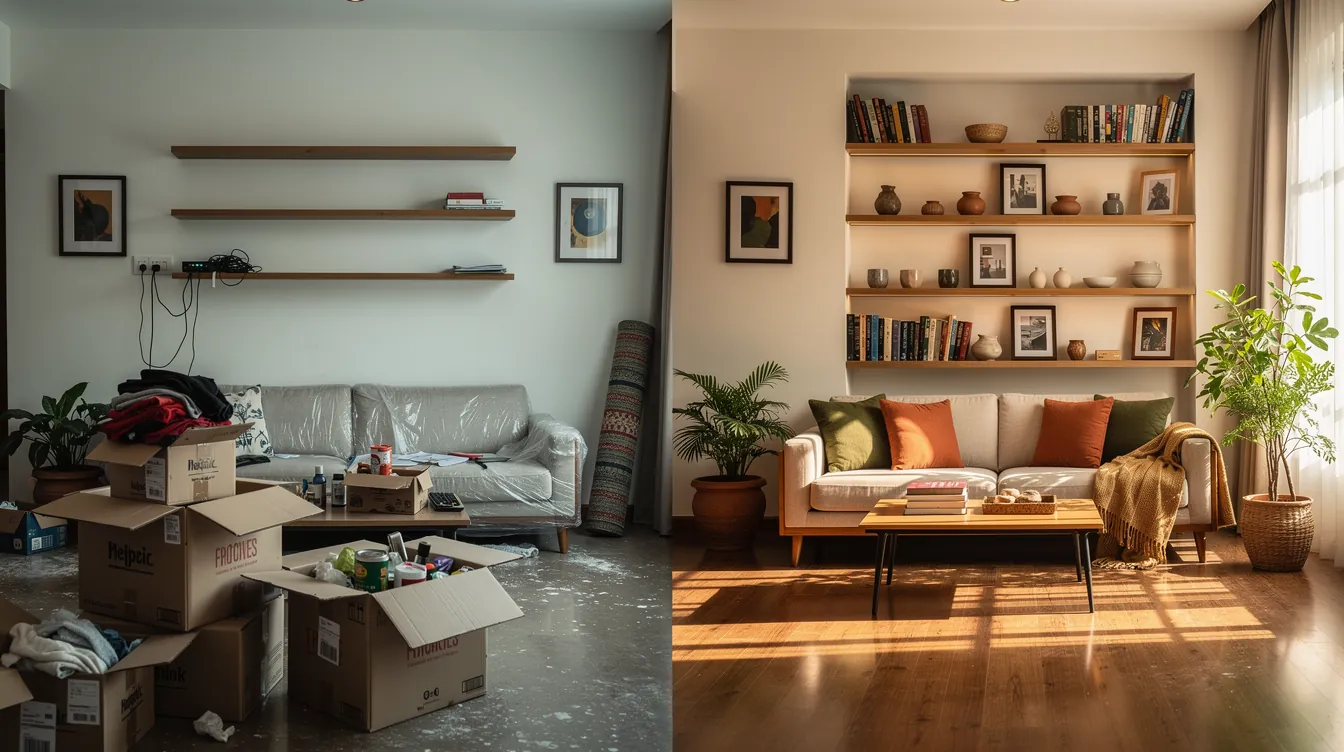
Learn the professional approach to decluttering — how to sort, purge, and prepare your home before organising. The essential first step for any home transformation.
Kitchen Organization
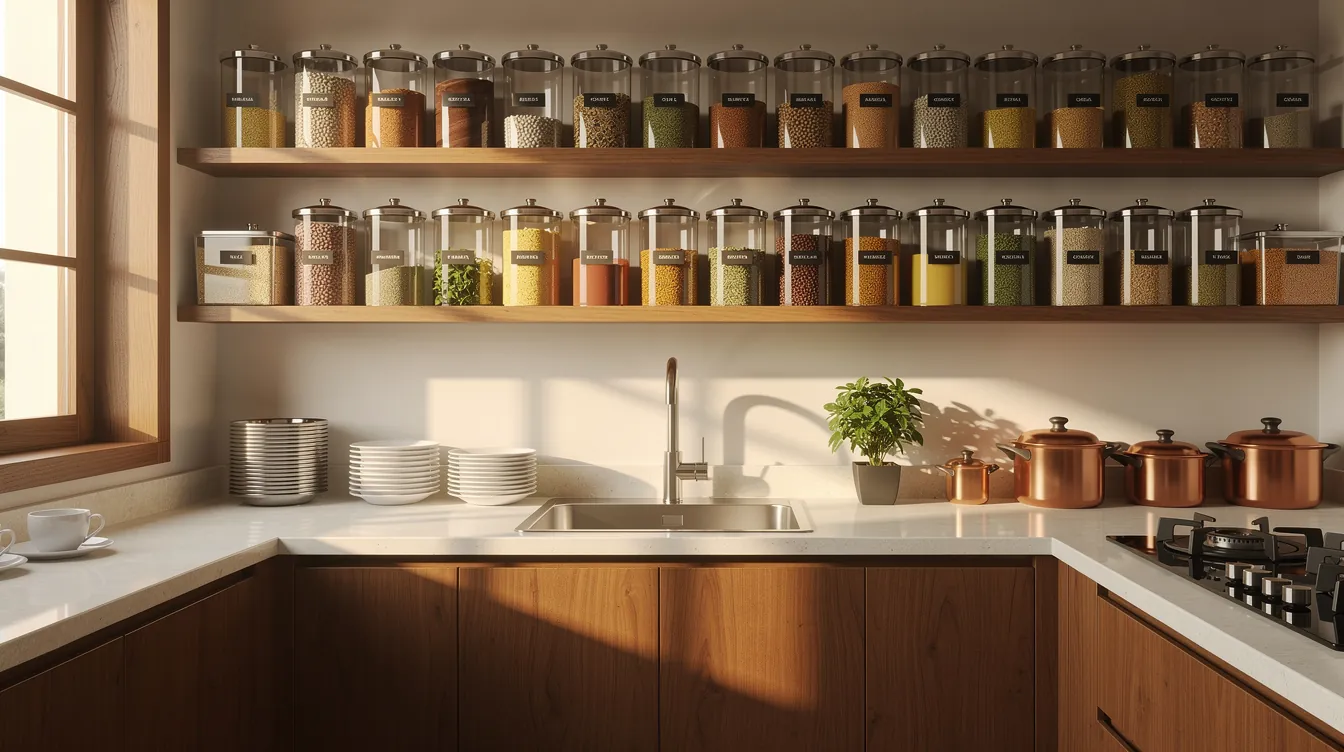
A dedicated guide to kitchen organisation covering pantry setup, cabinet layouts, spice storage systems, and how to create a kitchen that works for Indian cooking.
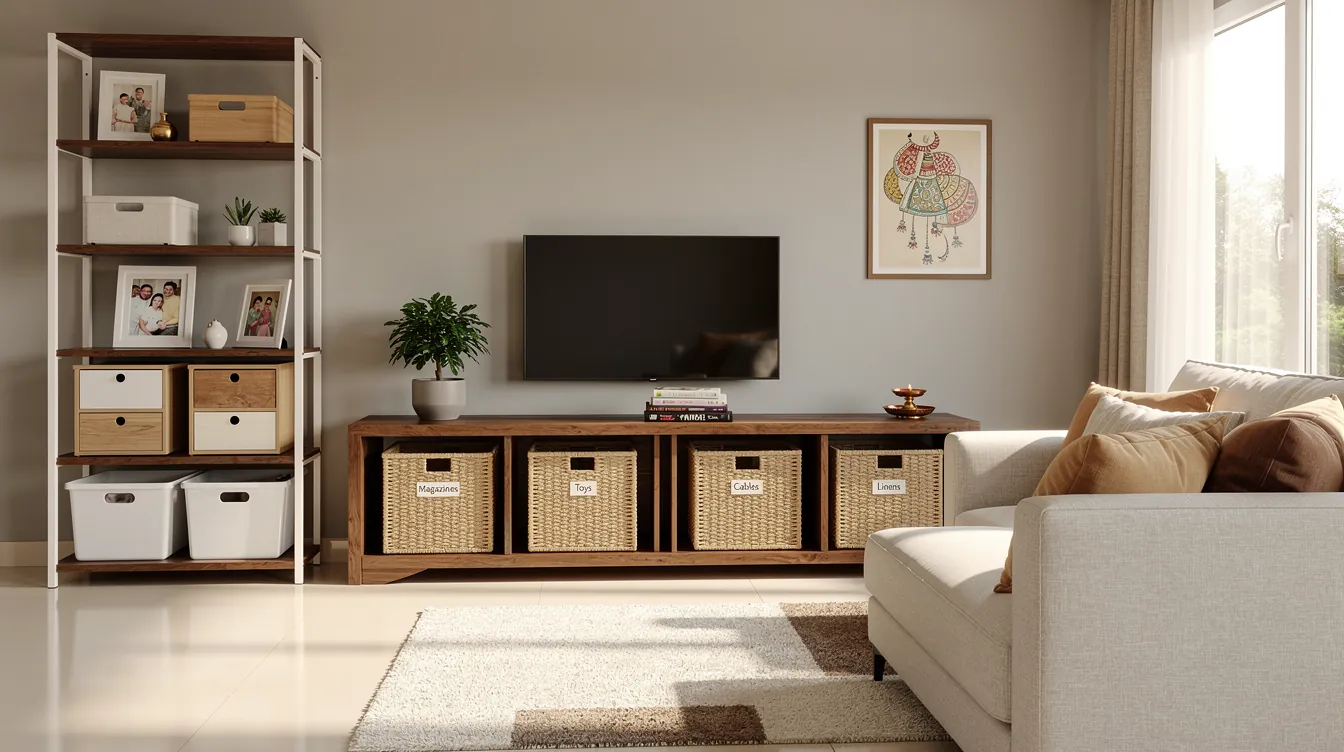
Home Organization Products
A curated roundup of the best organisers, bins, dividers, and storage solutions — plus how to choose the right products for each room in your home.
Explore In-Depth Guides
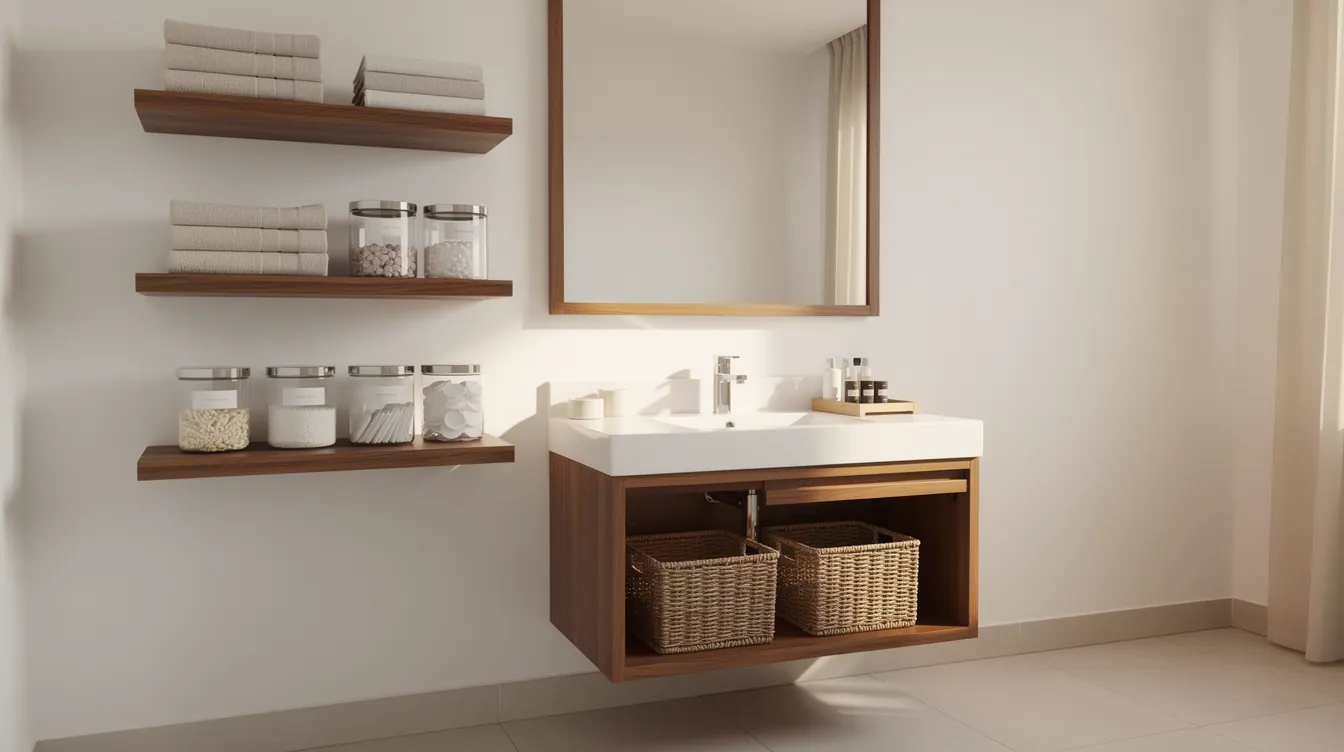
Complete Guide to Bathroom Organization
Expert ideas, storage solutions, and maintenance systems to transform your bathroom — covering every size from compact powder rooms to shared family bathrooms.
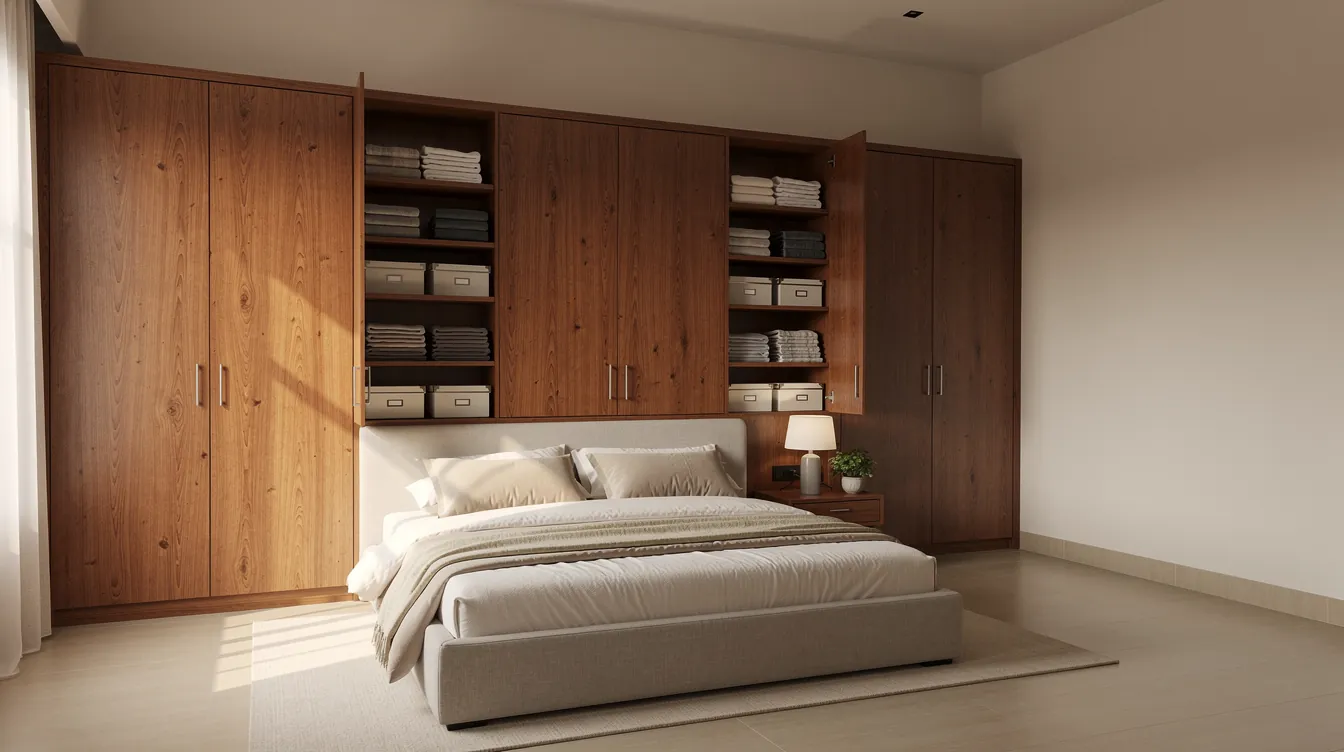
Bedroom Storage Cabinets Guide
A professional organiser's guide to choosing, organising, and styling bedroom storage cabinets for maximum space efficiency and a calm, restful retreat.
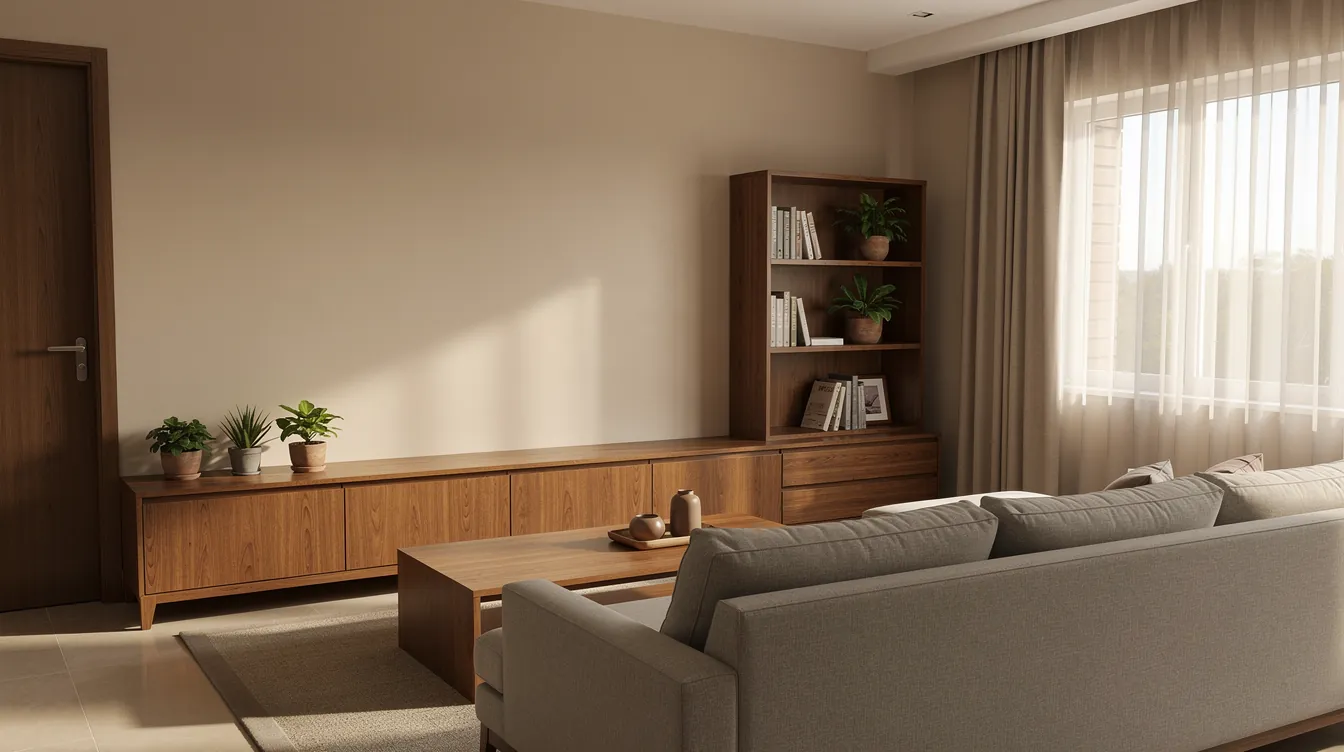
How to Organize Your Living Room
Create a calm, functional living space with expert strategies for decluttering, furniture arrangement, and storage solutions that work for real-life use.
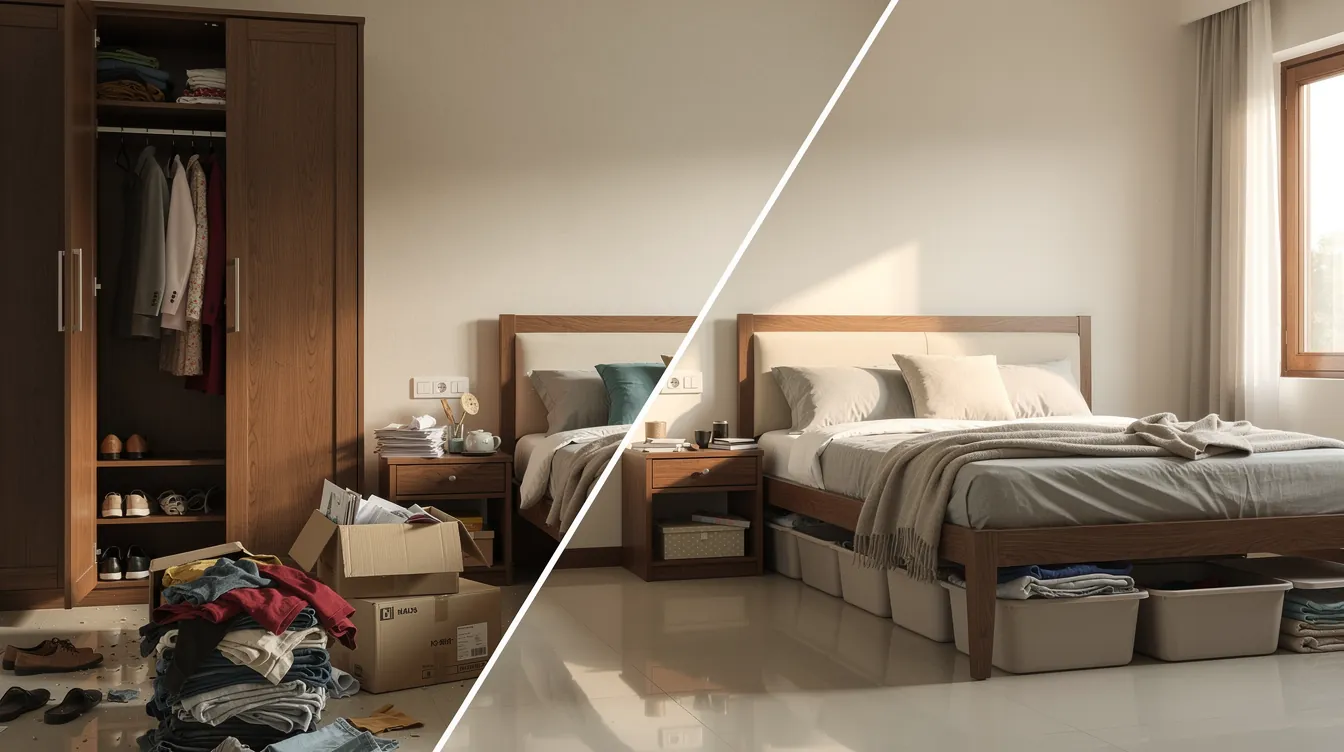
Universal Room Organization Principles
Ten expert-backed tips that work in any space — learn the foundational principles professional organisers use to tackle any room.
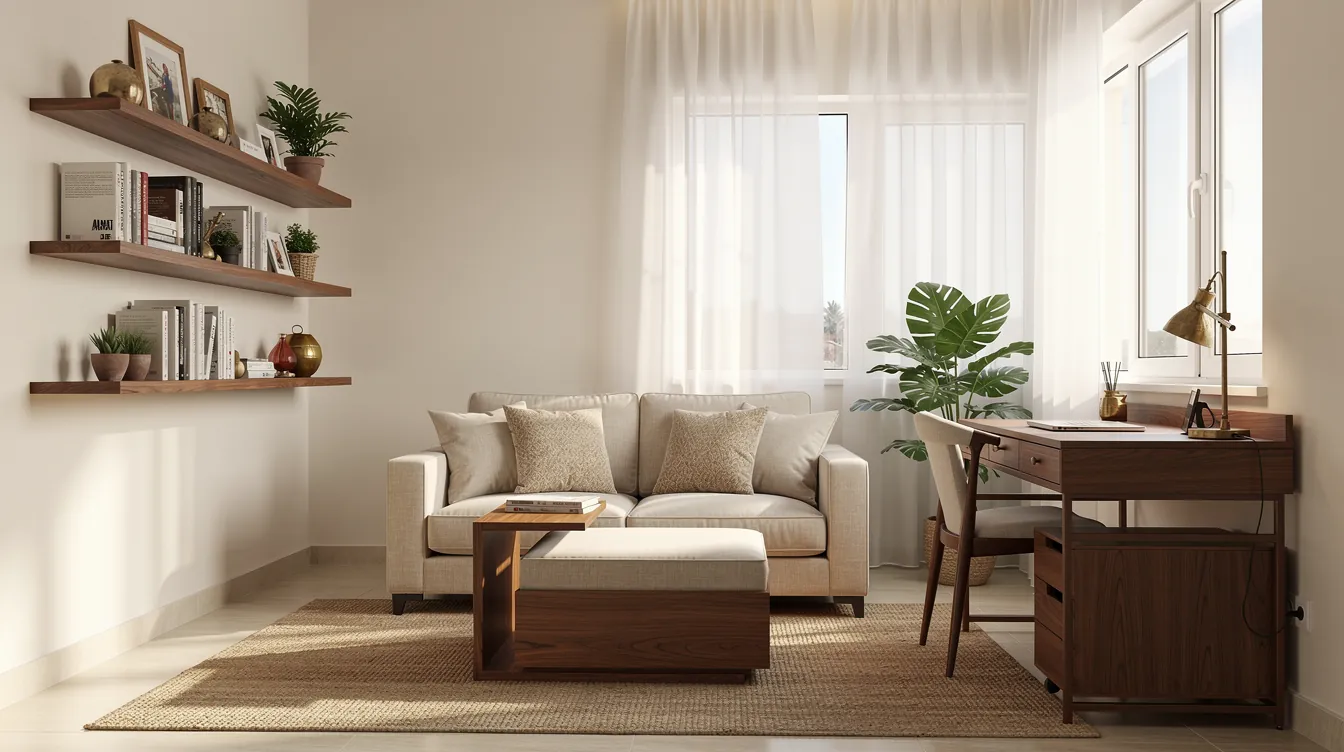
Small Space Organization for Bangalore Apartments
Expert tips to maximise every square foot in compact urban homes — from wardrobe and kitchen storage to furniture hacks and renter-friendly solutions.
Need a Professional Organiser? We're Here to Help.
Whether you want a single wardrobe organised or your entire Bangalore home transformed, Tidy Blueprints brings expertise, empathy, and systems that last. Book a free online consultation today — no obligation, just a plan.