Bedroom Storage Cabinets: Types, Ideas & Organization
Expert tips for choosing, organizing, and styling bedroom storage cabinets to maximize space, reduce clutter, and create a calm retreat.
Jump to section
Why Bedroom Storage Matters: Sleep, Organization & Well-Being
Your bedroom isn't just a place to store clothes and belongings—it's your personal sanctuary, designed for rest and rejuvenation. Yet a cluttered bedroom works against that purpose. Studies confirm that organized bedrooms directly improve sleep quality, reduce stress, and boost productivity. Over 42% of homeowners now prioritize organized living spaces, recognizing that storage solutions do more than hold items; they create calm, breathable environments where you can truly relax.
When your bedroom lacks proper storage, everyday items migrate to visible surfaces—the nightstand becomes a catch-all, the floor fills with piles, the closet overflows. This visual chaos triggers mental fatigue and makes it harder to unwind at day's end. A well-organized bedroom storage system addresses this by giving every item a dedicated place, freeing your mind and your space.
The Link Between Organization and Sleep Quality
Research from interior design experts and wellness researchers shows that people in organized bedrooms report better sleep, less anxiety about "where things are," and easier morning routines. Tidy Blueprints' approach begins with this principle: storage isn't about accumulation; it's about creating space for rest.
How Clutter Impacts Mental Health and Productivity
Clutter activates your brain's threat-detection systems. Psychologically, visible disorder signals to your mind that tasks remain undone, creating a subtle but persistent sense of stress. When items are organized and out of sight, your cognitive load decreases, freeing mental energy for focus, creativity, and relaxation.
Types of Bedroom Storage Cabinets & When to Use Each
Before choosing a cabinet, you need to understand your options. Bedroom storage cabinets aren't one-size-fits-all; each type serves different needs and space constraints.
Wardrobe Cabinets vs. Multi-Purpose Cabinets: Key Differences
Wardrobe Cabinets are designed primarily for clothing storage, with hanging rods, shelves, and drawers optimized for hangers and folded garments. They're ideal for bedrooms where clothing is the dominant storage need.
Multi-Purpose Cabinets combine hanging space with shelving, drawers, and cubbies, making them versatile for clothes, accessories, linens, documents, and seasonal items. They work well for bedrooms serving dual purposes (guest rooms, shared spaces, small apartments).
Built-In vs. Freestanding: Pros and Cons
Built-In Cabinets are custom-fitted to your bedroom walls, utilizing every inch of vertical space. They feel seamlessly integrated and create a streamlined aesthetic. They also tend to maximize storage per square foot. However, built-ins require professional installation and are difficult to relocate if you move.
Freestanding Cabinets offer flexibility—you can reposition them, take them with you, and install them yourself. They're also typically more budget-friendly than custom built-ins. The trade-off: they may not fit as efficiently into awkward spaces or take up more floor space.
Cabinet Materials: Wood, Engineered Wood, Plastic, and Metal
Solid Wood cabinets are durable, look premium, and age beautifully. They're ideal for long-term investment but come at a higher price point.
Engineered Wood (MDF, plywood) offers a good balance—affordable, reasonably durable, and available in many finishes. It's the most popular choice for contemporary bedroom storage.
Metal Cabinets (steel, aluminum) are lightweight, rust-resistant (when galvanized), and industrial-chic in aesthetic. They're great for modern or minimalist bedrooms and small spaces.
Plastic/Composite Cabinets are the most budget-friendly and moisture-resistant, making them ideal for humid climates like Bangalore. They're lightweight and easy to clean, though they may feel less premium.
Glass-Door vs. Solid-Door Cabinets: Aesthetics and Function
Glass-Door Cabinets display their contents, adding visual interest and making it easy to locate items at a glance. They're ideal for storing attractive items like folded linens, books, or curated collections. However, they require interior organization to look good.
Solid-Door Cabinets hide clutter and maintain a clean, minimalist aesthetic. They're ideal for items you don't want visible and work well in smaller bedrooms where visual simplicity feels more spacious.
7 Common Bedroom Storage Mistakes (and How to Fix Them)
Most bedroom storage problems don't stem from choosing the wrong cabinet—they stem from how we use it. Here are the most common mistakes professional organizers see, and how to avoid them.
Mistake #1: Ignoring Vertical Space (and How to Maximize It)
The Problem: Most people fill floor space first, leaving tall walls empty. This is the single biggest waste in small bedrooms.
The Fix: Invest in tall, floor-to-ceiling cabinets or wall-mounted shelving. Vertical storage multiplies your capacity without eating floor space. Floating shelves above dressers, tall wardrobes in corner spaces, and wall-mounted cabinets are all professional-organizer go-tos. Vertical space maximization is the #1 strategy for small bedroom storage, increasing usable capacity by 200% or more.
Mistake #2: Oversizing Your Cabinet Without Decluttering First
The Problem: People often buy bigger storage hoping it will "solve" clutter. Instead, they end up with a larger cabinet filled with the same disorganized mess.
The Fix: Before purchasing or organizing any cabinet, declutter ruthlessly. Ask: Do I wear this? Do I use this? Does this fit my current life? Remove items that don't serve you. A smaller, organized cabinet beats a huge, chaotic one every time. This principle is the cornerstone of the Tidy Blueprints framework.
Mistake #3: Neglecting Hidden Storage Areas (Under-Bed, Behind-Doors)
The Problem: People focus on visible cabinets and forget about under-bed space, behind-door pockets, and drawer dividers—easy wins for hidden storage.
The Fix: Maximize every corner. Use flat under-bed storage containers for seasonal items or linens. Hang over-door organizers for accessories, jewelry, or scarves. These secondary storage layers add capacity without visual clutter. (Feng Shui note: reserve under-bed storage for soft, seasonal items only—avoid storing sharp objects or exercise equipment underneath.)
Mistake #4: Forgetting to Measure Before Purchasing
The Problem: "It looked perfect in the store, but it doesn't fit through the door!" This is surprisingly common and costly.
The Fix: Measure doorways, hallways, ceiling height, and wall width before shopping. Account for clearance needed to open drawers and doors. Measure twice; buy once. This simple step prevents returns, frustration, and wasted time.
Mistake #5: Placing Cabinets in Poor Lighting or Traffic Flow
The Problem: A beautiful cabinet placed in a dark corner or directly in your path becomes an eyesore and a navigation hazard.
The Fix: Position cabinets where natural or artificial light highlights them, and ensure they don't block movement through the room. A well-lit, accessible cabinet becomes a focal point; a poorly placed one creates tension every time you walk past it.
Mistake #6: Using Storage for Things You Don't Actually Need
The Problem: Cabinets fill up with "just in case" items, expired products, or things you're keeping "for sentimental reasons" but never use.
The Fix: Be honest about what deserves storage space in your bedroom. Your bedroom storage should prioritize items you use daily or seasonally—clothes, linens, accessories, documents. Everything else belongs in a hallway closet, basement, or garage. Bedroom space is premium; use it wisely.
Mistake #7: Buying Mismatched Storage (Chaos Over Calm)
The Problem: Mixing styles, colors, and finishes creates visual noise that undermines the "calm" you're trying to build.
The Fix: Choose cabinets that coordinate with your bedroom aesthetic. This doesn't mean everything must match exactly, but aim for cohesion in finish (matte vs. glossy), color palette, and style (modern, rustic, minimalist). A coordinated storage system feels intentional and calming.
A Professional Organization Framework for Bedroom Storage
Don't just buy a cabinet and hope for the best. Professional organizers follow a proven methodology—one that Tidy Blueprints applies to every project. Here's the framework you can use to organize your bedroom storage like a pro.
Step 1: Declutter Your Bedroom (Start Before You Buy)
Remove everything that doesn't belong: expired items, duplicates, things that don't fit, broken objects, and sentimental clutter you've been holding onto "just in case." A common guideline from professional organizers: if you haven't used it in a year, you don't need it in your active storage. Be ruthless. This step shapes everything that follows.
Step 2: Categorize What Stays (Wardrobe, Linens, Accessories, Documents)
Group remaining items by category:
- Wardrobe: Daily wear, work clothes, seasonal items, special occasion outfits
- Linens: Bedsheets, pillowcases, blankets, towels
- Accessories: Jewelry, scarves, belts, bags, hats
- Documents: Important papers, certificates, warranties
- Other: Books, hobby items, personal collections
This categorization reveals volume and helps you allocate cabinet space proportionally.
Step 3: Measure Your Space (Dimensions, Ceiling Height, Door Swing)
Measure twice, three times if needed:
- Wall width, height, and depth (note ceiling angles or obstacles)
- Doorway dimensions (for cabinet fit)
- Door swing radius (will the cabinet door clear the bed, dresser, etc.?)
- Natural light sources (to inform cabinet placement)
Precise measurements prevent costly mistakes.
Step 4: Plan Your Storage Layout (Flow, Access, Aesthetics)
Sketch your bedroom and note cabinet placement. Consider daily routines: Do you dress from your wardrobe first thing, or later in the day? Are accessories stored near your mirror or inside the wardrobe? Plan storage to match your actual habits, not an idealized version of yourself.
Step 5: Select Cabinet Types (Based on What You Decluttered, Not Wishful Thinking)
Now you know your volume and categories. Choose cabinets that fit those needs, not abstract desires. If you decluttered down to one season's worth of clothes, you don't need a triple wardrobe. Oversizing is the root of many storage failures.
Step 6: Organize the Interior (Folding, Hanging, Shelving Systems)
Inside your cabinet:
- Hanging space: Reserve for items that wrinkle (dresses, blazers, trousers). Organize by color or category.
- Shelving: Fold items neatly and use dividers or small baskets to prevent avalanches. Professional organizers recommend the "8-minute rule"—spend 8 minutes daily putting items back in place.
- Drawers: Use drawer dividers for accessories, undergarments, or seasonal items. Label each section.
- Small items: Use small trays or baskets for jewelry, scarves, belts. Clear containers help you see what's inside.
The golden rule: organize around your daily routine. If you reach for your makeup every morning, store it by your mirror. If you fold laundry in a specific way, design your shelves to support that method.
Step 7: Style and Maintain (Labels, Consistent Aesthetic, Ongoing Care)
Once organized, maintain it:
- Label everything. Visual labels remind you where items belong and speed up putting things away.
- Color-code if it helps (all winter wear in one section, all work clothes in another).
- Do a 5-minute daily reset. Before bed, return out-of-place items to their homes.
- Seasonal refresh. Every 3-4 months, remove seasonal items, evaluate what you actually wore, and adjust next season's storage.
A well-maintained cabinet stays organized; a neglected one devolves into chaos within weeks.
Bedroom Storage Styles & Design Trends for 2026
Storage cabinets aren't just functional—they're design statements. Here's what's trending in 2026 and why.
Built-In Wardrobes: The Smart Choice for Modern Bedrooms
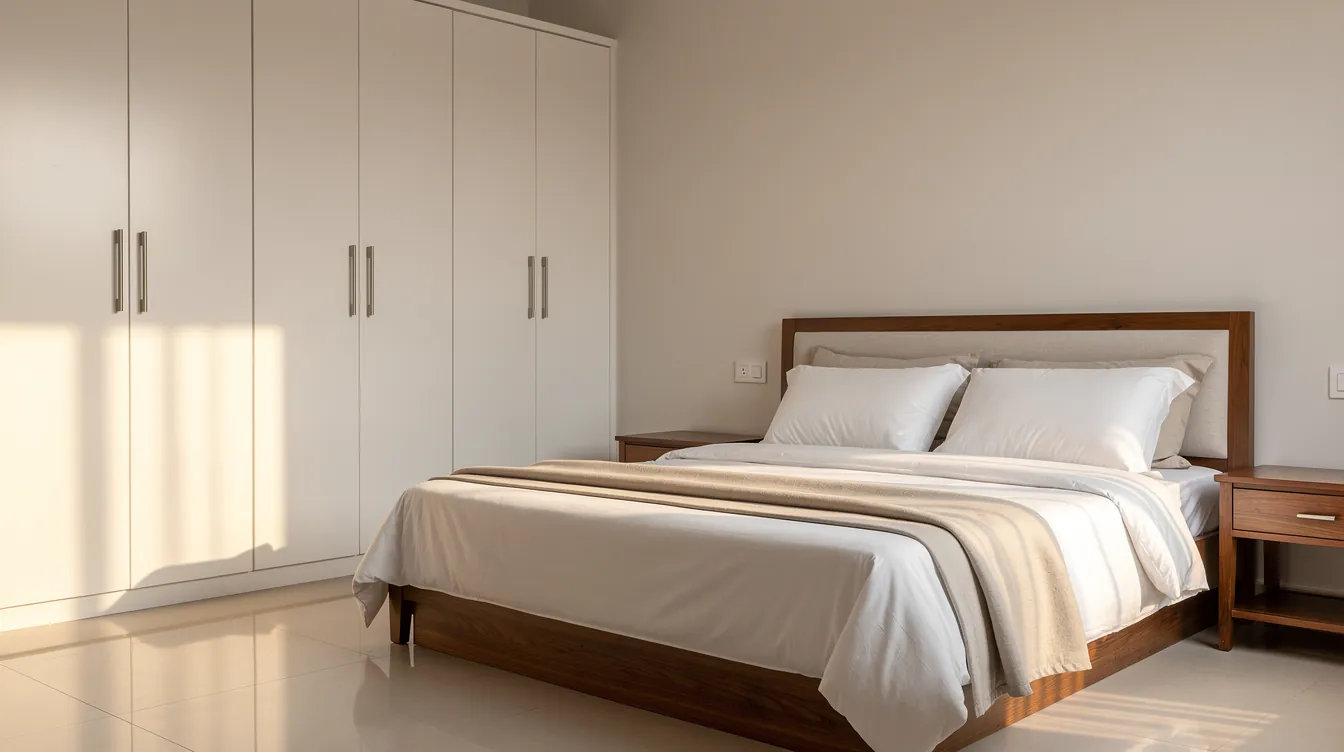
Built-in wardrobes are becoming the gold standard for smart, space-efficient design. Rather than a standalone cabinet, floor-to-ceiling wardrobes with clean paneling keep rooms feeling streamlined while handling serious storage needs. The 2026 trend emphasizes minimalist design with subtle texture details—think woven cane, rope-beaded trim, and sculptural handles.
Benefit: Built-ins feel custom and integrated, elevating your entire bedroom aesthetic while maximizing every inch of wall space.
Double-Sided Storage Beds: Maximize Space with Headboard Storage
Designers are reimagining bed frames themselves. Double-sided bed frames with integrated storage function as both headboard and storage unit, serving two purposes in one piece. This trend is ideal for small or dual-purpose bedrooms where floor space is precious.
Benefit: Smart, space-saving design that blurs the line between furniture and storage.
Flexible Furniture Alternatives: Armoires, Dressers, and Sideboards
Not everyone wants or can install built-in cabinets. Modern armoires and oversized dressers are experiencing a resurgence—they offer flexibility and can move with you if you relocate. 2026 armoires feature clean lines, mixed materials (wood + metal, wood + glass), and contemporary color palettes (warm neutrals, sage, slate).
Benefit: All the style of built-ins with the flexibility of freestanding furniture.
Cabinet Materials & Durability: Making an Informed Choice
Choosing cabinet materials affects both longevity and maintenance. Here's what you need to know.
Solid Wood vs. Engineered Wood: Longevity and Maintenance
Solid Wood (teak, walnut, oak): Pros: Durable (lasts 20+ years), can be refinished, beautiful aging patina. Cons: Expensive, requires periodic oiling or staining, sensitive to humidity.
Engineered Wood (MDF, plywood): Pros: Affordable, consistent finish, available in many styles. Cons: Can sag under heavy weight, susceptible to moisture damage, lifespan 10-15 years. However, if properly sealed and maintained, engineered wood performs well in dry conditions.
For Bangalore's humid climate, sealed engineered wood or moisture-resistant composite materials are smart choices.
Plastic and Metal Cabinets: Benefits for Small Spaces
Metal (steel, aluminum): Lightweight, weather-resistant, industrial aesthetic. Great for modern bedrooms or humid climates. Low maintenance. Trade-off: can feel cold or commercial without soft furnishings.
Plastic/Composite: Extremely moisture-resistant (ideal for Bangalore), lightweight, affordable. Easy to clean. Trade-off: less premium feel and lower weight capacity than wood or metal.
Care and Maintenance Tips to Extend Cabinet Life
- Wood: Dust regularly, avoid direct sunlight, maintain consistent humidity, oil/stain every 2-3 years.
- Engineered Wood: Wipe spills immediately, avoid moisture, use coasters under glasses, avoid placing near heat sources.
- Metal: Dust to prevent rust, wipe with dry cloth, apply protective coating if exposed to humidity.
- Plastic/Composite: Easy care—wipe clean with damp cloth, dry immediately, avoid abrasive cleaners.
Budget-Friendly Options Without Sacrificing Quality
You don't need solid wood to achieve a beautiful, durable bedroom. Quality engineered wood cabinets with proper sealing, metal cabinets with a matte finish, or composite cabinets with smart design choices all provide value and longevity. The key: invest in quality finishes and installation, not necessarily premium materials.
Frequently Asked Questions About Bedroom Storage Cabinets
How Much Storage Do I Actually Need?
Allocate storage for one season's worth of actively worn clothes, plus linens and off-season items in secondary storage. Most people need 40-60% less space than they think. Start by decluttering—this reveals your true storage needs.
Should I Buy Before Decluttering, or After?
Always declutter first. Buying storage before knowing your volume leads to oversized cabinets filled with clutter. Declutter, measure what remains, then shop for the right size. This saves money and prevents storage mistakes.
What's the Best Cabinet Height for a Bedroom?
Floor-to-ceiling cabinets maximize vertical space, but full-height can feel imposing. A hybrid approach works well: floor-to-6-feet for primary storage, open shelving or wall space above for visual breathing room. Consider your ceiling height.
Can I Modify or Customize a Cabinet After Purchase?
Freestanding cabinets are easy to modify—add shelving, drawer dividers, or lighting. Built-ins are harder to alter without professional help. Choose modular systems if you anticipate future changes.
How Do I Style a Bedroom Cabinet to Match My Décor?
Match the cabinet finish (matte, glossy, natural) and color to your bedroom palette. Add styling elements like baskets inside, hardware that complements your fixtures, and decorative items on top. Consistency is key to cohesion.
Are Built-In Cabinets Always Better Than Freestanding?
Built-ins maximize space and feel integrated, but they're permanent and expensive. Freestanding cabinets offer flexibility and affordability. The best choice depends on your budget, mobility plans, and available space.
Key Takeaways: When to Call a Professional Organizer
Bedroom storage is personal—everyone's needs differ. Professional guidance can make all the difference in choosing and organizing your storage systems.
Wardrobe Organization Systems
Your clothes deserve a thoughtful system. Professional wardrobe organizers assess your lifestyle, help you declutter intentionally, and design custom folding and hanging systems that work with how you actually dress.
Explore Wardrobe OrganizationKids Bedroom Storage Solutions
Kids bedrooms demand flexible, accessible storage that grows with them. Professionals help design systems that make cleanup easy and teach organizational habits early.
Kids Room OrganizationSpace Planning & Cabinet Selection
Overwhelmed by choices? Professional organizers measure your space, analyze your needs, and recommend cabinet types and placements optimized for your bedroom.
Get Expert GuidanceOngoing Organization Support
Organization is a skill. Many clients benefit from professional support in implementation, troubleshooting, and maintaining systems long-term.
Schedule a ConsultationReady to Transform Your Bedroom Storage?
Bedroom organization is a journey, and you don't have to do it alone. Whether you're choosing your first storage cabinet or redesigning your entire bedroom, Tidy Blueprints' professional organizers in Bangalore are here to help. We offer a free online consultation to discuss your space, understand your needs, and design a personalized organization plan.