Kitchen Organiser Guide: Zones, Methods & Indian Kitchen Tips
Learn zone-based methods, Indian kitchen solutions, and expert strategies to transform your kitchen — whether you DIY or work with a professional organiser in Bangalore.
Jump to section
Why Kitchen Organisation Matters
A disorganised kitchen isn't just frustrating — it costs you time, money, and peace of mind every single day. According to RolloutDrawers, the average person wastes 10+ minutes per day searching through cluttered cabinets and drawers. That adds up to over 60 hours a year — nearly three full days — spent hunting for lids, spices, and utensils that should be right where you need them.
The demand for kitchen organisation is massive and growing. But here's what most people miss: buying organisers is not the same as organising your kitchen.
The True Cost of a Disorganised Kitchen
When your kitchen is cluttered, the costs pile up in ways you might not notice:
- Wasted time: 10+ minutes daily searching through cabinets = 60+ hours lost every year.
- Food waste: Poor visibility means ingredients expire before you remember they exist. An average family loses ₹4,000–₹8,000 annually to spoiled dry goods and forgotten pantry items.
- Duplicate purchases: You buy another packet of jeera because you can't find the one you already have — buried behind three mismatched containers.
- Daily friction: Cooking feels harder than it should. You skip meals at home, order in more often, and lose the joy of using your own kitchen.
How Professional Organisation Differs from Buying Products
Here's the insight that changes everything: organisers solve problems; products fill space.
Most people buy containers first and then try to arrange things inside them — which is why DIY organisation often fails within weeks. A professional organiser works in reverse: declutter first, design a system that matches how you actually cook, then recommend only the products that fit the system. The result is a kitchen that stays organised because it works with your habits, not against them.
This is what sets Tidy Blueprints apart from the e-commerce stores that dominate search results for "kitchen organiser." We don't sell organisers — we design and implement organisation systems tailored to your kitchen, your cooking style, and your life.
The ROI of an Organised Kitchen
Think of kitchen organisation as an investment that pays back daily:
- 60+ hours saved per year — time you can spend cooking, with family, or doing anything other than searching through cabinets.
- ₹4,000–₹8,000 saved annually on reduced food waste.
- Fewer duplicate purchases — you know exactly what you have and where it is.
- Easier cleaning — clear countertops and organised cabinets take half the time to wipe down.
- Better cooking — when your masala dabba is accessible and your vessels are stacked by size, cooking becomes faster and more enjoyable.
The kitchen is the most-used room in most Indian homes. Investing in its organisation is investing in how you live every day.
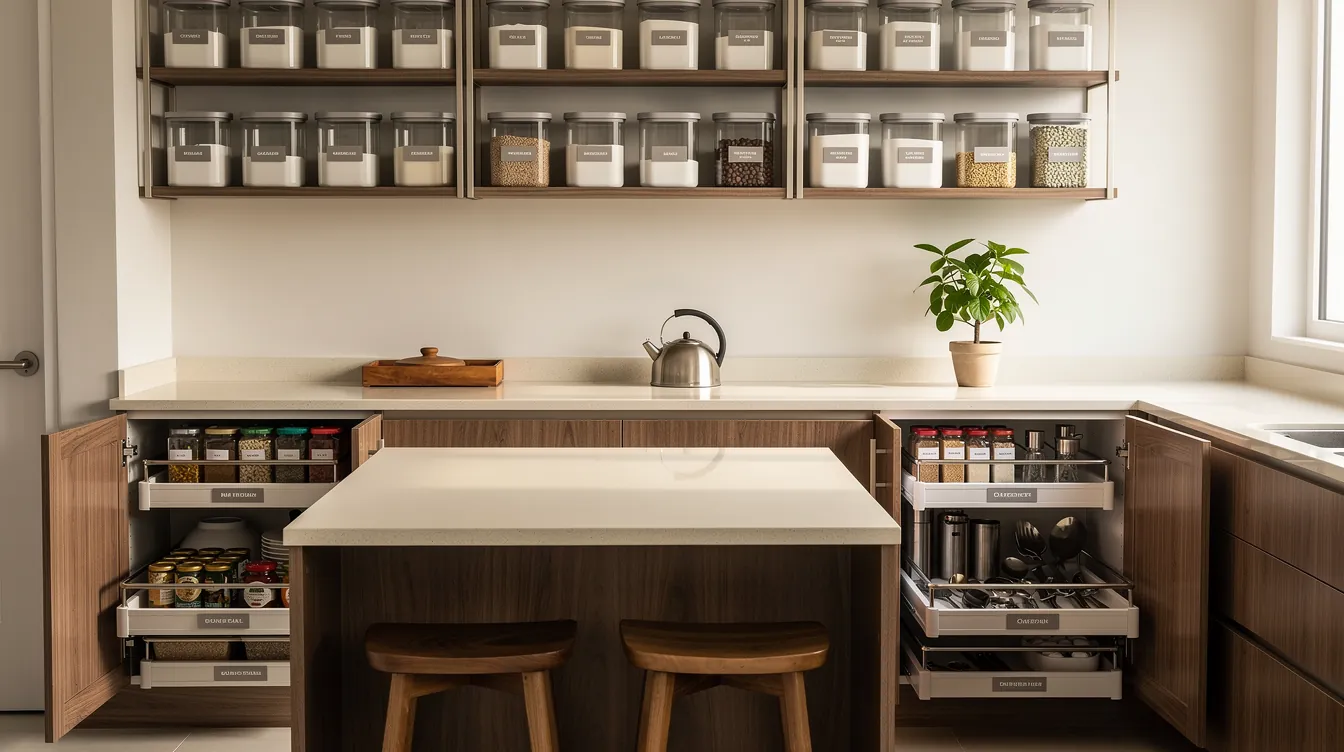
Kitchen Organisation by Zone — A Room-by-Room Approach
The most effective way to organise a kitchen isn't to tackle everything at once — it's to think in zones. A zone is an area dedicated to a specific activity: prepping, cooking, cleaning, or storing. When every item lives in the zone where it's actually used, your kitchen flows naturally.
This zone-based method builds on the classic kitchen work triangle — the design principle developed in the 1940s that positions the sink, stove, and refrigerator for efficient movement. Modern kitchens (especially in Indian homes with multiple cooks and complex meal preparation) benefit from expanding this into dedicated functional zones.
Countertop Organisation — Keeping Surfaces Clear and Functional
Your counters are prime real estate, and the golden rule is simple: nothing stays on the counter that isn't used daily.
- Keep only daily-use appliances accessible — mixer-grinder, kettle, toaster. Everything else goes into cabinets.
- Use tiered stands and risers to create vertical layers on limited counter space. A two-tier stand doubles your usable area.
- Group items by activity: tea and coffee supplies together near the kettle; spices and oils near the stove.
- Consider an "appliance garage" — a designated cabinet with accessible shelves for frequently used but visually cluttering appliances.
- Clear counters make cleaning faster and cooking more enjoyable. The psychological benefit is real: a clear surface invites you to cook.
Cabinet and Shelf Organisation — Maximising Vertical Space
Cabinets are the most underutilised space in most kitchens. The fix isn't more cabinets — it's better use of the ones you have.
- Shelf risers are the single highest-impact purchase. A simple wire riser doubles the vertical storage of any shelf — perfect for stacking plates, bowls, or small containers.
- Square containers over round ones — square containers use approximately 25% more shelf space because they stack without wasted gaps (InstaCuppa, 2026).
- Frequency-based placement: daily-use items at eye level, weekly-use items one shelf down, rarely-used items on the highest and lowest shelves.
- Stackable, same-brand container sets maximise efficiency. Mismatched containers create dead space and visual chaos.
- For deep cabinets, use pull-out drawers or lazy susans so nothing gets lost at the back.
Drawer Organisation — Dividers, Trays, and Custom Inserts
The "everything visible at a glance" principle is the test of good drawer organisation. When you open a drawer, you should see every item in it without moving anything.
- Cutlery trays with adjustable compartments let you customise for your specific utensils — Indian kitchens need wider slots for karchis, chammach, and jharas that don't fit standard Western dividers.
- Pegboard-style drawer inserts (like the IKEA UPPDATERA system) let you reconfigure compartments as your needs change.
- Group by function, not by category: "tea-making supplies" (strainer, teaspoon, tea bags) in one compartment beats separating spoons from strainers.
- Drawer liners prevent items from sliding and make cleaning easier.
Under-Sink Organisation — Taming the Cleaning Supply Chaos
The under-sink cabinet is notoriously difficult because of plumbing pipes. But it's also the perfect zone for cleaning supplies — close to water, out of sight.
- Pull-out organisers and tiered shelves work around plumbing obstacles.
- Door-mounted racks hold scrubbers, brushes, and small bottles without taking cabinet floor space.
- Separate by frequency: daily cleaners (dish soap, scrubber) in front, weekly cleaners further back, occasional supplies (drain cleaner, spare sponges) in the deepest position.
- Use small bins or baskets to keep categories contained — nothing rolls around loose.
Fridge and Pantry Organisation — Food Storage That Works
Food storage is where organisation most directly saves money. When you can see what you have, you use it before it expires.
- Airtight containers for all dry goods — flour, rice, dal, sugar, spices. This prevents pantry pests (a common monsoon problem in Bangalore) and keeps ingredients fresh.
- Fridge zones: dairy on upper shelves (most consistent temperature), produce in crisper drawers, leftovers at eye level so they're eaten first.
- FIFO rotation — First In, First Out. New stock goes behind old stock so older items get used first.
- Label everything. Masking tape and a marker cost ₹50 and prevent the "is this atta or maida?" guessing game forever.
- BPA-free plastic for fridge storage; glass or steel for pantry — glass lets you see contents at a glance, steel is durable and won't stain.
Kitchen Organisation for Indian Homes
Indian kitchens are different. They handle multiple elaborate meals a day, accommodate a wide range of vessels and spices, and face challenges — monsoon humidity, limited apartment space, large joint-family cooking volumes — that Western organisation advice simply doesn't address. This section is for the real Indian kitchen.
Managing the Masala Dabba and Spice Collection
The masala dabba is the heart of the Indian kitchen. Keeping it organised means faster cooking and fresher spices.
- Daily-use spices belong near the stove — but not directly above it. Heat and steam degrade spice potency. Place the masala dabba on a counter to the side of the stove, or on a pull-out shelf in the adjacent cabinet.
- Backup spice storage goes in a cool, dark cabinet away from heat and sunlight. Transfer bulk spices into airtight glass or steel containers — plastic absorbs turmeric stains and retains odours.
- Label clearly. Names in English or your preferred language, plus the date of purchase. Ground spices lose potency after 6 months; whole spices last up to a year.
- Glass and steel over plastic for spice storage: they don't stain, don't retain odours, and are easier to clean. If you use plastic, designate specific containers for turmeric and chilli powder — they'll stain permanently.
Storing Multiple Vessels, Pressure Cookers, and Tawas
The Indian kitchen has more large-format cookware than most Western kitchens: multiple pressure cookers (2-litre, 3-litre, 5-litre), kadai in various sizes, tawas, handis, and idli steamers. Standard organisers aren't built for these.
- Stackable vessel organisers with adjustable dividers let you store pressure cookers and their lids together vertically rather than nesting them (which makes the bottom one inaccessible).
- Lid organisers — separate from the pots themselves — save enormous space. A simple file organiser repurposed as a lid rack keeps every lid visible and grab-able.
- Wall hooks for frequently used items: tawas, kadhais, and large spatulas hung on a wall-mounted rail free up cabinet space and are always within reach. This is especially valuable in smaller kitchens.
- Plan for weight: Indian vessels are heavier than their Western counterparts. Ensure shelves and organisers are rated for the load — steel and cast iron add up fast.
Monsoon-Proofing Your Kitchen Storage
Bangalore's monsoon season (June through September) brings humidity that can ruin dry goods, rust steel containers, and invite pests into your pantry. A few preventive steps make all the difference.
- Switch to glass or steel containers during humid months — they seal better than plastic and don't absorb moisture.
- Silica gel packets tucked into spice cabinets and dal containers absorb ambient moisture. Replace them monthly during peak monsoon.
- Check grains and flours weekly for signs of weevils or moisture. Discard anything questionable immediately — pests spread fast in humidity.
- Ensure pickle jars have an intact oil layer — the oil seal is what preserves pickles. Top up with fresh oil if the layer looks thin.
- Dry the sink area completely at night — standing water overnight increases kitchen humidity and attracts pests.
Small Kitchen Solutions for 1BHK and 2BHK Apartments
Bangalore's apartment kitchens are often compact — 50 to 80 square feet in many 1BHK and 2BHK units. In these spaces, every square inch counts.
- Wall-mounted everything: magnetic knife strips, hook rails for utensils, wall-mounted spice racks, pegboards for small tools. Walls are free real estate — use them aggressively.
- Over-sink drying racks add a full shelf's worth of storage above the sink without consuming any counter or cabinet space.
- Cabinet door interiors for small items: mount adhesive hooks or slim racks on the inside of cabinet doors to hold measuring spoons, small lids, or spice sachets.
- Foldable and nesting items: a foldable dish-drying rack, nesting mixing bowls, and collapsible measuring cups save space when not in use.
- Stacking is the core strategy: shelf risers inside cabinets, stackable containers, tiered corner racks — anything that builds upward rather than outward.
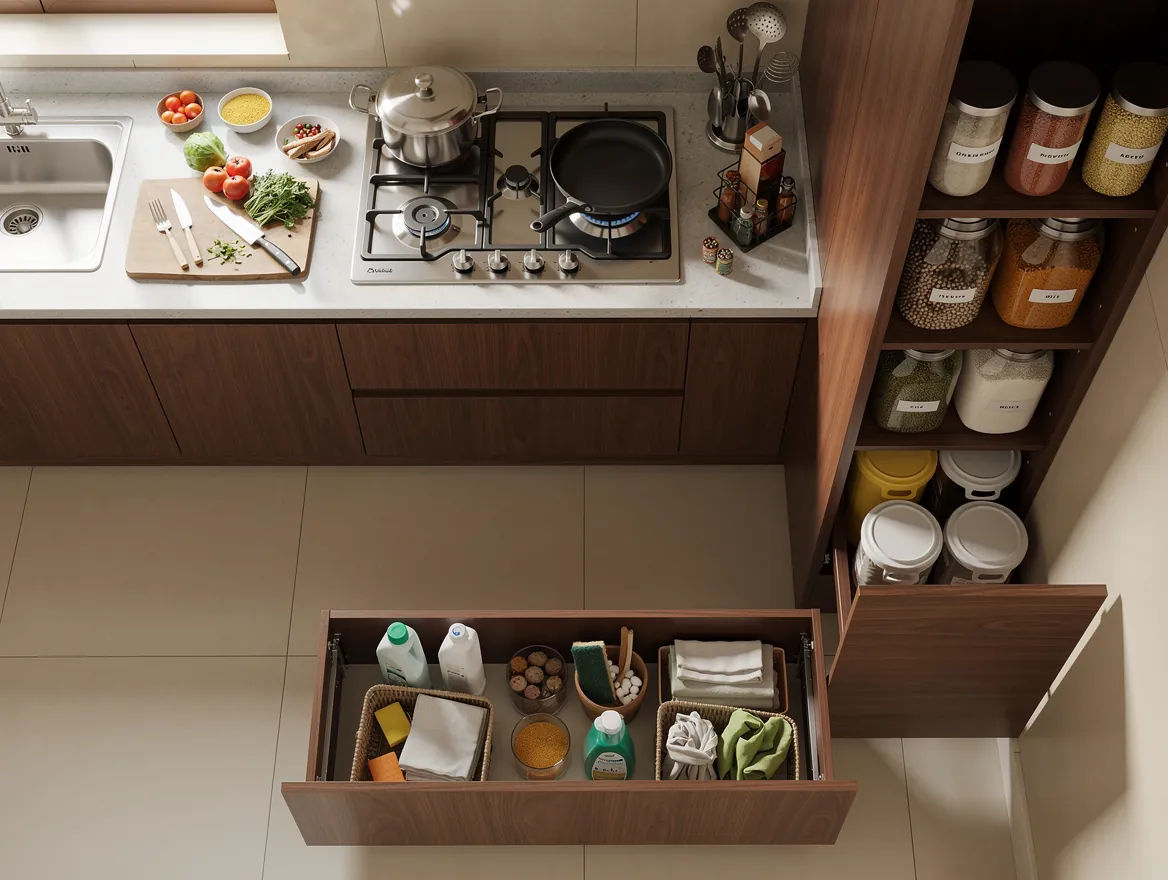
Step-by-Step Kitchen Organisation Process
Step 1 — Declutter and Purge Before You Organise
This is the step most people skip — and the reason most DIY organisation fails. Empty every cabinet and drawer completely. Sort items into three piles: keep, donate, and discard. Toss anything expired, duplicate items you never use, gadgets you haven't touched in 6+ months, and containers without matching lids. Professional organisers recommend decluttering 30-50% of kitchen items before buying a single organiser (Ultimately Organized, 2026). Only when you know what remains should you buy organisers for it.
Step 2 — Zone Your Kitchen Based on How You Actually Cook
Don't organise based on a magazine photo — organise based on how you really use your kitchen. Identify your zones: prep zone (near sink — cutting boards, knives, mixing bowls), cooking zone (near stove — pots, pans, spices, oils), cleaning zone (under sink — dish soap, scrubbers, towels), and storage zone (pantry, upper cabinets — dry goods, rarely-used appliances). Place every item in the zone where it's used. The masala dabba shouldn't live across the kitchen from the stove; the coffee supplies shouldn't be above the dishwasher.
Step 3 — Choose the Right Organisers for Each Zone
Measure your cabinets and drawers first — then shop. For cabinets: shelf risers create a second level. For drawers: adjustable dividers let you customise compartments. For under-sink: pull-out bins and door-mounted racks work around pipes. For pantry: airtight containers (square, stackable) with labels. For walls: hooks, magnetic strips, and pegboards. Material guidance: steel for durability and daily use, glass for visibility and spice storage, wood/bamboo for open shelving aesthetics, plastic for fridge only (it absorbs stains and odours near heat).
Step 4 — Implement, Label, and Adjust
Place everything in its designated zone. Label every container — masking tape and a permanent marker work perfectly and cost under ₹50. Live with the system for a week before declaring it done. Notice what feels awkward: is the spatula drawer on the wrong side of the stove? Are the daily spices too high to reach comfortably? Adjust based on real use, not theory. Adopt the 'one in, one out' rule: every new item means one old item leaves. This prevents gradual re-cluttering.
Step 5 — Maintain with Daily and Weekly Habits
The difference between a kitchen that stays organised and one that reverts to chaos is maintenance habits. Daily 10-minute routine: wipe counters, empty the sink, sweep the floor, return stray items to their zones. Weekly: check the fridge for expiring items, restock containers, wipe cabinet fronts. Monthly: deep clean one zone on rotation — this month the spice cabinet, next month under the sink. Seasonal: pre-monsoon pest-proofing (June), festival cooking prep (September-October), winter pantry reset (December).
Common Kitchen Organisation Mistakes to Avoid
Even with the best intentions, most people make the same mistakes when organising their kitchen. These aren't just minor inefficiencies — they're the reason DIY organisation often fails within weeks. Professional organisers see these patterns in nearly every kitchen they work on.
Mistake 1 — Buying Organisers Before Decluttering
This is the number one mistake, and it's the hardest to recover from. When you buy containers, shelf risers, and drawer dividers before removing what you don't need, you're not organising — you're organising clutter inside prettier boxes.
Professional organisers consistently recommend decluttering 30-50% of kitchen items before purchasing a single organiser (Ultimately Organized, 2026). The math is simple: if you have 40 items across four shelves and you declutter to 25, you need fewer organisers, less space, and the system will be easier to maintain. Buy organisers for what remains — not for what you started with.
Mistake 2 — Ignoring Vertical Space and Door Interiors
Most people only use the shelf surface area of their cabinets. That leaves two entire dimensions unused: the vertical space above each shelf's contents, and the inside of every cabinet door.
- Shelf risers instantly create a second storage level — doubling capacity without adding shelves.
- The inside of cabinet doors can hold measuring spoons, small spice racks, cleaning brushes, or lid organisers with adhesive hooks or slim racks.
- Wall-mounted rails, magnetic strips, and pegboards turn empty wall space into accessible storage for frequently used tools.
- In small kitchens, this mistake is especially costly — ignoring vertical space means living with half the storage you actually have.
Mistake 3 — Storing Items Far From Where You Use Them
Your kitchen has a natural workflow, whether you've consciously designed it or not. Storing items where they're used — not where they "fit" — is the difference between a kitchen that flows and one that fights you.
- Spices stored above the stove lose potency from heat and steam. Place them beside the stove instead, at arm's reach.
- Pots and pans stored across the kitchen from the stove mean extra steps every time you cook. They belong in the cabinet closest to the burner.
- Cleaning supplies stored under the bathroom sink instead of the kitchen mean you'll procrastinate wiping counters. Keep daily cleaners exactly where you use them.
- Martha Stewart's organising experts call this the #1 workflow mistake: "organising based on where things fit rather than where they're used" (Martha Stewart, 2025).
Mistake 4 — Using Mismatched Containers That Don't Stack
It starts innocently: you buy a set of three containers here, two more there, a different brand on sale. Six months later, your pantry shelf is a jigsaw puzzle of incompatible shapes and sizes.
- Square containers use approximately 25% more shelf space than round ones because they stack flush without gaps (InstaCuppa, 2026).
- Same-brand, same-shape sets are more expensive upfront — but they save you the cost of replacing scattered, incompatible containers within a year.
- Label every container. The 30 seconds it takes to write "atta" on masking tape prevents the daily frustration of opening three identical containers to find the right flour.
DIY vs. Professional Kitchen Organisation — Which Is Right for You?
By now, you have a solid understanding of kitchen organisation methodology, zones, and common mistakes. The next question is practical: should you do it yourself or hire a professional? The answer depends on your kitchen's complexity, your available time, and how long you want the results to last.
What a Professional Kitchen Organiser Actually Does
A common misconception: professional organisers are cleaners. They are not. A professional kitchen organiser is a systems designer who:
- Assesses your kitchen — they evaluate your layout, workflow, storage constraints, and the specific ways your household uses the space.
- Leads the decluttering process — they guide you through what to keep, donate, and discard, bringing an objective eye to items you've stopped seeing.
- Designs a custom zone system — based on how you actually cook, not a generic template. A family that cooks three elaborate meals daily needs a different system than a couple that meal-preps on weekends.
- Recommends and sources organisers — they know which products work for Indian kitchens specifically (masala dabba sizing, pressure cooker storage, monsoon-resistant materials).
- Implements the system hands-on — they place every item, label every container, and set up the workflow.
- Provides maintenance guidance — they teach you the daily and weekly habits that prevent the system from degrading.
DIY vs. Professional — Time, Cost, and Longevity
| Factor | DIY | Professional |
|---|---|---|
| Time investment | 10–20 hours of your own time (research, shopping, decluttering, implementing) | 3–6 hours of professional time; you participate in decluttering decisions |
| Materials cost | ₹1,000–₹1,500 for basic organisers (hooks, shelf risers, containers per InstaCuppa) | Included in service or sourced at your budget |
| System longevity | Often reverts within 2–4 months because the system wasn't designed for real habits | Typically lasts 1–3+ years with periodic maintenance |
| Best for | Small, simple kitchens; people who enjoy organising; tight budgets | Complex kitchens; busy professionals; kitchens where previous DIY attempts failed; post-move setup |
Note: The cost of professional kitchen organisation depends on your kitchen's size and the scope of the work. Book a free online consultation to discuss your project.
How Tidy Blueprints Approaches Kitchen Organisation
Tidy Blueprints is a professional home organising service based in Bangalore. Our kitchen organisation service follows the methodology described throughout this guide — because we believe in teaching our process, not hiding it.
- Every project starts with a free online consultation, then we visit your kitchen, understand your cooking habits, assess your space, and discuss your goals.
- Indian kitchen expertise — we understand masala storage, monsoon challenges, multiple-vessel management, and small-apartment layouts because we work in Bangalore kitchens every day.
- Hands-on implementation — we don't just advise; we do the work alongside you. The system is fully in place when we leave.
- Multi-room perspective — our experience organising wardrobes, makeup stations, kids' rooms, and entire homes means we bring cross-domain principles to your kitchen. Zone thinking, frequency-based access, and maintenance habits apply everywhere.
If your kitchen causes daily friction and previous DIY attempts haven't stuck, a professional session could be the investment that transforms how you live at home.
Kitchen Organisation Trends to Watch in 2026
Kitchen organisation is evolving fast, driven by smaller urban living spaces, sustainability preferences, and clever new products. These trends are shaping how professional organisers design systems — and they can inspire your own kitchen transformation.
Pull-Out Shelves and Tiered Racks
The dominant trend across every 2026 kitchen organisation forecast (TheCoolist, SimmerlyHome, KitchenDesignPlan) is pull-out accessibility. Deep cabinets are being retrofitted with pull-out drawers and shelves so nothing gets buried at the back.
- Pull-out shelves let you see and reach everything in a deep cabinet without crouching or moving items.
- Tiered racks inside cabinets create visible layers — spices at the back are visible over shorter items in front.
- Many pull-out solutions are retrofit-friendly — you don't need a full kitchen renovation to add them to existing cabinets.
- In Bangalore apartments where kitchen footprint is small but cabinet depth is standard, pull-outs effectively increase usable space by making the deep back area accessible.
Door-Mounted and Magnetic Storage
Cabinet door interiors and magnetic surfaces are the breakout storage surfaces of 2026. These spaces were previously wasted — now they're prime real estate.
- Slim adhesive racks mounted inside cabinet doors hold spice jars, measuring spoons, or small cleaning bottles.
- Magnetic knife strips eliminate countertop knife blocks and keep blades visible and accessible.
- Magnetic spice racks attach to the side of the refrigerator or a metal backsplash — no drilling, fully removable.
- For renters, magnetic and adhesive solutions are transformative: full organisation capability with zero permanent changes.
Sustainable and Plastic-Free Organisation
Consumer preference is shifting hard toward durable, non-toxic, and sustainable materials — and kitchen organisation is no exception.
- Bamboo drawer dividers and shelf risers are replacing plastic equivalents. Bamboo is antimicrobial, durable, and compostable at end of life.
- Glass containers are the new default for pantry storage — they're infinitely recyclable, don't stain, and let you see contents at a glance.
- Steel containers for daily-use items (spices, dry goods) offer durability that outlasts plastic by years.
- The trend aligns with broader home design shifts toward natural materials and away from single-use plastics.
- For Indian kitchens, this trend makes practical sense: glass and steel already perform better than plastic for spice storage (no staining, no odour retention) and monsoon resistance (better seals).
Frequently Asked Questions About Kitchen Organisation
How do I start organising a very cluttered kitchen?
Start small — one cabinet or drawer at a time. Empty it completely, sort into keep/donate/discard, clean the empty space, then place keepers back by frequency of use (daily at eye level, rarely-used up high). Label everything. Don't try to do the whole kitchen at once — zone by zone over several days prevents burnout.
How much does it cost to organise a kitchen in India?
DIY budget: approximately ₹1,000–₹1,500 for basic organisers — wall hooks (₹150–250), shelf risers (₹200–350), airtight containers (₹400–600), masking tape and marker (₹50). The cost of professional organisation depends on your kitchen's size and the scope of the work — [book a free online consultation](/book-an-appointment/) to discuss your project.
What are the best organisers for Indian kitchens specifically?
Steel containers for daily-use items (durable, non-staining). Glass containers for pickles, spices, and visibility. Wall hooks for tawas and kadhais. Shelf risers for stacking pressure cookers. A traditional masala dabba for daily spices. Avoid plastic near the stove — it absorbs turmeric stains, retains odours, and can warp from heat.
Can I organise my kitchen without drilling or making permanent changes?
Yes — adhesive hooks, magnetic strips, freestanding shelf risers, over-door racks, tension rods, and stackable containers all work without drilling. These renter-friendly solutions provide full organisation capability and can be removed without a trace when you move. Magnetic spice racks on the refrigerator side are especially effective in rental kitchens.
How do I keep my kitchen organised after the initial setup?
Adopt the 'one in, one out' rule — every new item means one old item leaves. Run a 10-minute daily reset: wipe counters, empty sink, return stray items to their zones. Check the fridge weekly for expiring items. Deep clean one zone monthly on rotation. Do seasonal prep: monsoon pest-proofing (June), festival cooking prep (September-October), winter pantry reset (December).
Is it worth hiring a professional organiser for a small kitchen?
It depends on complexity. If your kitchen layout causes daily friction and DIY attempts haven't stuck, a professional can solve systemic problems in 3–6 hours. Small kitchens often benefit *more* from professional help because every inch counts — a well-designed 60 sq ft kitchen can feel more functional than a poorly organised 120 sq ft one. The free online consultation helps you decide without commitment.
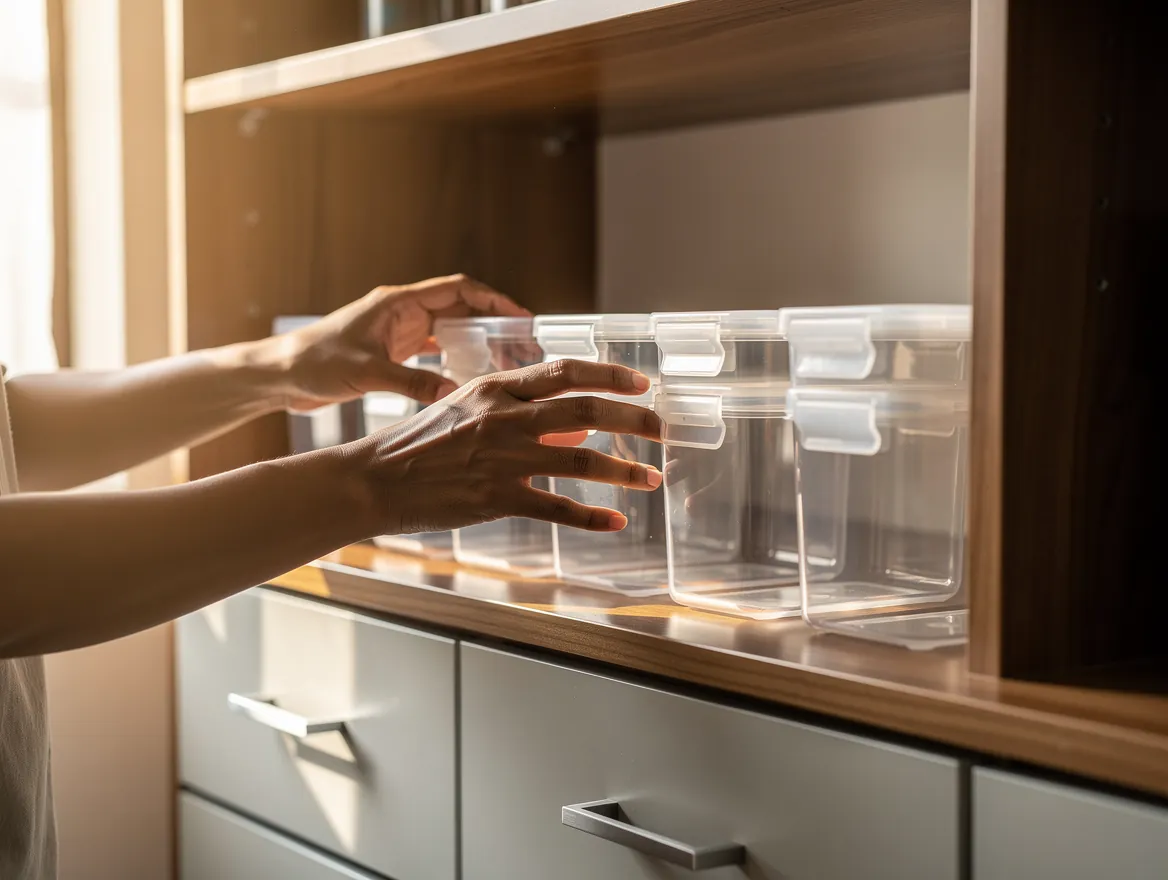
Key Takeaways: When to Call a Professional
Kitchen organisation is deeply satisfying as a DIY project — but some situations call for expert help. Here's when to consider bringing in a professional organiser.
Your DIY Attempts Haven't Stuck
If you've organised your kitchen before and it reverted to chaos within weeks, the issue isn't discipline — it's system design. A professional creates a system aligned with your real habits, not aspirational ones.
Explore Kitchen Cupboard GuideYou're Moving to a New Home
Moving is the ideal moment for professional organisation. Start with a system designed for your new space rather than importing old clutter patterns.
New Home OrganisationYour Space Is Severely Limited
Bangalore's compact apartments demand creative solutions. Professionals excel at maximising tight spaces with vertical storage, multi-functional organisers, and layout optimisation.
Small Kitchen Counter GuideYou Value Your Time
DIY kitchen organisation takes 10–20 hours of research, shopping, and implementation. A professional completes it in 3–6 hours with better, longer-lasting results.
Kitchen Organisation ServiceMore Guides Like This
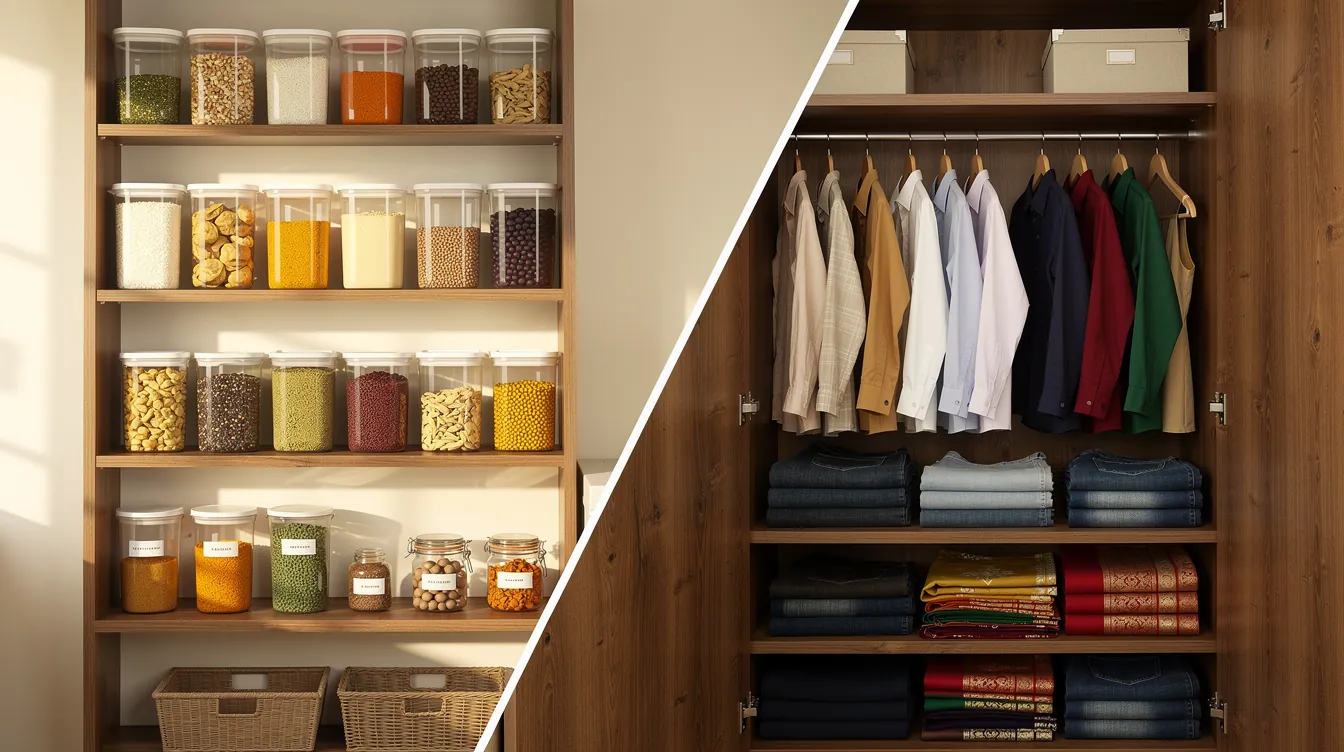
Home Organization Ideas & Expert Tips
Practical advice for organising every room — from wardrobes and kitchens to kids' spaces — with step-by-step methods from Bangalore's professional organisers.
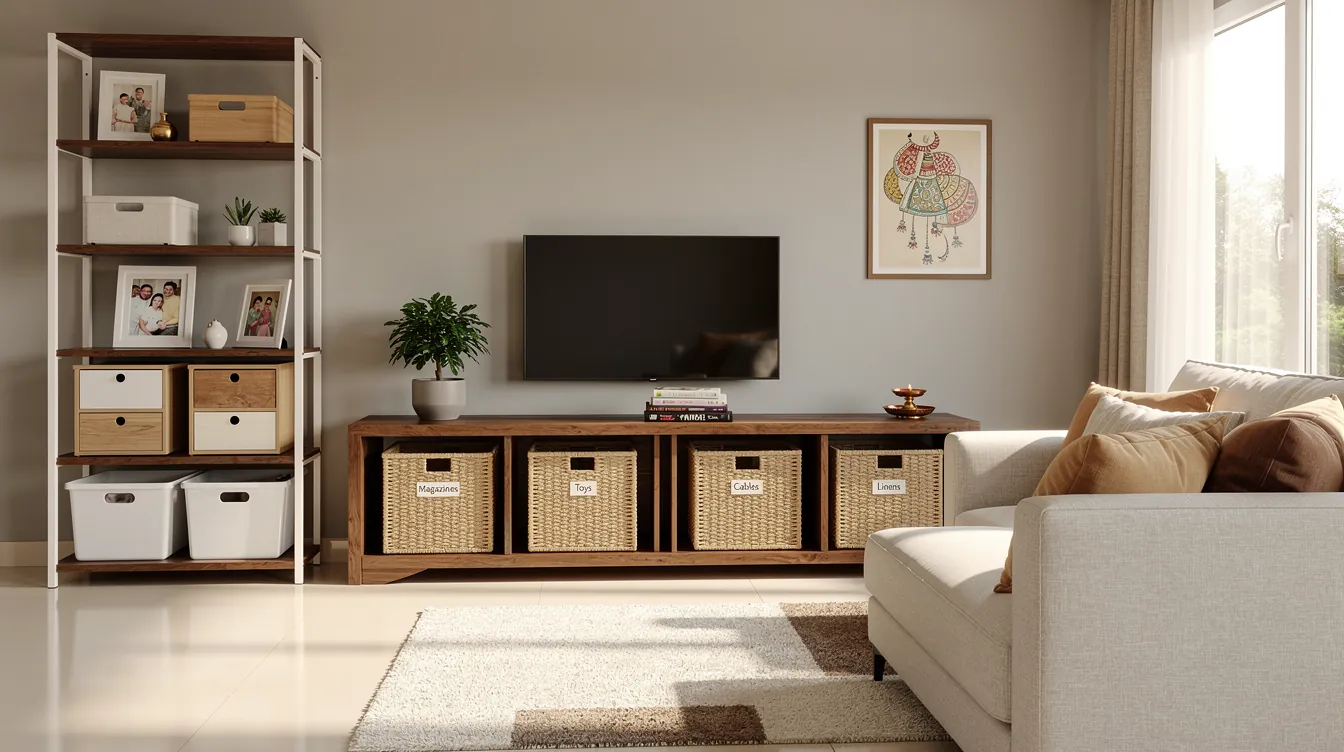
Home Organization Products
A curated guide to the best organisers, storage solutions, and space-saving products — with recommendations tailored for Indian homes and Bangalore apartments.
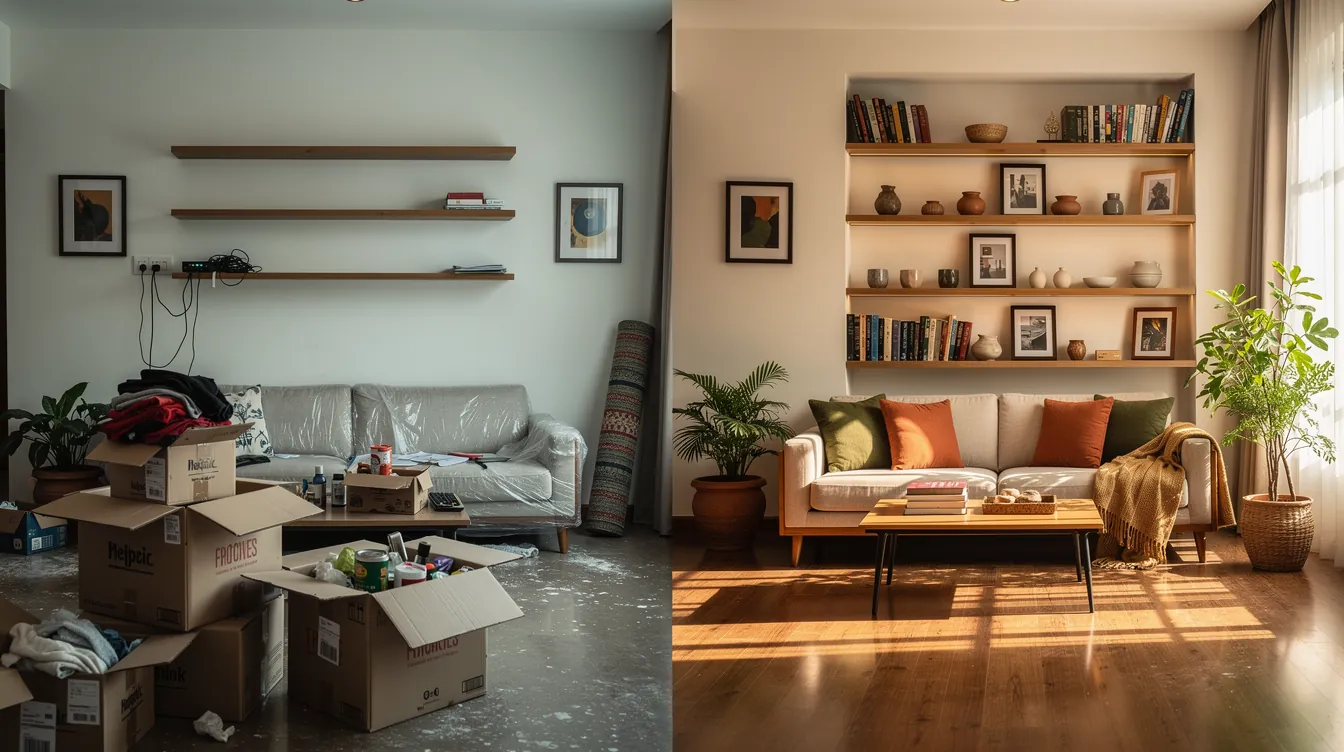
Declutter House
The essential first step before any organisation project. Learn how to declutter room by room, what to keep versus discard, and how to maintain a clutter-free home.
Explore Kitchen Organisation Guides
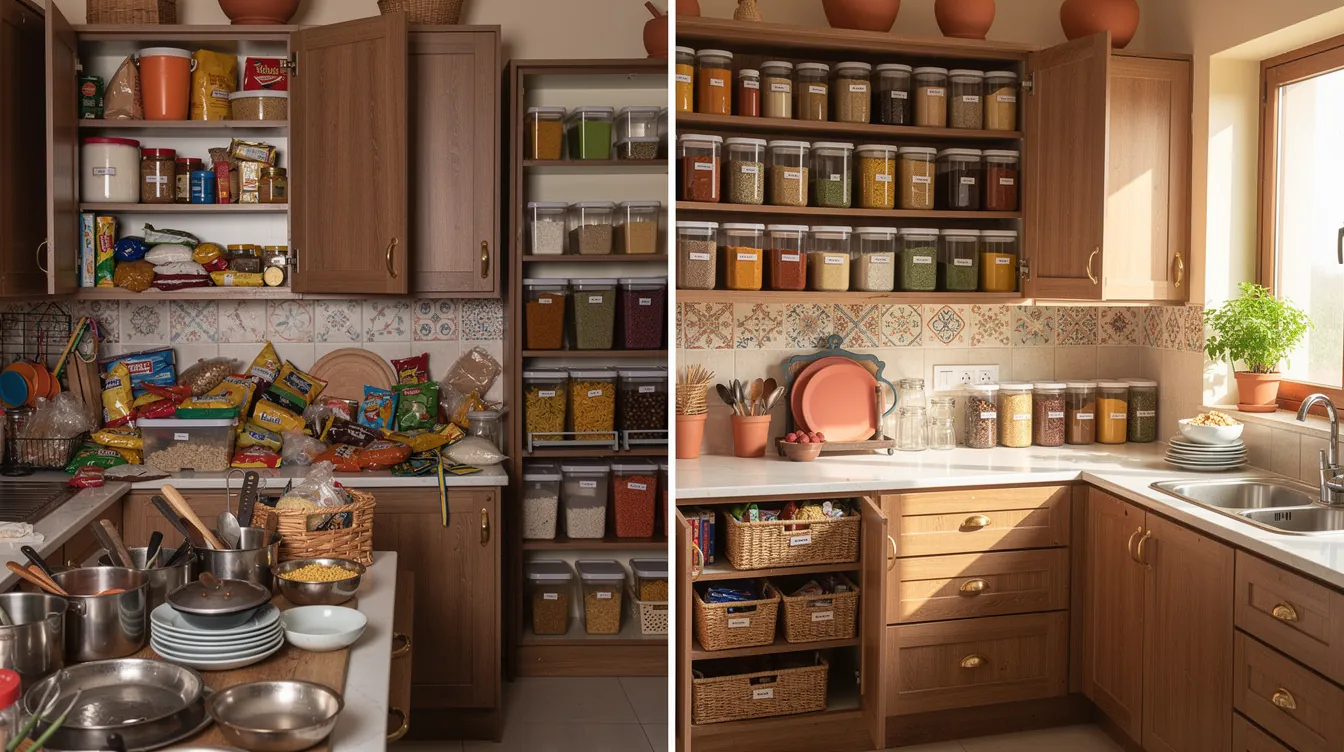
Kitchen Organisation Ideas for Small Kitchens
35 practical ideas for small Indian kitchens — walls, counters, corners, lofts, steel vessels and masalas — that you can start this week.
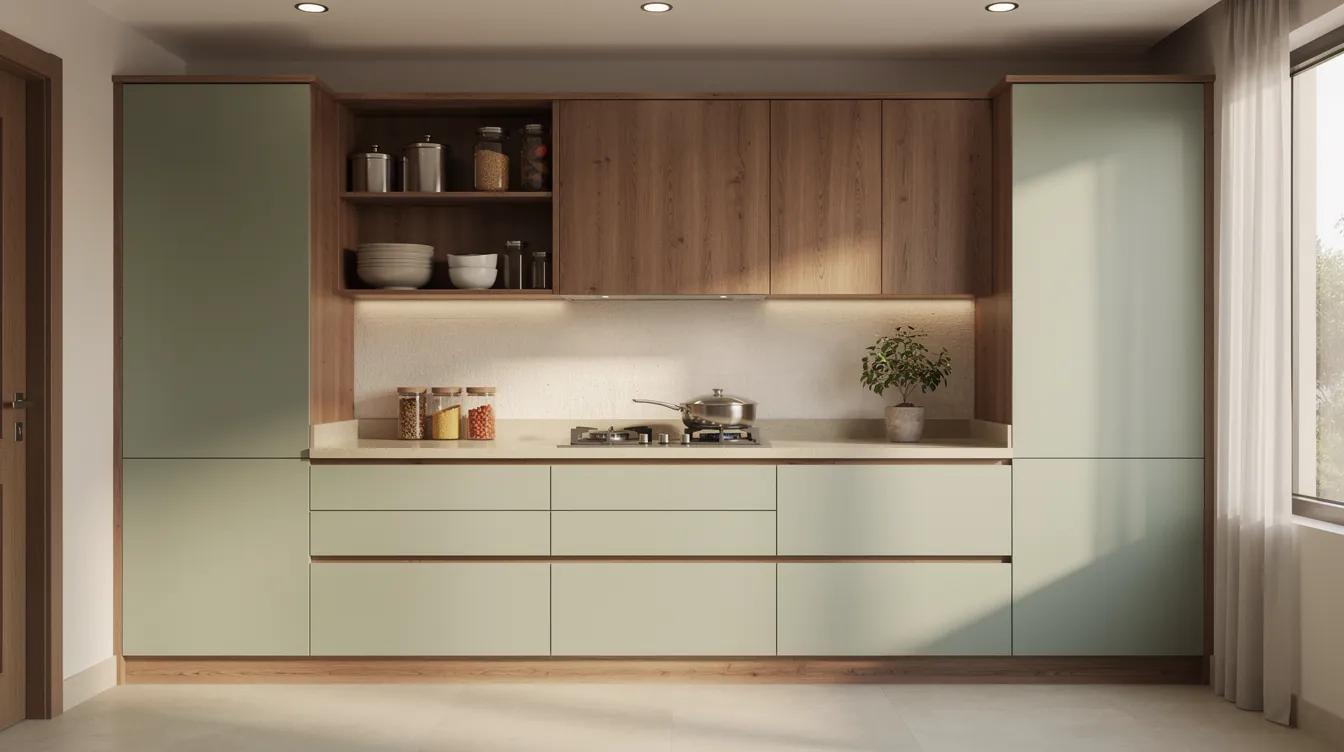
100+ Kitchen Cabinet Ideas for 2026
Cabinet design styles, smart organisation solutions, and practical trends — from pull-out storage to small-kitchen hacks and modern kitchen interiors.
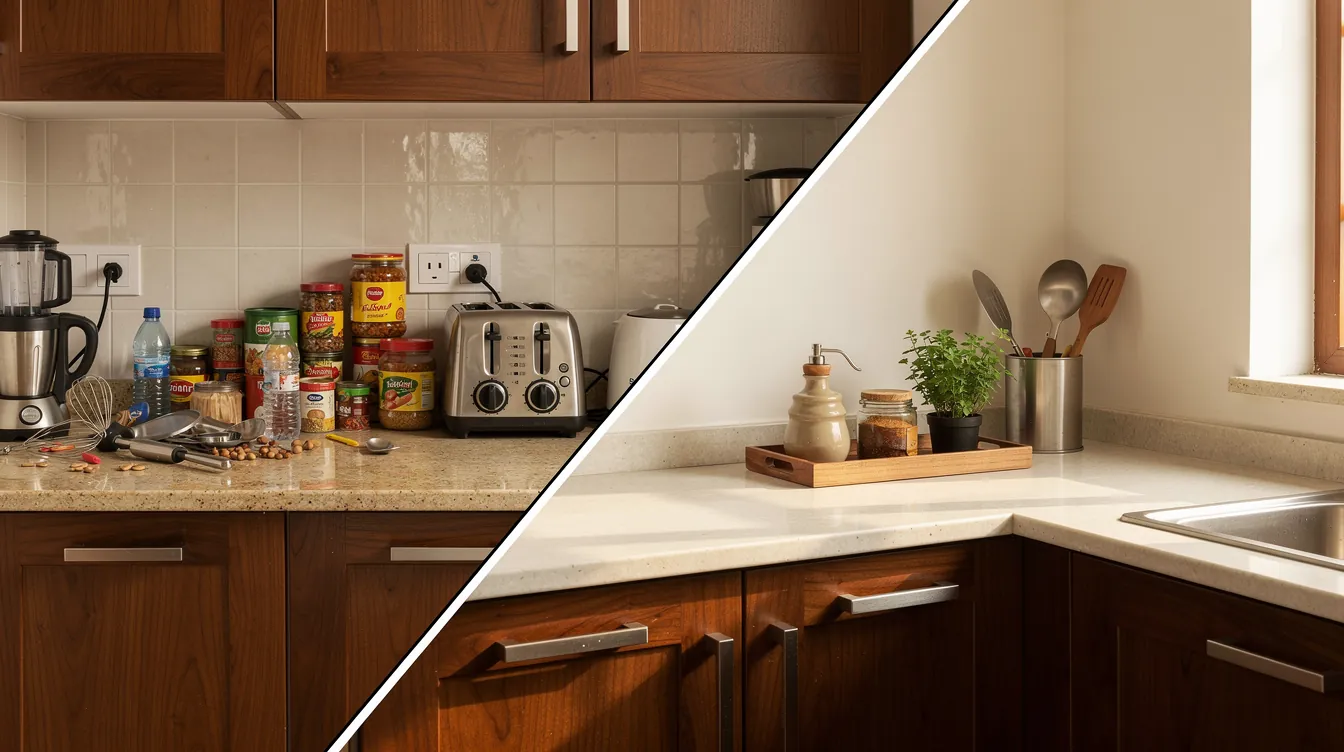
Complete Guide to Kitchen Counter Organisation
Professional strategies for clear, functional countertops — types of organisers, zone planning, and when to call a professional for Bangalore homes.
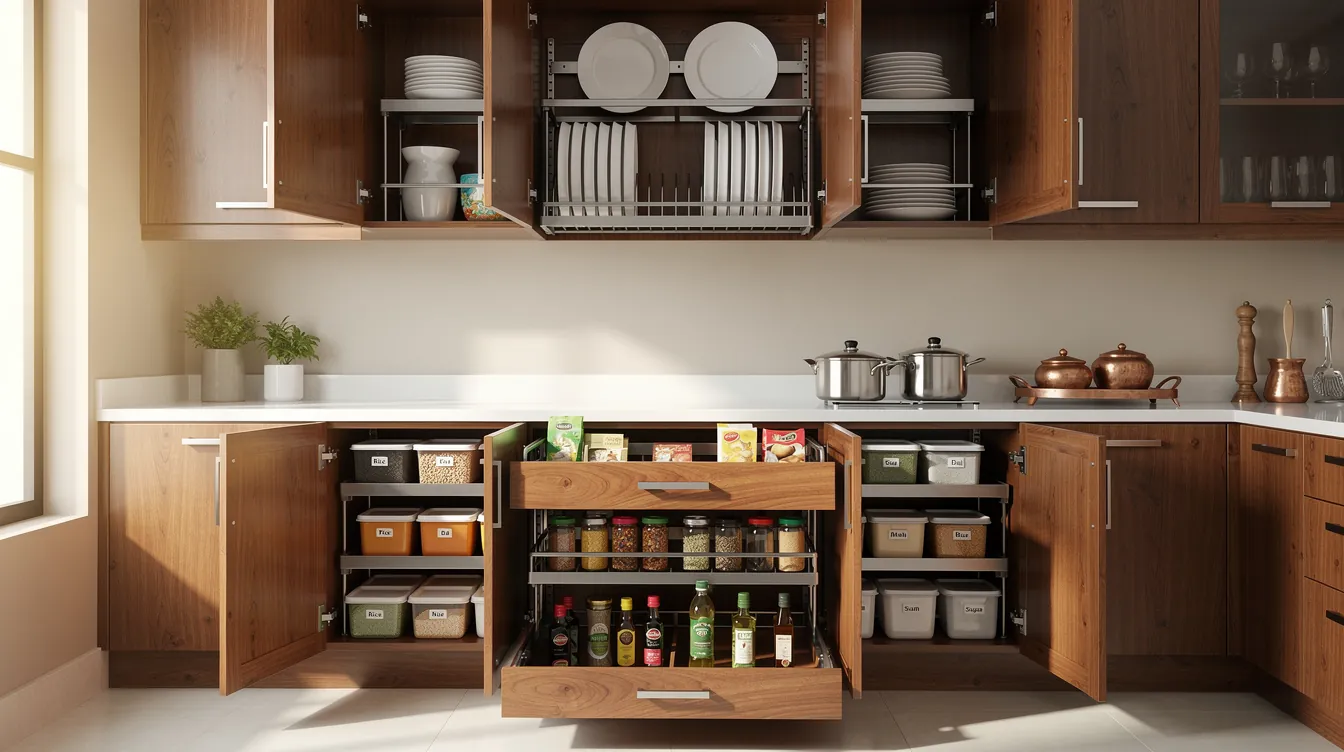
Professional Guide to Organising Kitchen Cupboards
Expert strategies for cupboard organisation, common mistakes, and when professional help makes the difference for lasting results.
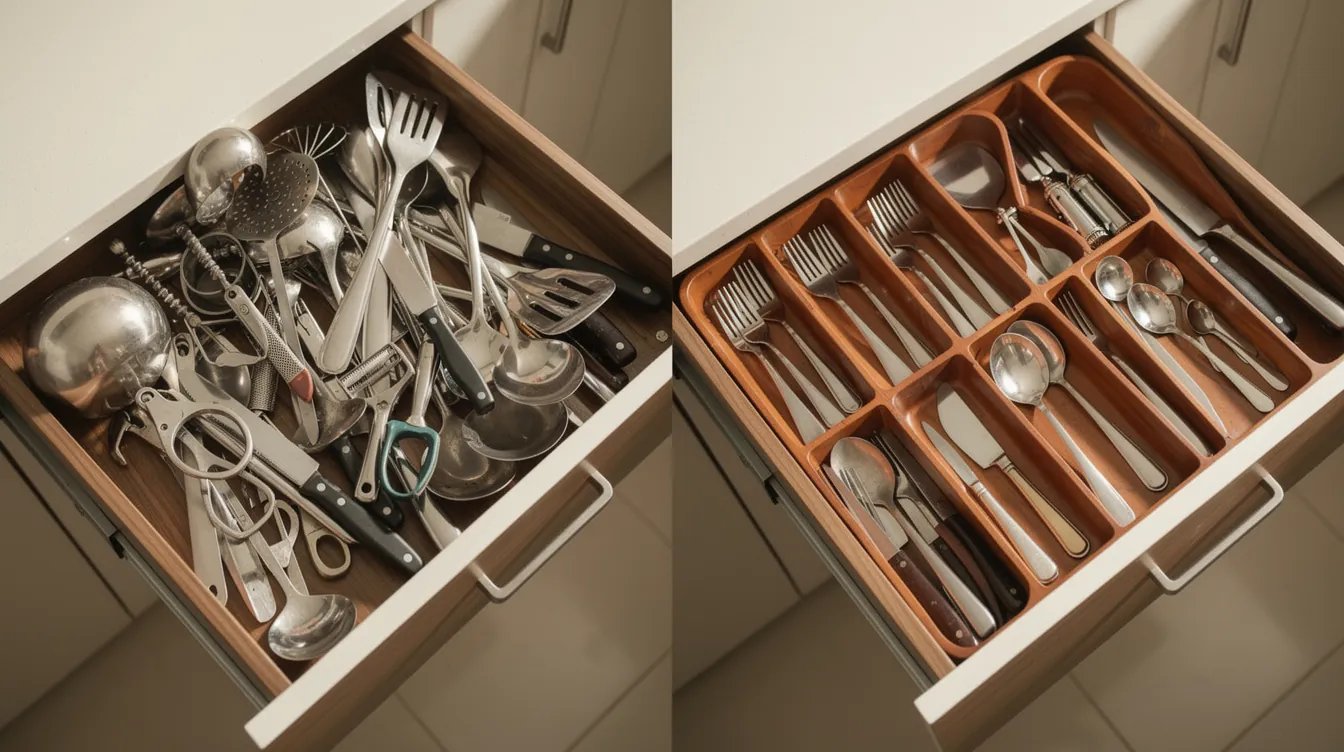
How to Organise Your Kitchen Drawers
A step-by-step guide to clutter-free drawer storage — the professional method for dividers, grouping by function, and systems that actually last.
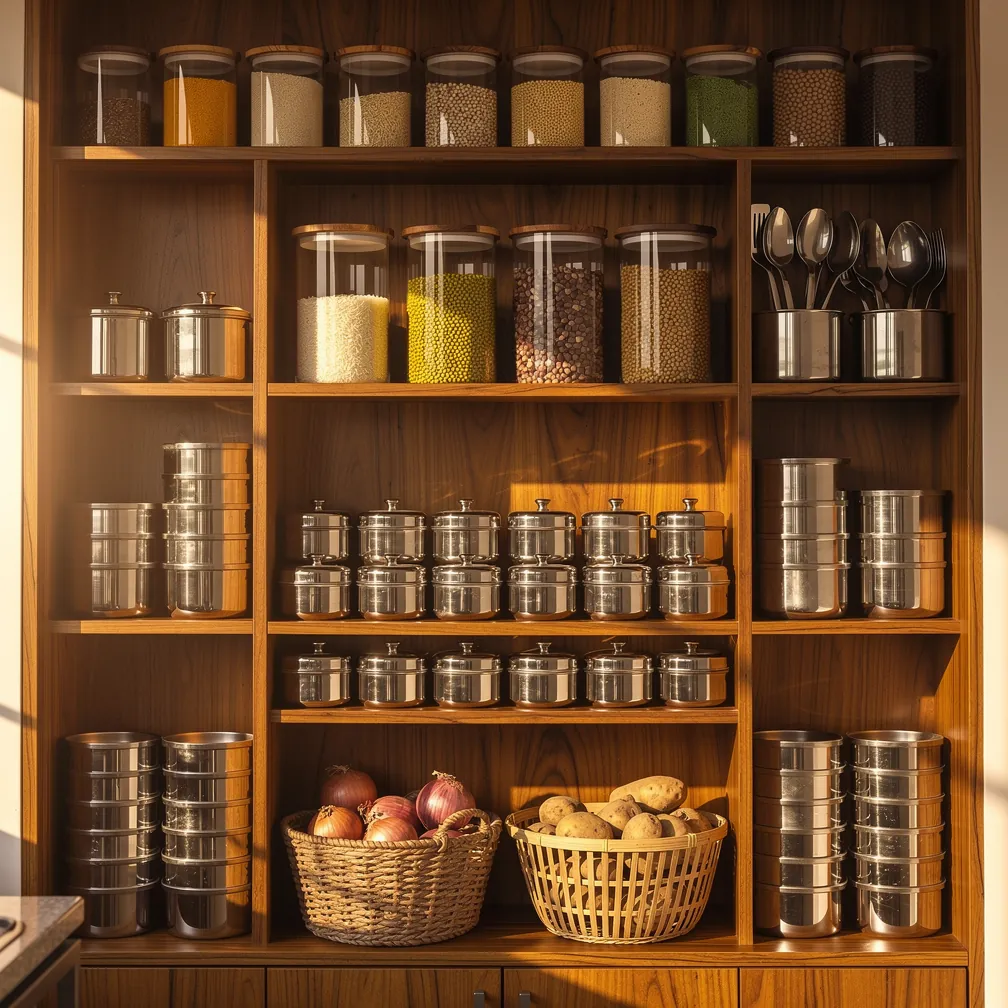
How to Organise Your Kitchen Pantry
A step-by-step guide for Bangalore homes — save time, reduce food waste with FIFO rotation, and create a pantry system that works for Indian kitchens.
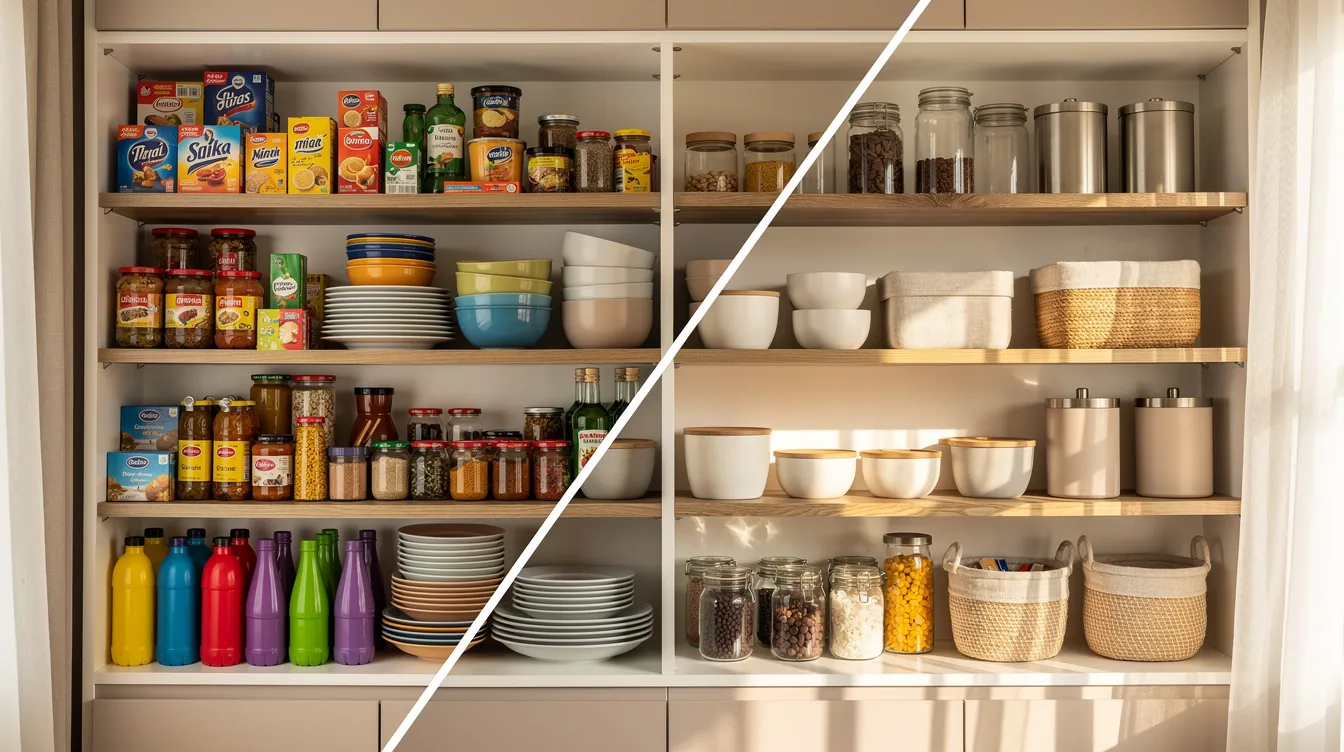
How to Organise Kitchen Shelves
Smart storage solutions for Bangalore homes — master the professional methodology for decluttering, organising, and styling every shelf in your kitchen.
Need a Professional Organiser? We're Here to Help.
If your kitchen causes daily friction and DIY attempts haven't stuck, Tidy Blueprints can help. Our Bangalore-based team designs and implements custom kitchen organisation systems that work for Indian homes — and we start every project with a free, no-obligation online consultation.