Storage Cupboards for Indian Homes: How to Choose and Organise One
A practical guide to steel almirahs, wooden and modular wardrobes, plastic and fabric units: which storage cupboard suits your room, and how to turn any cupboard into an organised cupboard that stays that way.
Jump to section
What Is a Storage Cupboard, and Do You Need Another One?
A storage cupboard is a closed storage unit, freestanding or built in, with doors, shelves and usually a hanging rod, drawers or a locker. It keeps clothes, linen, documents and household things out of sight. In Indian homes the same piece of furniture goes by many names: almirah, wardrobe, cupboard or cabinet. Whatever you call it, it is usually the largest piece of storage in the room, so choosing the right one, and organising it well, matters more than any box or basket you put inside it.
This guide is part of our home organisation products series. It is about the cupboard itself: the types of storage cupboards available, how to choose one that fits your room and your belongings, and how to set up an organised cupboard. If you already have a cupboard and only need containers for its shelves, our guide to cupboard storage boxes goes deeper on boxes.
Storage cupboard, wardrobe, almirah or cabinet?
- Almirah: the traditional Indian freestanding cupboard, usually steel or wood, with fixed shelves, a hanging section and often a lockable inner locker.
- Wardrobe: a cupboard designed mainly for clothes, with more hanging space. In Bangalore apartments it is often built in by the builder or a modular furniture vendor.
- Storage cabinet: a general-purpose cupboard with shelves only, used in kitchens, utility areas, study rooms and living rooms.
- Specialty cupboards: shoe cupboards, pantry units, bathroom cabinets and the lofts above doors and wardrobes.
More cupboards, or a better-organised one?
Before buying another storage cupboard, look closely at the ones you have. Often the problem isn't a lack of cupboard space but how that space is used. The usual signs: top shelves crammed with things nobody has touched in years, the back half of every deep shelf "lost", and clothes that don't fit or aren't worn taking up the most convenient shelves. A round of decluttering and a better layout often frees more room than a new cupboard would add.
Key takeaway: Buy a new storage cupboard when you genuinely lack space for things you use. If your cupboards are full of things you don't use, declutter and reorganise first.
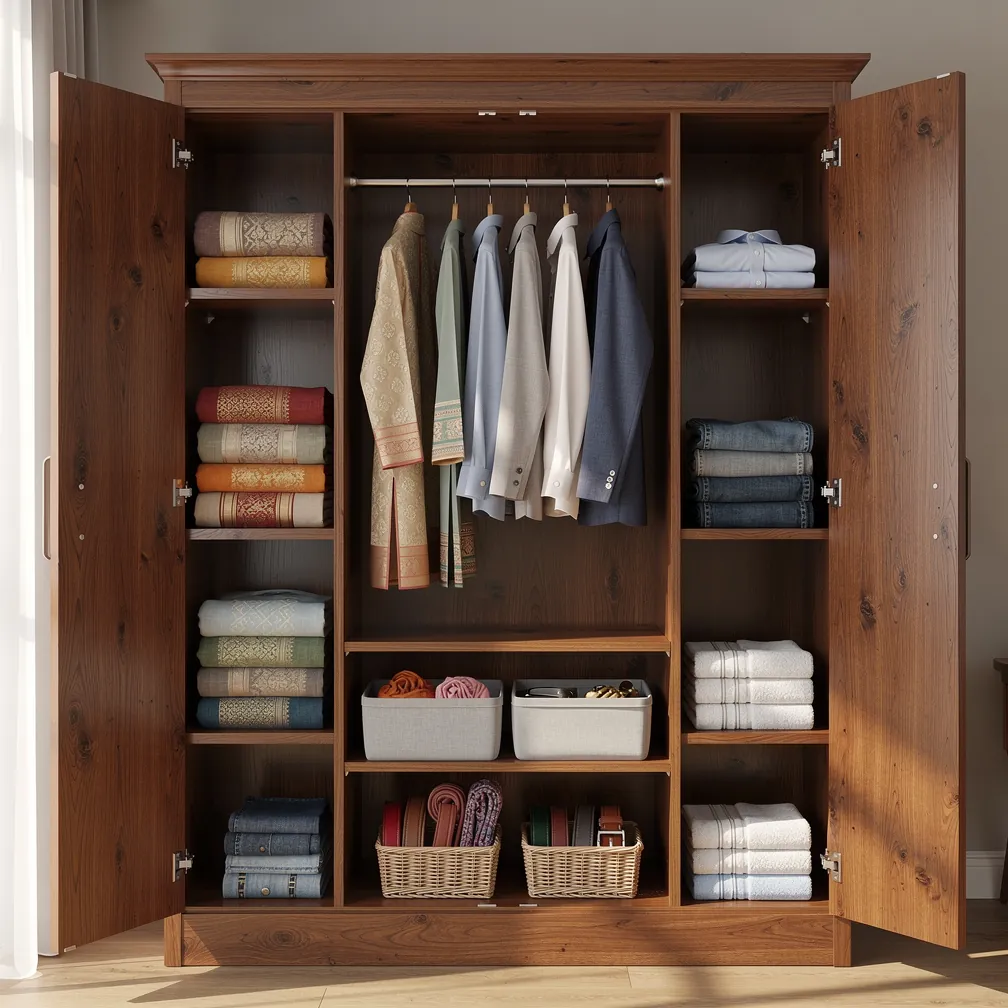
Types of Storage Cupboards: Materials and Formats Compared
Storage cupboards differ in two ways that matter: what they are made of, which decides how they cope with weight, damp and pests, and how they are built, whether freestanding, modular or built in. These are the main options you'll find in Indian homes and furniture stores.
Steel almirahs
The classic steel almirah is strong, lockable and safe from termites, which is why so many Indian families keep one for valuables, documents and silk sarees. Newer models come with powder-coated finishes, adjustable shelves and mirrors on the doors.
- Good for: valuables, documents, heavier folded clothes, families who want a lockable locker.
- Watch out for: rust where the base sits on a damp floor or the back touches a damp wall, fixed shelf heights in older models, and the weight when you need to move it.
Wooden and engineered-wood cupboards
Solid-wood cupboards last for decades and can be repaired and re-polished, but they are heavy and can attract termites if the wood isn't treated. Most new cupboards are made of engineered wood: plywood, MDF or particle board with a laminate finish. Plywood, especially water-resistant grades, holds screws well and copes better with humid months. MDF and particle board cost less but swell if water gets in at the edges.
- Good for: bedrooms where you want furniture with a warm look, and families who plan to stay put.
- Watch out for: termites, doors that stick or swell in the monsoon, shelves that sag over wide spans, and laminate peeling near bathrooms.
Modular and built-in wardrobes
Fitted wardrobes use the full wall height, often with a loft above. Their interiors can be planned around you, with drawers, pull-out trays, shelf heights and hanging zones exactly where you need them. That flexibility is also the risk: a built-in wardrobe planned without knowing what you own ends up with too much hanging space and too few shelves, or the reverse.
- Good for: home owners, new homes and anyone who can plan the interior in advance.
- Watch out for: layouts that don't match your clothes, deep corner sections that turn into dead space, and the cost of changing things later.
Plastic storage cupboards
Moulded plastic cupboards and cabinets are light, easy to clean and unaffected by damp, which makes them useful on balconies, in utility areas, in kids' rooms and in rented homes.
- Good for: cleaning supplies, toys, kids' clothes, overflow storage, renters.
- Watch out for: shelves that bow under heavy loads, flimsy doors and hinges, and fading in direct sun.
Fabric (foldable) wardrobes
A metal or plastic frame with a zipped fabric cover. They are inexpensive and portable, and handy as a stopgap in a PG, a guest room or during a move.
- Good for: short-term storage, light clothing, guest rooms.
- Watch out for: dust, sagging rods and damp. A fabric cover doesn't protect clothes well through a humid monsoon.
Specialty storage cupboards
Shoe cupboards (look for ventilation slats), tall pantry units for kitchens, under-sink and bathroom cabinets (choose moisture-proof materials), and lofts above doors or wardrobes for seasonal items each solve one job well. Treat them as part of the same plan as your main cupboards.
Quick comparison
| Type | Best for | Main weakness | Renter-friendly? |
|---|---|---|---|
| Steel almirah | Valuables, documents, heavy folded clothes | Rust in damp spots, heavy to move | Yes |
| Solid wood | Long-term bedroom furniture | Termites, swelling, weight | Moderately |
| Engineered wood (plywood, MDF) | Most bedrooms, modular units | Edges swell if they get wet | Depends on the unit |
| Modular or built-in | Planned, full-height storage | Fixed layout, costly to change | No |
| Plastic | Utility areas, kids' rooms, balconies | Low load capacity | Yes |
| Fabric | Temporary or guest storage | Little protection from dust and damp | Yes |
How to Choose a Storage Cupboard That Fits Your Room and Your Belongings
The right storage cupboard is one whose interior matches what you own and whose size fits the room it stands in. Start with an honest list of what will go inside, then measure the space, then compare materials and interiors. Shopping in the opposite order is how people end up with good-looking cupboards that don't suit their clothes.
1. List what you will store
Split your belongings into things that hang (shirts, kurtas, trousers, dresses, blazers), things that fold (sarees, T-shirts, jeans, innerwear, dupattas, linen) and everything else (documents, jewellery, bags, accessories). Indian wardrobes usually hold far more folded clothing than hanging clothing, so many families need more shelves and less hanging space than a standard design offers.
2. Measure the room, not just the wall
- Width and height of the wall, including any loft, beam or switchboard.
- Depth, remembering that skirting and the cupboard's base push it forward.
- Door swing: hinged doors need clear floor space in front. In tight bedrooms, sliding doors may work better.
- Walking space between the open cupboard and the bed.
- Windows, AC units and damp patches: avoid placing a cupboard against an external wall that gets damp in the monsoon.
3. Check the interior, shelf by shelf
- Shelf depth: Indian cupboards are commonly 18–24 inches deep. Deep shelves hold more, but items at the back disappear, so plan pull-out trays or baskets for them.
- Shelf spacing: around 10–12 inches between shelves suits most folded stacks. Much more than that invites tall piles that topple. Adjustable shelves are worth paying for.
- Hanging height: long kurtas, dresses and trousers hung full length need a taller section than shirts do. A second, lower rod under short garments doubles the hanging space.
- Drawers and a locker: you need at least one closed compartment for small valuables, documents and accessories.
4. Pick the door type
- Hinged doors show the whole interior at once, and the inside of the door can carry hooks or a slim rack.
- Sliding doors save floor space but only ever show half the cupboard.
- Mirrored doors double as a dressing mirror in small bedrooms.
5. Ask these questions before you buy
- Are the shelves adjustable, and how much weight can each one take?
- Is the back panel solid board or thin hardboard?
- Does it stand on legs or a raised base, which helps against floor damp?
- Is there ventilation for shoes or linen?
- Who assembles and installs it, and can it be anchored to the wall?
Key takeaway: Plan the inside first. The ratio of shelves to hanging space, and how deep those shelves are, decide whether a storage cupboard stays organised.
How to Organise a Cupboard, Step by Step
Step 1: Empty it completely
Take everything out so you can see what you own and the condition of the cupboard itself. Wipe the shelves and check the corners for damp, rust or signs of pests.
Step 2: Declutter before you organise
Sort everything into keep, donate and discard. If you haven't worn or used something in a year and it isn't seasonal or sentimental, let it go.
Step 3: Group by category and frequency
Put like with like (sarees, kurtas, office wear, innerwear, documents), then split each group into daily, occasional and seasonal.
Step 4: Assign zones by height
Daily items at eye level, heavy things low, light seasonal things on the top shelf or loft. If the cupboard is shared, give each person a full vertical section.
Step 5: Add only the organisers you need
Measure the shelves, then choose dividers, boxes, hangers or drawer inserts for the problems you actually have, rather than a full kit.
Step 6: Label it and keep a simple routine
Label boxes and shelves, put things back the same day, and do a ten-minute reset each month and a fuller review each season.
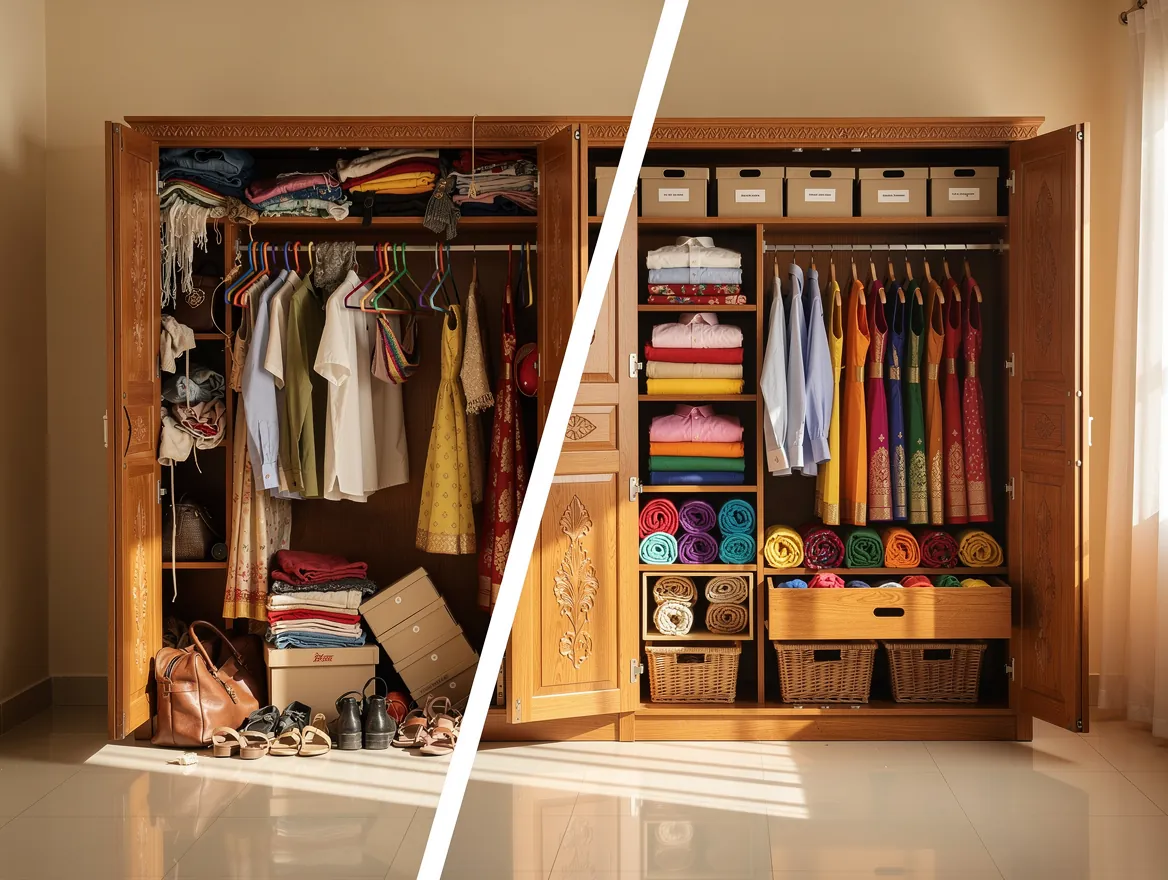
What an Organised Cupboard Looks Like
An organised cupboard gives every item a fixed home at a height that matches how often you use it, and lets you see what you own without unstacking anything. It doesn't need matching boxes. It needs zones, short stacks and a way to reach the back of deep shelves.
Top shelf and loft: seasonal and occasional
Winter woollens, festive décor, spare bedding, guest linen and luggage belong up high in lidded, labelled containers, because you reach for them only a few times a year. Keep each container light enough to lift down safely. Our guides to cupboard storage boxes and foldable storage boxes cover which containers work best up there.
Eye level: what you wear every week
The shelves between your shoulders and your waist are the most valuable space in the cupboard. Use them for daily wear, office clothes and the things you reach for most. Keep stacks short, around six to eight folded pieces, so the bottom item comes out without the pile collapsing.
The hanging section
Hang what creases or what you wear often: shirts, kurtas, trousers, dresses and blazers. One style of slim hanger lets the rod hold more and makes the section look calm. Heavy silk sarees are better stored folded than hung for long periods, because the fabric stretches under its own weight. Our saree organizer service covers how we store large saree collections.
Drawers and the locker: small things and valuables
Jewellery, watches, documents, chargers, innerwear and socks need compartments, not open shelves. Drawer inserts and trays stop them from turning into a tangle; our guides to storage drawers and storage trays explain the options.
Lower shelves: heavy and bulky
Bags, bedsheets, blankets and anything heavy go low, where they are safe to pull out. If shoes have to live in a bedroom cupboard, keep them on their own shelf in a tray or box, away from clothes.
Making deep shelves work
Deep almirah shelves are where things go missing. Instead of storing one row behind another, run each category from front to back so every stack is visible, or use pull-out baskets and trays so the back of the shelf comes to you. Shelf dividers stop neighbouring stacks from leaning into each other.
Storage Cupboards Room by Room
Each room asks something different of its storage cupboard. Here's how to set each one up.
Bedroom
The bedroom cupboard does the most work in an Indian home: clothes for two or more people, plus jewellery, documents and bedding. When a cupboard is shared, divide it vertically, with each person getting a full column from top to bottom, rather than shelf by shelf, so nobody has to dig through someone else's stack. Our wardrobe organizer and cupboard organizer services handle exactly this kind of set-up.
Kids' rooms
Children keep a cupboard tidy only if they can reach it. Put everyday clothes and school things on the lowest shelves, use open bins they can drop things into, and add picture labels for younger children. Adjustable shelves let the cupboard grow with them. See our kids room organizer service.
Kitchen and pantry
A tall kitchen storage cupboard or pantry unit works best with pull-out baskets or trays, so tins and jars at the back stay reachable. Keep heavy items like atta and rice at waist height or below, and everyday masalas near the stove rather than deep inside a tall unit. Our guide to kitchen cupboard organizers covers kitchen storage in detail.
Living room and entrance
A shoe cupboard by the door needs ventilation and shelves that are easy to wipe. In the living room, a closed cupboard is the place for board games, files, chargers and spare cushions, all the things that make a room look busy when they're left out.
Study and home office
Use a cupboard with shelves and at least one drawer for documents, stationery and devices. Keep important papers together in labelled files on one shelf so they're easy to find, and easy to grab in an emergency. Our document organizer service sets up filing systems that last.
Utility areas and balconies
Plastic or powder-coated metal cupboards suit utility areas because they cope with splashes from the washing machine and the damp of a balcony. Store cleaning supplies, tools and spare bulbs here, with chemicals on a high shelf out of children's reach.
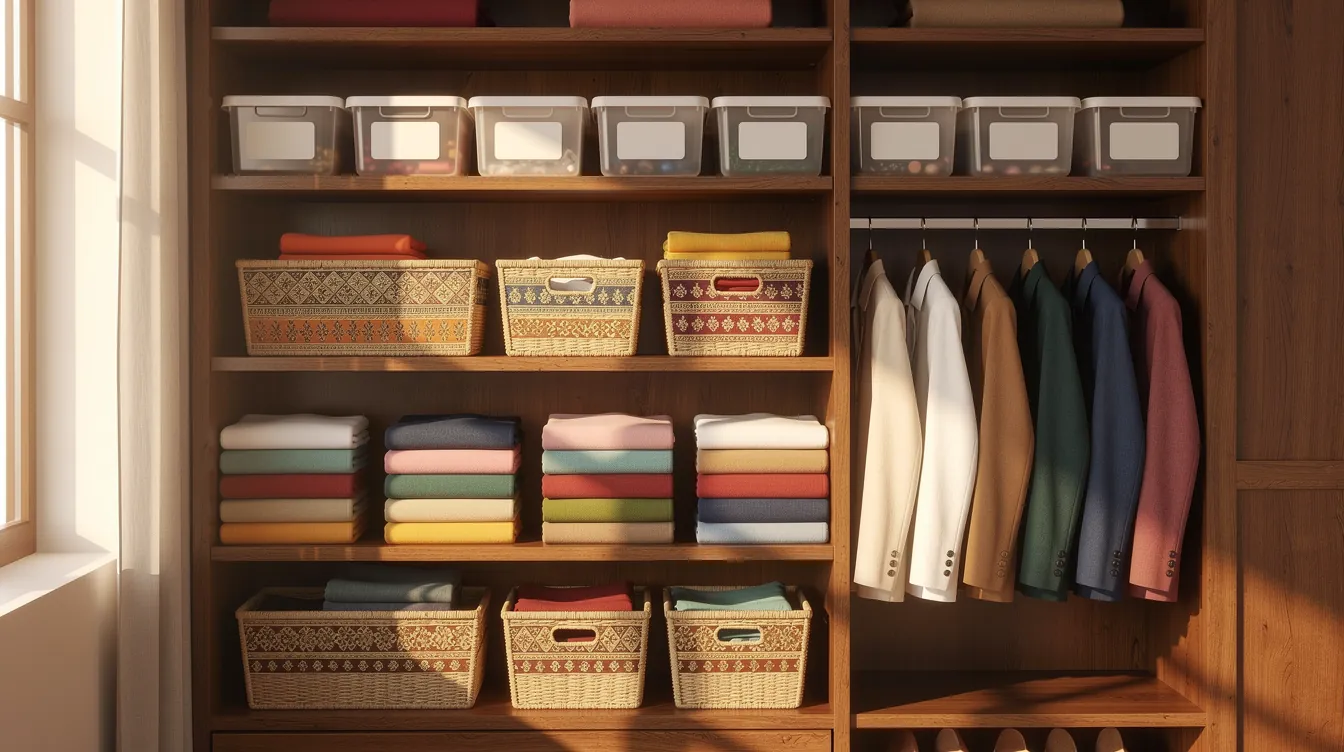
Storage Cupboards in Bangalore Homes: Space, Damp and the Monsoon
Bangalore's weather is mild for most of the year, but the monsoon months bring humidity that settles inside closed cupboards. Add compact apartment bedrooms and builder-fitted wardrobes, and a few local habits make a big difference to how well a storage cupboard works.
Working with builder-fitted wardrobes
Many Bangalore apartments come with built-in wardrobes whose shelf heights and hanging sections weren't planned around the people living there. Before replacing them, see what organisers can do: shelf inserts to split tall gaps, pull-out trays for deep corners, a second hanging rod for shirts, and labelled boxes for the loft. Renters can make most of these changes without drilling.
Keeping damp and musty smells out
- Leave a small gap between the cupboard and the wall, especially external walls and walls next to bathrooms.
- Raise steel and wooden cupboards slightly off the floor on legs or rubber feet.
- Place silica gel packets on the shelves and replace or recharge them every 3–6 months.
- Never put clothes away while they are still damp from washing or warm from ironing.
- Open the cupboard on dry, sunny days to air it, and keep silks in breathable cotton or muslin covers rather than sealed plastic.
Keeping pests away
Silverfish, cockroaches and moths like dark, undisturbed cupboards, and termites go for untreated wood. Clean the shelves whenever you reorganise, tuck cedar blocks or dried neem leaves among stored clothes, and check the corners and the base of the cupboard before and after the monsoon.
Caring for steel and wooden cupboards
Wipe steel almirahs dry and touch up scratches before rust spreads. On wooden and engineered-wood cupboards, tighten the hinges once a year and don't force doors that stick in humid weather; they usually ease as the season changes. Swelling that doesn't go away means moisture is getting in and needs fixing at the source.
Key takeaway: Airflow, a gap from the wall and completely dry clothes do more to protect what's inside a storage cupboard than any product. Add silica gel and natural repellents as a second layer.
Common Storage Cupboard Mistakes (and How to Avoid Them)
Most cupboards that refuse to stay tidy have one of these problems. Each has a simple fix.
Buying a bigger cupboard instead of decluttering
A bigger cupboard filled with the same unused things just moves the problem. Declutter first, then decide how much storage you actually need.
Measuring the wall but not the room
A cupboard that fits the wall but blocks a door, the AC or the walkway gets used badly. Measure the door swing and the walking space too.
Choosing hanging space for a folded wardrobe
If most of what you own is folded, a cupboard that's half hanging space will overflow on its few shelves. Match the interior to your clothes.
Storing one row behind another
On deep shelves, the back row is forgotten within weeks. Run stacks from front to back, or use pull-out trays and baskets.
Treating the top shelf and loft as a dumping ground
"Up there" quickly becomes "never again". Give high storage specific, labelled categories and review them every season.
Buying organisers before measuring
Boxes and dividers that don't match your shelf height and depth waste space. Measure each shelf, then buy.
Ignoring damp
Pushing a cupboard flat against a damp wall, or packing it so tightly that air can't move, invites mould and musty clothes. Leave gaps and let it breathe.
Organising a Cupboard Yourself vs Hiring a Professional Organiser
Plenty of people organise a single cupboard well on their own. A professional organiser makes the most difference when the job is larger, shared, or keeps falling apart.
When DIY works well
- It's one cupboard, holding mostly your own belongings.
- You have a free day and enjoy the process.
- The cupboard's layout already suits what you own.
When professional help is worth it
- Several cupboards, or a whole bedroom, need doing at once.
- The cupboard is shared by family members with different habits.
- You're moving into a new home and want the storage planned before you unpack.
- You've organised before and it slipped back within weeks.
- You're about to buy or design a storage cupboard and want the interior planned around your belongings.
How Tidy Blueprints organises a cupboard
Tidy Blueprints is a professional home organising service in Bangalore, founded by Vidhi Gumber. For cupboards and wardrobes, our organisers:
- Assess the cupboard in your home, measure every shelf and understand how you use it.
- Declutter with you, deciding what to keep, donate or discard, without judgement.
- Categorise and plan zones around your routine.
- Choose the right organisers, sized to your shelves, and either source them or give you a shopping list.
- Set up and label everything, then walk you through how to keep it that way.
See our cupboard organizer and new home organising services. If you live outside Bangalore, or would like a plan you can carry out yourself, a virtual consultation works over a video call. Your first online consultation is free.
Frequently Asked Questions About Storage Cupboards
What is the best storage cupboard material for a humid city like Bangalore?
Plywood (especially water-resistant grades), powder-coated steel and plastic all cope well with humidity. MDF and particle board are fine in dry rooms but can swell if water reaches the edges, and untreated solid wood needs termite protection. Whatever you choose, leave a gap from the wall and keep the base off damp floors.
How deep should a storage cupboard be?
A hanging section needs roughly 22–24 inches of depth so hangers don't brush the doors, while shelves for folded clothes are easier to use at 15–20 inches because nothing hides at the back. Indian cupboards are commonly 18–24 inches deep, so plan pull-out trays or baskets for the deepest shelves.
Is a steel almirah or a wooden cupboard better?
A steel almirah is better for security, pest resistance and heavy loads; a wooden or engineered-wood cupboard is better if you want an adjustable interior and a warmer look. Many families keep both: a steel almirah for valuables and documents, and a wooden wardrobe for daily clothes.
How do I keep an organised cupboard from getting messy again?
Give every category a fixed zone, keep stacks short and put things back the same day. A ten-minute reset each month and a review each season stop small slips from turning into a full reorganisation.
Why do clothes in my cupboard smell musty during the monsoon?
Humidity gets trapped inside a closed cupboard, especially one pushed against a damp wall or holding clothes that weren't fully dry. Leave a gap from the wall, air the cupboard on dry days, use silica gel packets and store only completely dry clothes.
Are plastic storage cupboards strong enough for clothes?
Yes for light folded clothes, kids' clothes, linen and toys, as long as you don't overload the shelves. For heavy items, long hanging clothes or long-term storage of silks, a steel or wooden cupboard is the better choice.
How do I use the deep back part of my cupboard shelves?
Don't store a second row behind the first. Run each stack from front to back, or use pull-out trays, baskets or lidded boxes with handles so you can slide a whole category out at once.
Can a professional organiser help me plan a new storage cupboard?
Yes. Before you buy or design a cupboard, an organiser can look at what you own and how you use it, then suggest the shelf-to-hanging ratio, the number of drawers and the organisers it needs. Tidy Blueprints offers this planning in homes across Bangalore, and over a video call for clients elsewhere.
Key Takeaways: Choosing and Organising Storage Cupboards
The short version of this guide, and where a professional organiser can help.
Declutter Before You Buy
Overflowing cupboards are often full of things nobody uses. Clear those out first, then decide whether you really need another storage cupboard.
Read our decluttering guidePlan the Interior First
Match shelves, hanging space and drawers to what you own. Indian wardrobes usually need more shelves than standard designs offer.
See how to choose a cupboardProtect Against Damp
Leave a gap from the wall, keep the base off the floor, store only dry clothes and refresh silica gel every few months.
Read the monsoon tipsGet a Professional Set-Up
Tidy Blueprints' organisers declutter, plan zones, source organisers and set up cupboards in homes across Bangalore.
Explore our cupboard organizer serviceMore Home Organisation Product Guides
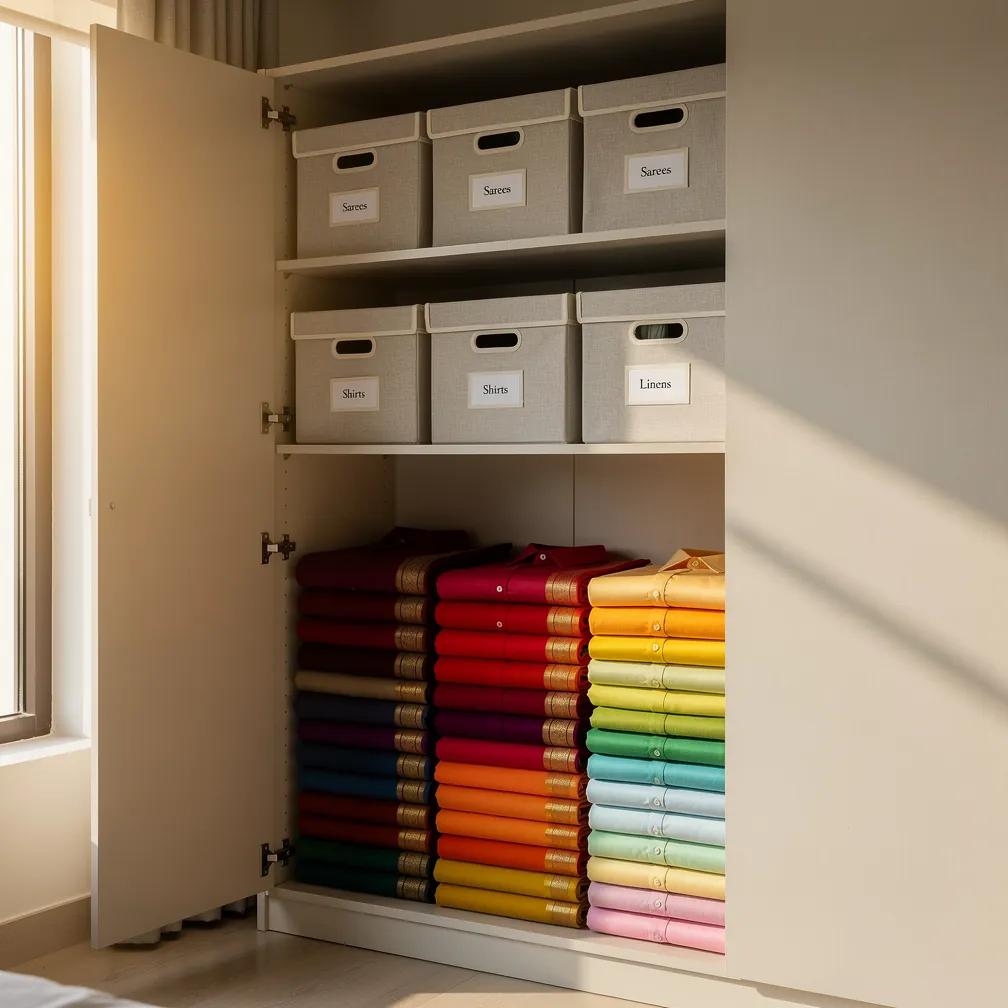
Cupboard Storage Boxes Guide
How to choose, fill and label plastic, fabric, wicker and foldable boxes for cupboard shelves, and keep them dry through the monsoon.
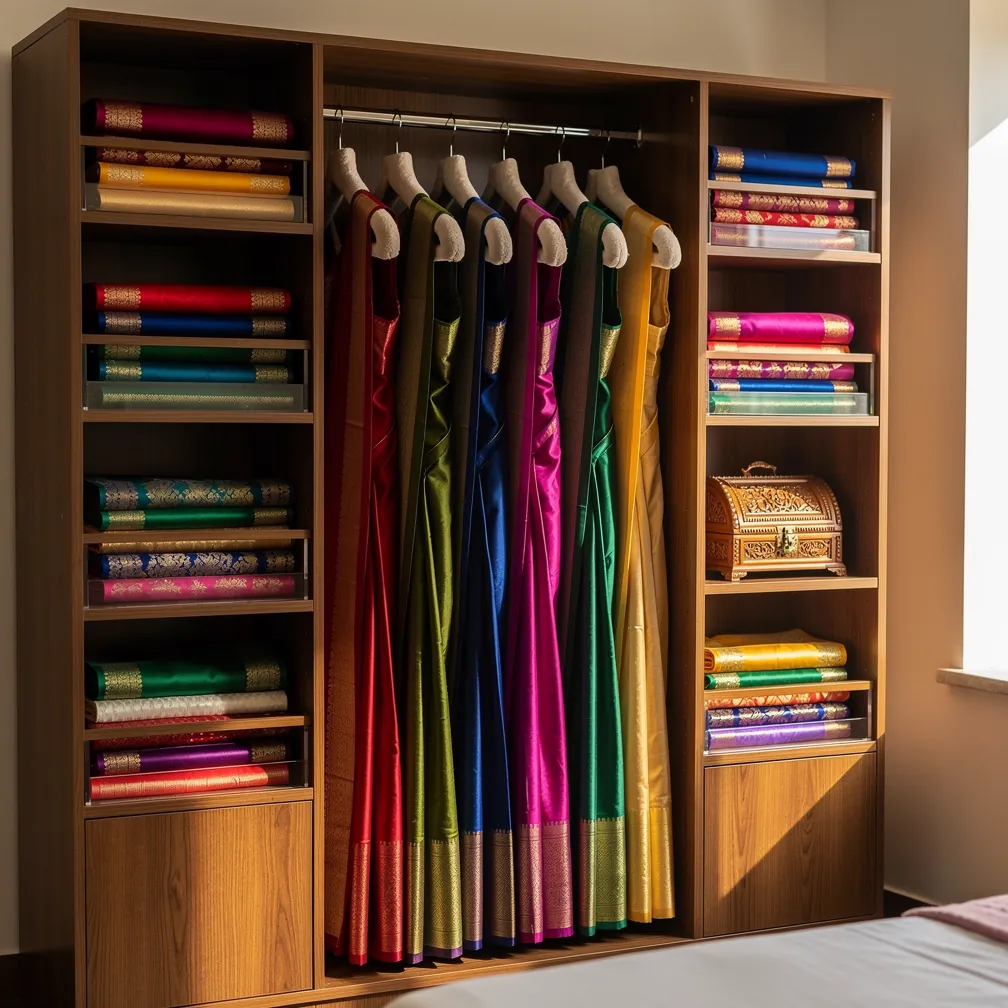
Shelf Dividers Guide
Acrylic, metal and wooden shelf dividers compared, with advice for deep Indian almirah shelves and simple DIY options.
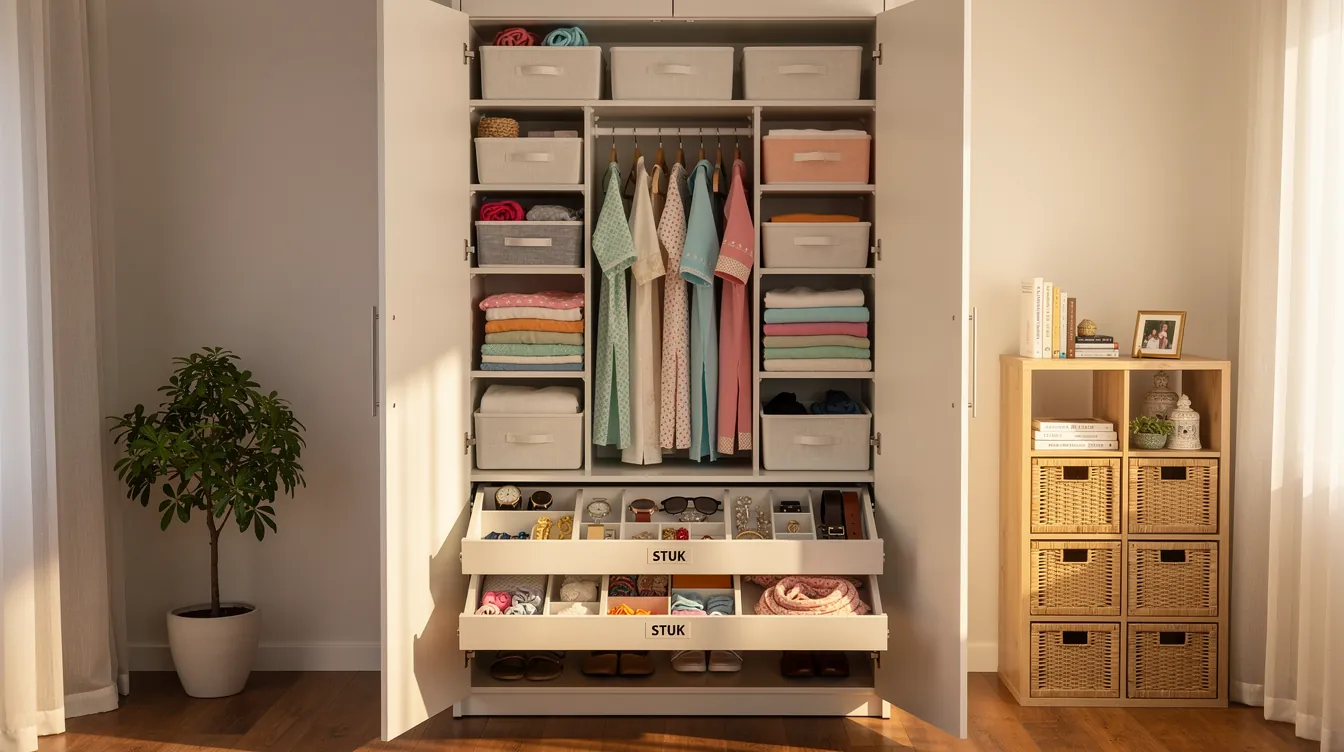
Storage Drawers and Drawer Organizer Boxes
Drawer units for every room, plus the organizer boxes, dividers and inserts that keep wardrobe, dresser and desk drawers tidy.
Want an Organised Cupboard Without the Trial and Error?
Tidy Blueprints' professional organisers declutter, plan and set up storage cupboards in homes across Bangalore, and guide clients elsewhere over video call. Your first online consultation is free.