How to Declutter Your House: A Room-by-Room Guide for Indian Homes
A calm, practical way to declutter your house — where to start, what to check in every room, what to keep, donate or discard, and how to stop the clutter coming back.
Jump to section
Where Should You Start When You Declutter a House?
Start small, and start where you will see the result every day. To declutter a house without burning out, pick one category or one small space — the kitchen counter, your half of the wardrobe, the drawer by the front door — take everything out, keep only what you use and love, and give the rest a clear way out of the house. Then move on to the next space. A whole house gets decluttered one shelf at a time, not in one heroic weekend.
Most people try to tackle "the house" and stall by lunchtime. The size of the job is the problem, not your willpower. Breaking it into small, finishable pieces gives you a visible win every session, and those wins carry you through the harder rooms later.
Declutter before you organise
Decluttering and organising are two different jobs, and the order matters. Decluttering decides what stays; organising decides where it lives. If you buy boxes, baskets and drawer dividers first, you end up neatly storing things you never needed to keep. Every Tidy Blueprints project starts with a declutter for exactly this reason: once only the useful things are left, you need far fewer organisers.
Set yourself up before you begin
- Four bags or boxes: keep, donate, recycle or discard, and "belongs elsewhere" for things that live in another room.
- A time limit: 30 to 60 minutes per session is plenty. Stop while you still have the energy to put things away.
- A rule for "maybe" items: decide it before you start — for example, "if I haven't used it in a year, it goes" — so you are not re-arguing every object.
- A plan for what leaves: know where donations and recycling will go, and get them out of the house within the week.
Key Takeaway: Choose one small, visible space, work in short sessions, and settle your keep-or-let-go rules before you pick anything up.
How to Declutter Your House in 5 Steps
Step 1: Pick one space and a time limit
Choose a single category or small space — the shoe rack, the bathroom cabinet, one kitchen shelf — and give it 30 to 60 minutes. Finishing one small space completely beats half-finishing a whole room.
Step 2: Empty it and see everything together
Take everything out so you can see the full quantity in one place, and wipe the empty shelf or drawer while it is clear. Seeing five water bottles or three identical chargers side by side makes the decisions much easier.
Step 3: Sort into keep, donate, discard and relocate
Handle each item once and ask the same three questions: Do I use it? Does it still work and fit my life now? Would I buy it again today? Anything that belongs in another room goes in the relocate box, not back on the shelf.
Step 4: Get outgoing items out of the house
Bag the donations, drop off the recycling and return borrowed things within the week. A donate bag that sits by the door for a month tends to drift back into the cupboards.
Step 5: Give everything you kept a home
Put each item back where it is used, with daily things easiest to reach. Only now, with just the useful things left, note any organisers you genuinely need.
Declutter Room by Room: What to Check in Each Space
Every room collects its own kind of clutter. Use this list as your declutter house checklist and work through one room at a time, starting with whichever one bothers you most. The items below are the ones we end up decluttering from almost every Indian home we organise.
Kitchen
- Plastic containers without lids, and lids without containers
- Takeaway boxes, glass jars and bottles saved "just in case" — keep a fixed number, not all of them
- Expired masalas, sauces, pickles and half-used pantry packets
- Duplicate tools and appliances you rarely use
- Chipped mugs, plates and crockery nobody reaches for
Once the kitchen is down to what you actually cook with, our kitchen organisation guide shows how to set it up, and the small kitchen organisation ideas list has quick fixes.
Wardrobe and bedroom
- Clothes that don't fit or haven't been worn in a year
- Worn-out bedsheets, towels and pillow covers
- Single socks, stretched-out innerwear and broken hangers
- Bags and footwear you avoid because they are uncomfortable
Give sarees and ethnic wear a slower, separate pass — heirloom pieces deserve a considered decision, and our saree organising service can help you store the ones you keep. For a full reset, see wardrobe organising.
Dressing table and bathroom
- Expired skincare, makeup, sunscreen and medicines
- Hotel toiletries, freebies and samples
- Dried-up nail paints, old razors and hair accessories with missing pieces
A cleared dressing table is the right moment for makeup and vanity organising.
Living room
- Old newspapers, magazines and bills that are already paid
- Chargers, cables and remotes for devices you no longer own
- Décor and gifts kept out of obligation rather than affection
Kids' rooms
- Broken toys, incomplete games and puzzles with missing pieces
- Outgrown clothes and shoes
- Dried-out art supplies and last year's school material
Let children choose what to pass on wherever you can — they are far more likely to keep the space tidy afterwards. Our kids room organising service sets up systems children can manage themselves.
Papers and the home office
- Old bills, expired warranties and duplicate copies
- Manuals you can find online
- Empty product boxes, especially phone and appliance boxes
Keep identity documents, property papers, insurance and tax records — just file them so you can find them. If the pile feels too big, document organising can help.
Utility area, balcony and loft
- Shopping bags and paper bags beyond the handful you really reuse
- Broken buckets, mops and cleaning tools
- Packing material, paint tins and things put away "for later" years ago
Key Takeaway: The same items turn up in almost every home: containers, bags, expired products, old cables and clothes that no longer fit. Clear those first and every room feels lighter, fast.
What to Keep, Donate or Discard in an Indian Home
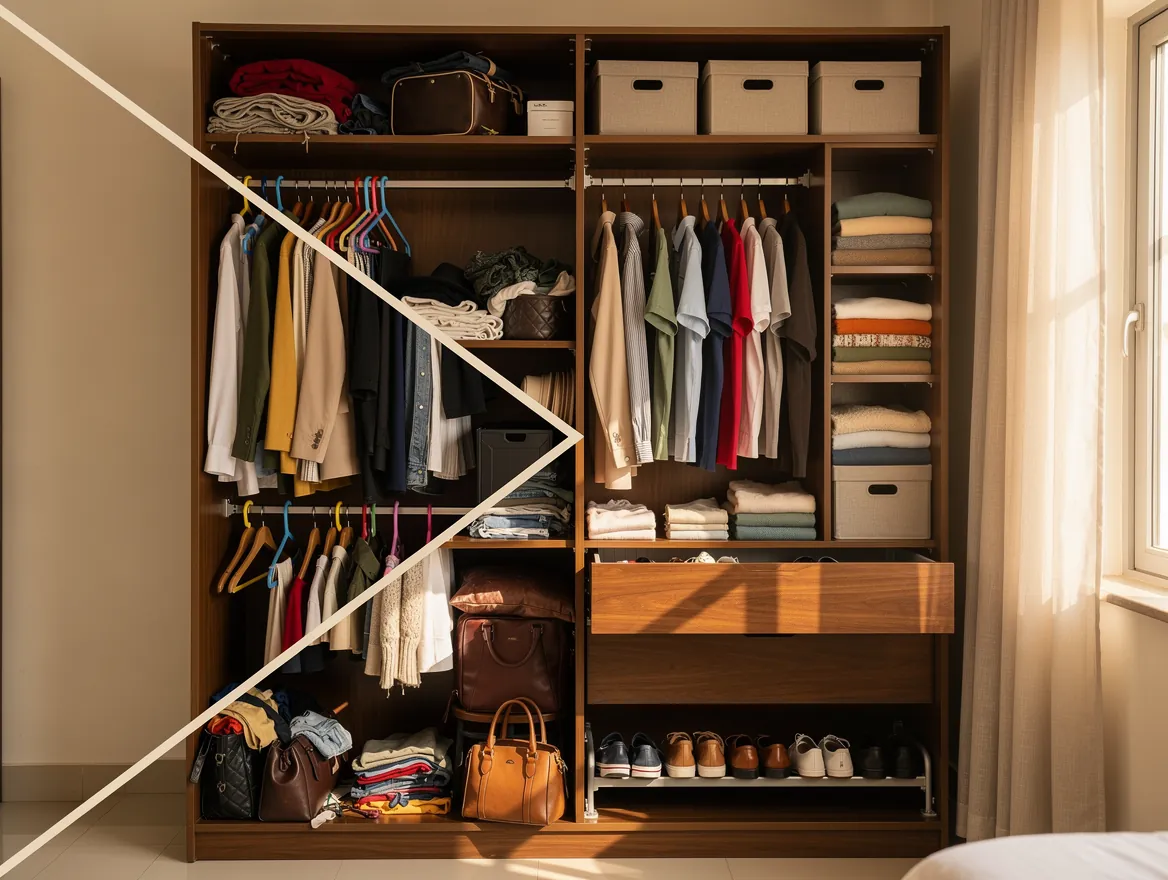
Keep what you use regularly, what you genuinely love, and what you are required to hold on to. Donate things in good condition that someone else can use now. Recycle or discard what is broken, expired or unsafe. Everything else is a "maybe" — and maybes need a deadline.
Keep
- Things you have used in the last year, or use every season, such as festival vessels and winter blankets
- Items that work and that you would happily buy again today
- Important papers: identity documents, property and tax records, insurance policies and warranties that are still valid
- Heirlooms and sentimental pieces you have chosen to keep — stored well, not stuffed at the back of the loft
Donate or pass on
- Clothes, shoes and bags in wearable condition
- Toys, books and children's clothes that have been outgrown
- Usable kitchenware and appliances you no longer need
- Spare bedding and towels in good condition
Offer things to relatives, friends, your apartment's community group or your house help first — items often find a new home faster close by. Wash, fold and pair things before you hand them over.
Recycle or discard
- Expired food, medicines, cosmetics and skincare
- Broken electronics, old chargers and dead batteries — keep these out of the regular bin and take them to an e-waste collection point
- Newspapers, cartons and old magazines — your local raddiwala will usually take paper and cardboard
- Chipped crockery, cracked containers and anything beyond repair
The "maybe" box
If you truly can't decide, put the item in a box, write today's date on it and store it out of the way. If you haven't opened the box in three to six months, donate it without unpacking it. Most people never miss what was inside.
Key Takeaway: Decide by use and condition, not by what something cost. The money is already spent; keeping an unused item only costs you space.

Decluttering Sentimental Items and Shared Family Homes
Sentimental things are the hardest part of decluttering any house, so leave them until last, when your decision-making is warmed up. In many Indian homes the challenge is bigger: several generations under one roof, gifts that come with expectations, and sarees, vessels and jewellery that carry family history.
Keep the meaning, not every object
- Keep the best few — one or two of your child's drawings from each year, not every sheet.
- Photograph things you want to remember but don't need to store.
- Give heirlooms a proper home: a saree you are keeping deserves breathable storage, not a plastic bag at the back of a cupboard.
- Pass things on to family members who will actually use them.
Never declutter someone else's things for them
Each person decides about their own belongings — elders and children included. Clear your own things first; a calmer, emptier space often persuades others more than any argument. It is how we work too: at Tidy Blueprints, nothing is thrown away without the owner's say.
Agree on shared spaces together
For the kitchen, the shoe rack and the living room, agree as a household on what stays and where it lives. If a cook or house help works in your home, walk them through the new places as well. A system only lasts when everyone who uses the space knows how it works.
How to Keep Your House Clutter-Free After You Declutter
Decluttering once is a project; staying clutter-free is a handful of small habits. The goal is not a perfect house — it is a house where everything has a home, so putting things back takes seconds.
Every day
- Put things back where they live. Returning an item takes a few seconds; searching for it later takes minutes.
- Create a landing spot by the door for keys, wallets, sunglasses and the day's post, so they don't spread across every surface.
- Do a ten-minute evening reset: clear the dining table, the kitchen counter and the bedside tables before bed.
Every week or month
- Keep a donate bag in one cupboard. Drop in anything you notice you no longer need; when the bag is full, it leaves the house.
- Clear incoming paper weekly — file, pay or recycle bills, receipts and school circulars.
- Follow "one in, one out": when a new kurta, water bottle or gadget comes home, an old one goes.
Every season
- Use the resets you already have. Many families do a thorough clean before Diwali — make it your yearly declutter too. A wardrobe check when the weather changes and a pantry check before the monsoon work the same way.
- Shop from a list of real gaps. Decluttering usually shows how much you already own, so buy to fill a need rather than on impulse.
Key Takeaway: Clutter comes back when things don't have a home, or when more comes in than goes out. Fix both and the house stays decluttered.
Frequently Asked Questions About Decluttering a House
How do I start decluttering when the whole house feels overwhelming?
Pick the smallest visible space that bothers you every day — a counter, a drawer or the shoe rack — and finish it completely in one 30 to 60 minute session. One finished space gives you momentum for the next. Leave sentimental items and the loft for later.
How long does it take to declutter a house?
It depends on the size of the home and how much has built up. A drawer or shelf takes under an hour, a full room can take a day, and a whole house is usually spread over several weekends. Short, regular sessions are easier to sustain than one marathon.
What is the fastest way to declutter?
Start with the easy categories: expired products, broken items, empty packaging, lidless containers and extra bags. They need no difficult decisions and clear a surprising amount of space quickly.
What is the one-year rule for decluttering?
If you haven't used or worn something in the past year — a full cycle of seasons and festivals — you probably won't. Donate or recycle it. Make exceptions for documents, emergency supplies and heirlooms you have chosen to keep.
Should I declutter or organise first?
Declutter first. Organising before decluttering just stores unnecessary things more neatly, and usually means buying more organisers than you need. Once only useful items remain, organising is quicker and much easier to maintain.
How do I declutter when my family doesn't want to let go?
Start with your own belongings and the shared spaces you have agreed on together, and never throw away other people's things without asking. Seeing a calmer, clearer space often convinces family members more than persuasion does.
Where can I give away things I have decluttered in Bangalore?
Offer usable items to relatives, neighbours, your apartment community group or your house help first. Paper and cardboard can go to a local raddiwala, and old electronics, chargers and batteries should go to an e-waste collection point rather than the household bin.
Can a professional organiser help me declutter?
Yes. A professional organiser keeps the decisions moving, brings an objective eye and then sets up storage for what you keep. Tidy Blueprints works in homes across Bangalore and offers [virtual consultations](/virtual-consultation/) for anyone elsewhere in India.
When to Bring in a Professional Organiser
Most decluttering can be done on your own with the steps above. These are the moments when an extra pair of hands — and an objective eye — saves weeks.
You have started several times and stalled
If every attempt stops halfway, the problem is usually the size of the job or decision fatigue. A guided session keeps decisions moving and finishes what it starts.
See all our organising servicesYou are moving house
Decluttering before you pack means you move, unpack and store less. We help with the pre-move declutter and with setting up the new home after it.
Explore new home organisingYou live outside Bangalore or want a plan first
A video walkthrough of your spaces gives you a clear, prioritised plan to follow at your own pace — and your first online consultation is free.
Book a virtual consultationOne room keeps defeating you
Wardrobes, kitchens and kids' rooms are where clutter returns fastest. We declutter with you and build a system around how your household actually uses the space.
Book a decluttering sessionMore Guides Like This
Home Organization Ideas
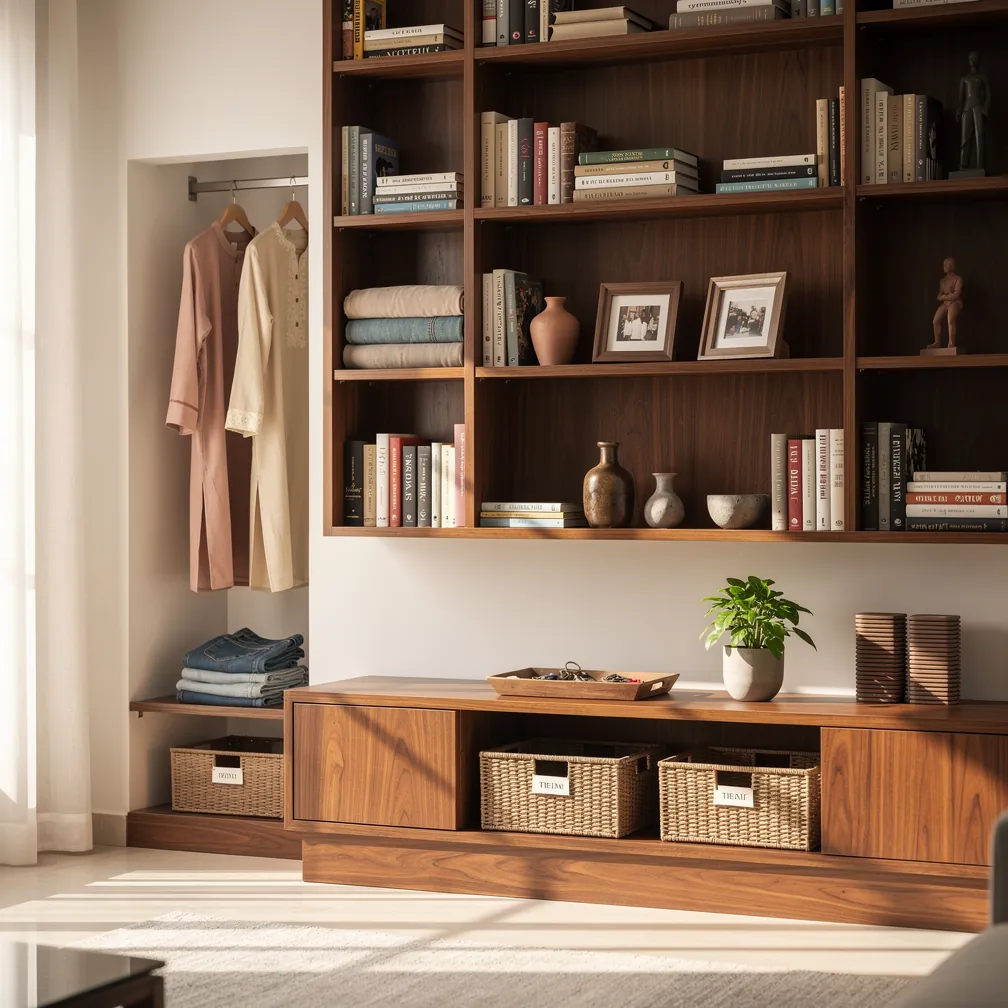
Room-by-room organising ideas, storage systems and Indian-home strategies — the natural next step once the decluttering is done.
Kitchen Organisation Guide
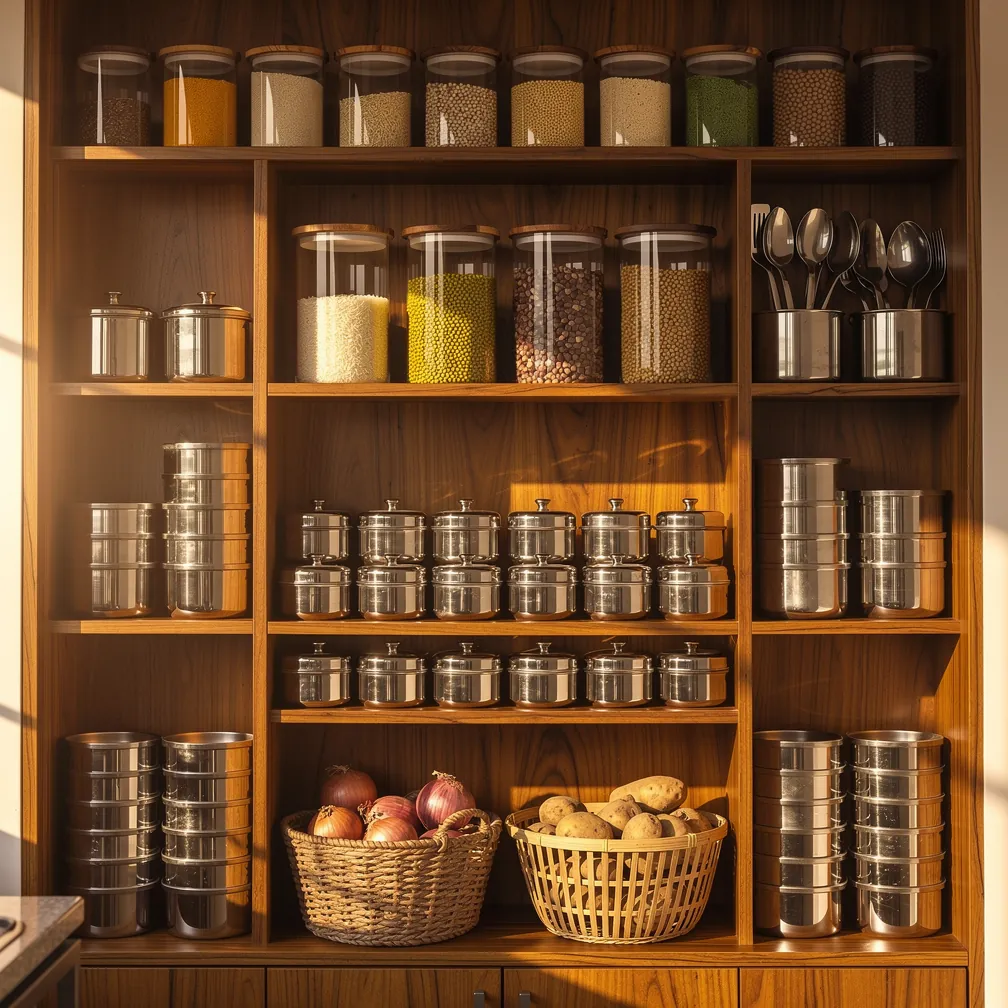
The zone-based method for organising an Indian kitchen, from masala storage and steel vessels to monsoon-proofing and common mistakes.
Home Organization Products
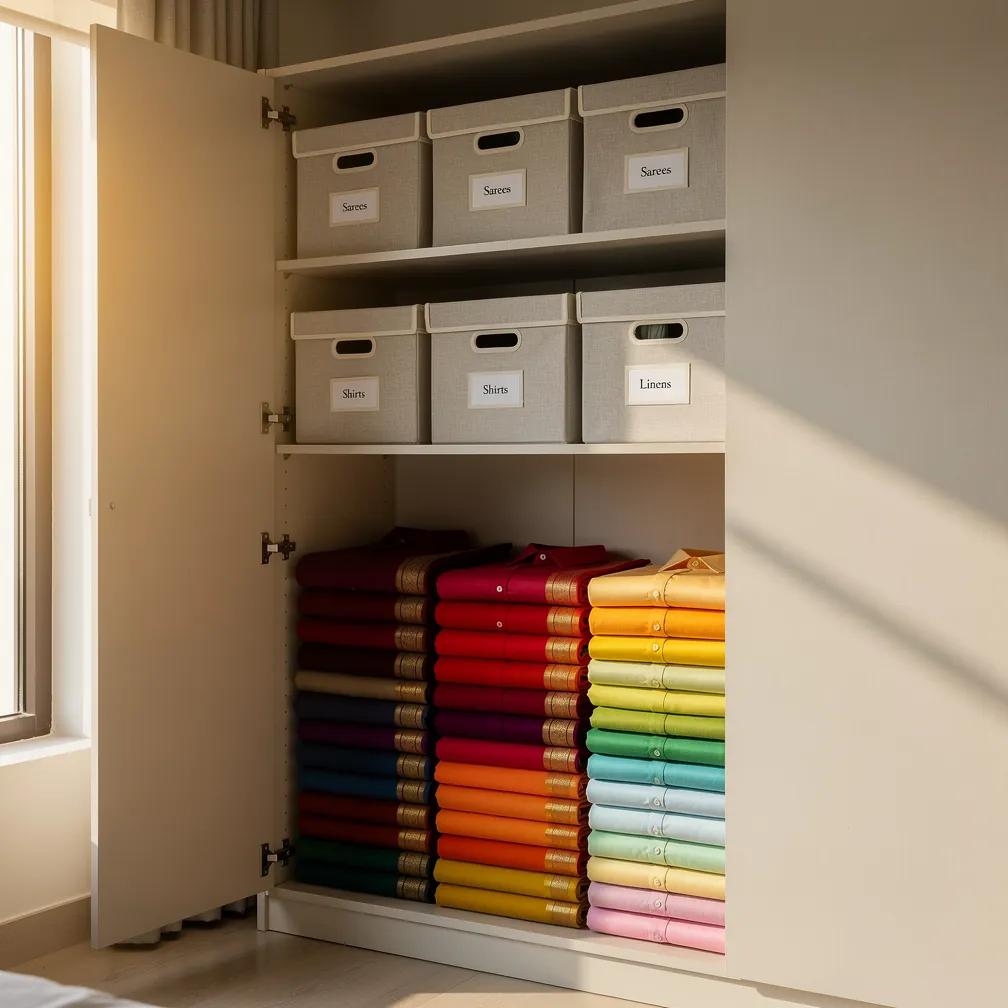
How to choose storage boxes, organisers and dividers for each room, with materials compared for Bangalore's humidity.
Want Help Decluttering Your Home?
If the job feels too big to start alone, Tidy Blueprints can work through it with you, room by room and at your pace, with nothing thrown away without your say. We organise homes across Bangalore and offer virtual consultations across India.