Kitchen Organisation Ideas for Small Indian Kitchens
35 practical ideas for small kitchen organisation — walls, counters, corners, lofts, steel vessels and masalas — for Bangalore apartments, rented flats and non-modular kitchens.
Jump to section
Before You Try These Kitchen Organisation Ideas
The best kitchen organisation ideas for a small kitchen do one of three things: they free up the counter, they use height you are currently wasting, or they put the things you use every day within one reach. Every idea on this list does at least one of those. You don't need all 35 — pick the three that fix your biggest daily annoyance and start there.
This page is a list of ideas. If you want the full method — decluttering, planning kitchen zones and keeping it all maintained — start with our kitchen organisation guide, then come back here for specific fixes.
"A more organised kitchen doesn't always need more storage. Sometimes, it just needs a few smarter changes." — Tidy Blueprints
Three quick checks first
- Clear out before you buy. Expired packets, lidless containers and duplicate tools take up exactly the space you are trying to create. Many small kitchens have enough storage once the excess goes.
- Measure. Note the height between shelves, the depth of the loft and the gap beside the fridge before you order any rack, riser or trolley.
- Watch yourself cook for a day. Notice what you reach for every morning and what you walk across the kitchen to fetch. Those are the things to move first.
Key Takeaway: Small kitchen organisation is less about buying storage and more about using walls, height and corners well — and keeping only what you actually cook with.
Wall and Counter Ideas for a Small Kitchen
Walls are the most underused storage in an Indian kitchen, and the counter is the most overused. Move daily tools up onto the wall and the counter gets lighter straight away.
On the walls
- Hang a steel rail with S-hooks above the cooking area for karchis, jharas, tongs and the chai strainer. They air-dry where they hang, and you stop rummaging through a crowded drawer mid-tadka.
- Mount a magnetic strip beside the chopping area for knives, kitchen scissors and the peeler. It holds more than a knife block and frees a corner of the counter.
- Use a wall-mounted plate and glass rack near the sink so washed steel plates, glasses and katoris drain and stay in one place — no separate drying rack taking up the platform.
- Add one narrow shelf on a free stretch of wall, such as above the window or the door frame, for things you use weekly rather than daily: the tiffin set, the large flask, spare jars.
- Fix hooks or a slim rail under the upper cabinets for mugs and measuring cups. The strip of air between the counter and the cabinets is free storage.
On the counter
- Keep the mixer-grinder jars together. Store every jar, lid and blade in one tray or shallow box in the cabinet nearest the grinder, instead of scattered across three shelves.
- Stand oil bottles on a small tray beside the stove. Drips land on the tray, not the platform, and you can lift the whole set out to wipe underneath.
- Set up a chai station. Tea leaves, sugar, the strainer and a few cups on one tray next to the stove or kettle turn the most repeated job in the kitchen into a single reach.
- Use a two-tier stand in the back corner of the counter for the few things that must stay out — salt, ghee, the daily masala dabba. Corners are awkward to work on but perfect for storing upwards.
- Store chopping boards upright in a file holder or slim stand rather than flat, so two boards take the space of one.
For help choosing a stand, see our kitchen organiser stand guide. For a complete counter plan, read the kitchen counter guide, and for open wall shelves, the kitchen shelf guide.
Cabinet, Corner, Drawer and Loft Ideas
Inside cabinets, the aim is simple: nothing should be hidden behind something else. Use the height, pull things forward and give every awkward space one specific job.
- Add shelf risers in tall cabinets so plates sit on top and bowls underneath, instead of one wobbly stack. In kitchens with plenty of counter space but few shelves, we often combine risers, a slim trolley and smarter stacking to make the unused height work.
- Turn the blind corner into a turntable. A round turntable (lazy Susan) in a deep corner cabinet brings oils, pickles and sauces to the front with one spin.
- Use baskets with handles in deep cabinets. They work like drawers you can pull out, so the back of the cabinet stops being where things go to be forgotten.
- Store kadais and pans upright in a pan rack instead of nesting them, so you lift out one pan, not three.
- Keep pressure-cooker spares in one labelled box — gaskets, whistles and safety valves — so you're not hunting for them while the dal waits.
- Use the inside of cabinet doors for foil, cling film, garbage bags and pot holders on slim racks or adhesive hooks.
- Leave the gas cylinder cabinet for the cylinder. Keep it clear and ventilated so the regulator is always easy to reach; don't pack it with bags or cleaning supplies.
- Split the "everything drawer" into small trays: one for rubber bands and clips, one for matches and spare batteries, and a power-cut kit — candles, a torch and spare cells — that you can find in the dark.
- Line drawers with an anti-slip mat so steel spoons and ladles stay in their sections when the drawer opens and closes.
- Give the loft one strict job: once-a-year and bulk items only — festival and party vessels, extra stock, pickle-making jars — in lidded boxes labelled on the short end that faces you.
For deeper how-tos, see our kitchen cabinet ideas, the kitchen cupboard guide and the kitchen drawer guide.
Key Takeaway: In a cabinet, anything you have to move something else to reach is as good as lost. Risers, turntables and pull-out baskets fix that without any new carpentry.
Pantry, Container and Fridge Ideas
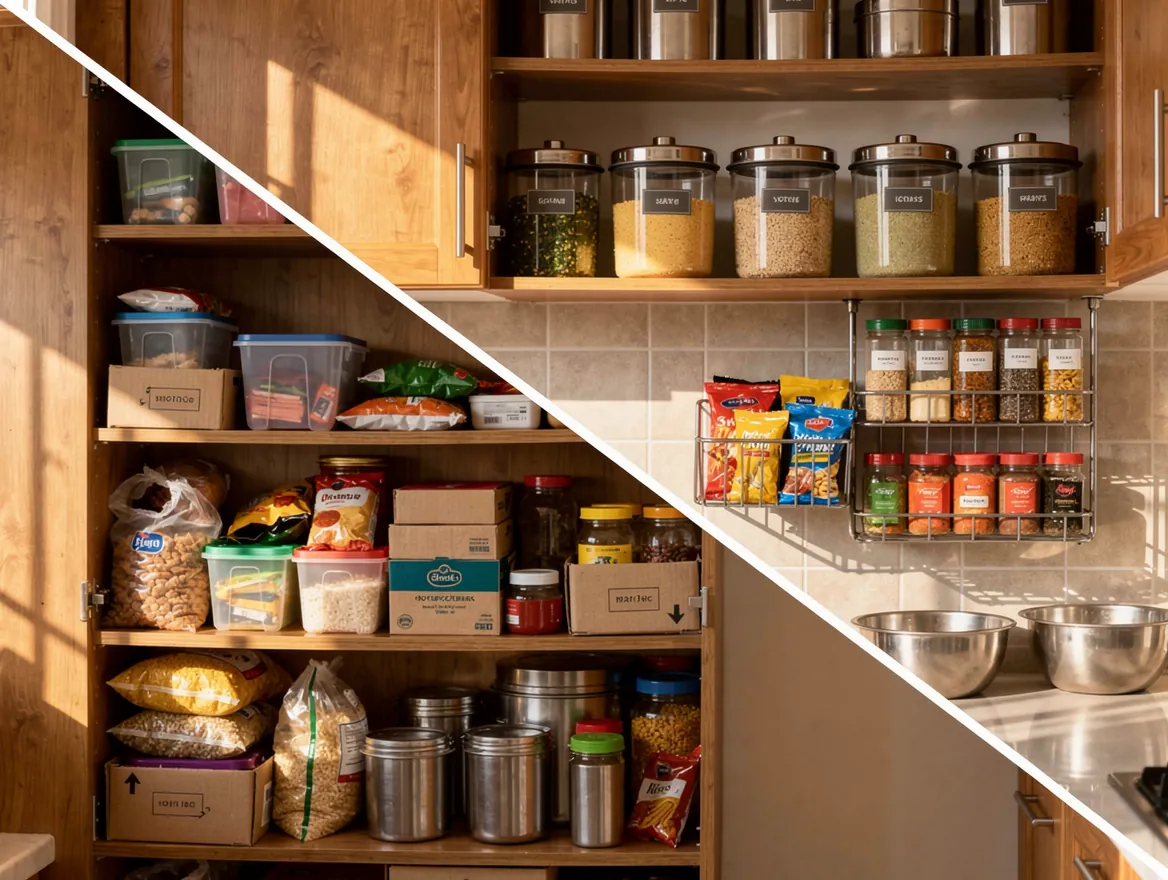
Indian kitchens stock a lot of dry goods — rice, several dals, atta, rava, poha, whole and ground spices — and in a small kitchen that stock competes with everything else for space. These ideas keep it visible and contained.
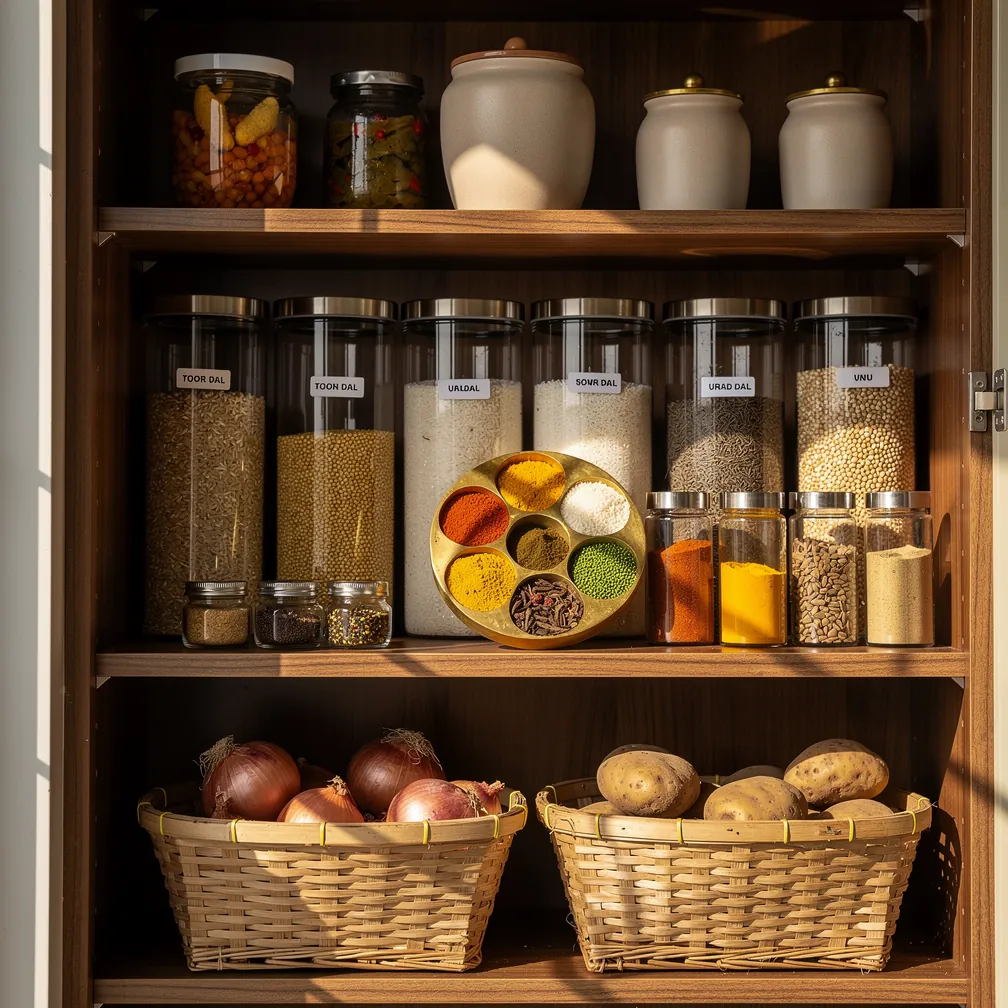
- Keep daily jars small and backup stock elsewhere. A small jar of each dal near the stove is refilled from a bulk container on a top shelf or in the loft, so a 5 kg bag never takes over your most convenient shelf.
- Pick one container shape and stick to it. Matching square or rectangular containers line up without gaps; a mix of round tins and recycled jars wastes space between them.
- Label where you look. Put labels on the front for containers on shelves, and on the lid for containers in drawers and deep baskets that you look into from above.
- Corral small packets — masala sachets, ready mixes, soup packets — in one clear, lidded box instead of letting them slide around a shelf.
- Keep a "use first" basket for open packets and anything close to its expiry date, so it gets cooked before it goes stale.
- Move onions, potatoes and garlic into ventilated baskets on a slim rolling trolley. It fits the gap beside the fridge or the end of the counter and keeps vegetables off the floor.
- Give each fridge bin a job: one for curd and milk, one for batter and chutneys, one for lemons, ginger and green chillies. Keep leftovers in see-through boxes at the front.
- Keep only tiffins and containers that have matching lids. Nest the boxes inside each other and stand the lids upright in a file holder.
For a full pantry set-up, read the kitchen pantry guide. For box types and sizes, see kitchen organiser boxes.
Ideas for Steel Vessels, Daily Cooking and the Utility Area
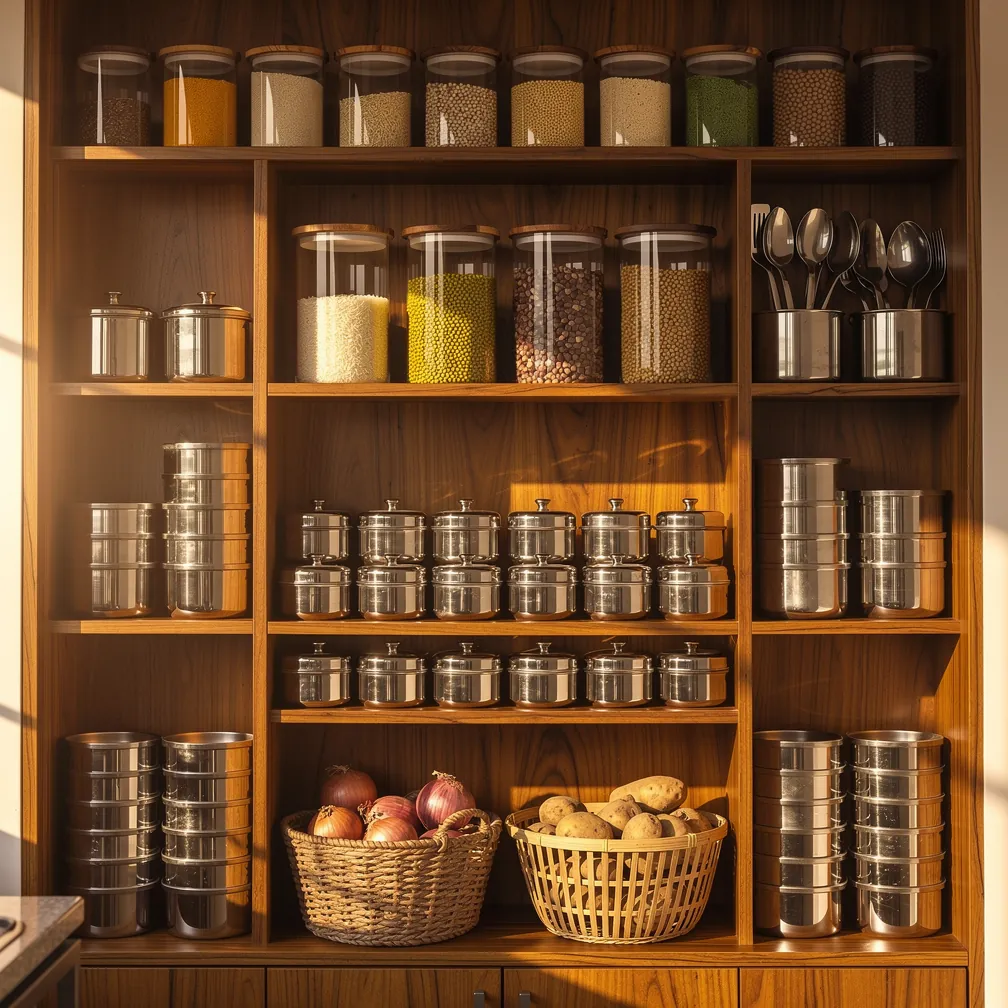
Indian cooking uses more vessels than most small kitchens were designed for, and many Bangalore apartments have a utility area next to the kitchen. Use both well.
- Keep only the vessels in daily rotation in the kitchen. Festival-size vessels, the extra pressure cooker and the big idli steamer can live in the loft or a utility cabinet until they're needed.
- Wash and dry vessels in the utility area if you have one. A wall-mounted drying rack there keeps the kitchen sink and platform clear for cooking.
- Move cleaning supplies out too. The mop, bucket and refill packs belong in the utility area; keep only a small caddy of daily cleaners under the kitchen sink.
Key Takeaway: The kitchen should hold what you cook with every day. Bulk stock, occasional vessels and cleaning refills can live one step away — in the loft or the utility area.
Small Kitchen Organisation: Frequently Asked Questions
How can I organise a small kitchen without a modular setup?
Use freestanding racks, wall rails and hooks, and lidded baskets on the open shelves under the platform. Turntables and shelf risers work in any cabinet, modular or not. Start by clearing out what you don't use, so the storage you already have is enough.
What should I keep on the kitchen counter?
Only what you use every day — usually the stove, the mixer-grinder, the kettle or induction, the daily masala dabba and oils. Group the small items on a tray or a two-tier stand so the rest of the counter stays clear for cooking.
How do I store steel vessels and pressure cookers in a small kitchen?
Keep only the vessels in daily use in the kitchen, store pans upright in a rack, and move festival-size vessels to the loft. A small box for spare gaskets, whistles and valves saves a lot of searching.
What is the cheapest way to organise a kitchen?
Declutter first — it costs nothing and frees the most space. Then reuse what you already own: shoeboxes as drawer dividers, matching jars for staples, a file holder for chopping boards or lids. Buy organisers only for the gaps that remain.
How do I organise a kitchen in a rented flat?
Choose no-drill storage: adhesive hooks, tension rods, magnetic strips, over-door racks and freestanding shelves or trolleys. They give you most of the benefit of fitted storage, and they move with you.
How do I stop my kitchen getting cluttered again?
Give every item a fixed home, follow 'one in, one out' for containers and gadgets, and clear the counter and sink each night. A quick monthly check of the pantry and fridge stops expired items piling up.
Is it worth hiring a professional to organise a small kitchen?
If the kitchen causes friction every day, several people cook in it, or past attempts didn't last, a professional can design a system around how your household actually cooks. Tidy Blueprints organises kitchens across Bangalore — see our [kitchen organisation service](/kitchen-organization-in-bangalore/).
Key Takeaways for Small Kitchen Organisation
If you only remember four things from this list, make it these.
Clear out before you buy
Many small kitchens have enough storage once expired, broken and duplicate items go. Declutter first, then buy only for the gaps that remain.
Build upwards and use the walls
Rails, magnetic strips, risers and tiered stands turn unused height into everyday storage and free the counter for cooking.
Keep daily things closest
Store what you use every day within one reach of where you use it, and send bulk stock and festival vessels to the loft.
Want it done with you?
Tidy Blueprints organises kitchens across Bangalore — decluttering with you, setting up storage that fits your space and walking your household through the new system.
See kitchen organisation in BangaloreMore Kitchen Organisation Guides
Kitchen Counter Organizers
Types of counter organisers, how to decide what belongs on the counter versus in drawers and cabinets, and counter ideas for every kitchen style.
Kitchen Cupboard Organizers
A professional five-step system for kitchen cupboards, with a section on small Bangalore apartment kitchens and the tools that help.
Kitchen Pantry Organizer
Plan, declutter and set up a pantry that cuts food waste, with budget-friendly ideas and fixes for small pantries.
Need Help Making a Small Kitchen Work?
Tidy Blueprints organises kitchens across Bangalore. We declutter with you, set up storage that fits your space and the way you cook, and walk everyone who uses the kitchen through the new system. Your first online consultation is free.