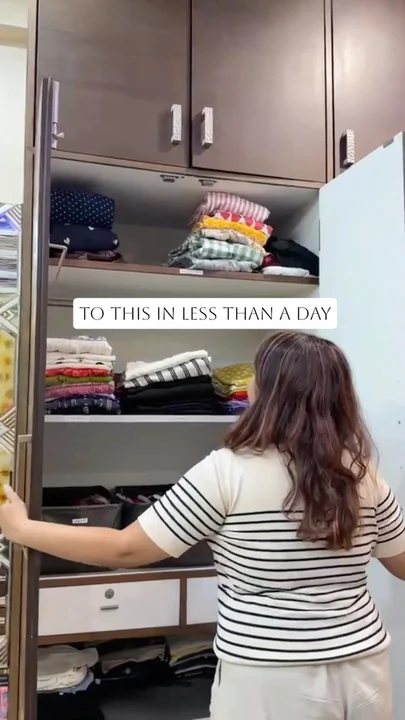
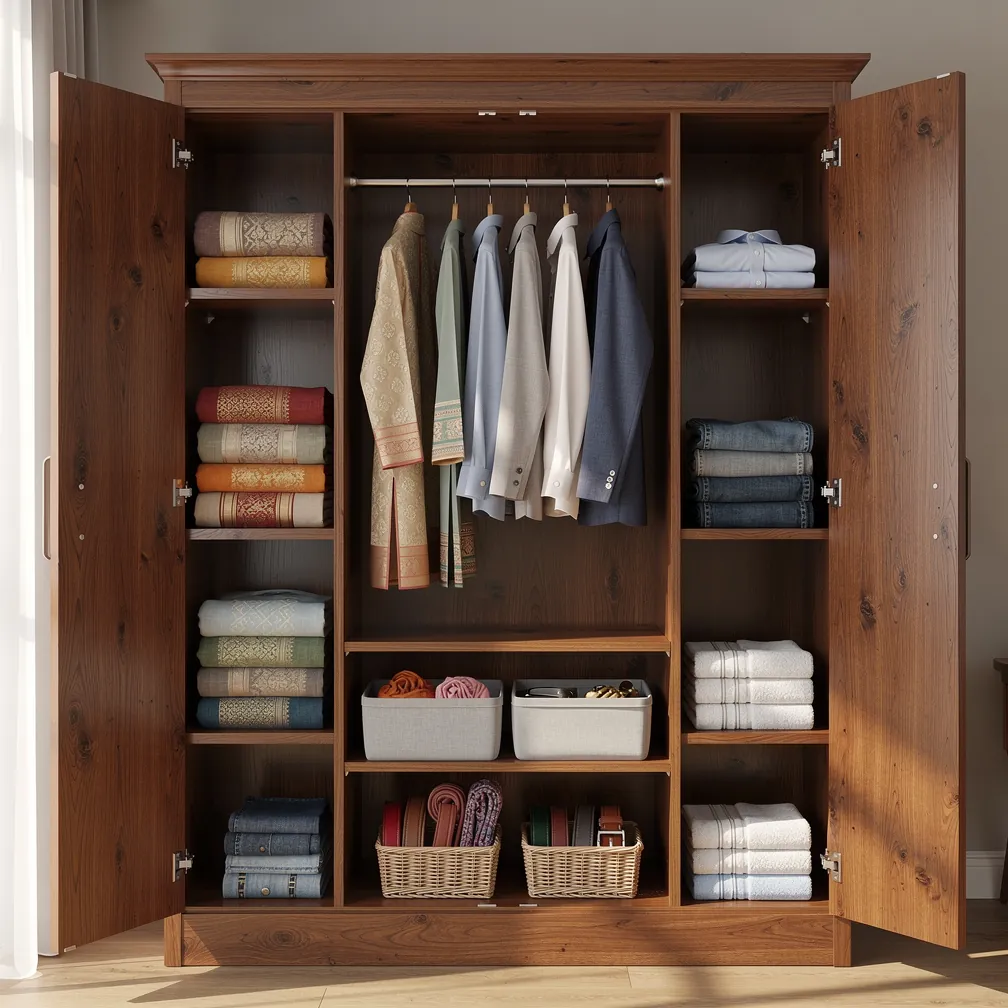
Bangalore-BasedIn-Home ServiceCustom Systems

Saree Organiser Service in Bangalore

Professional wardrobe organisation for your saree collection. Custom storage systems that protect silk, cotton, and heirloom pieces from Bangalore's humidity, save you hours every week, and keep every saree visible and accessible.

Jump to section

Why Your Sarees Need More Than Just a Cover

If you have ever spent 40 minutes searching for a wedding saree buried at the bottom of a stack — or opened a storage bag to find your favourite silk smelling like a wet towel — you already know: a plastic cover is not a saree organiser.

The Real Cost of a Disorganised Saree Wardrobe

A disorganised collection costs you in ways that add up fast:

  • Time wasted: The average person spends over an hour a week searching for clothing. For saree wearers, the problem is worse — sarees are long, layered, and easy to bury. A proper saree organiser system cuts retrieval time from 40 minutes to under 30 seconds.
  • Damaged sarees: Improper storage causes permanent creases in silk, tarnished zari from trapped moisture, and colour fading from direct light. A premium Kanjivaram silk costs ₹5,000–₹50,000+ — and a ₹50 plastic cover can ruin it in one monsoon season.
  • Duplicate purchases: Without visibility into your collection, you forget what you own. Many women have bought the same red silk twice simply because the first one was lost in the pile. A well-organised wardrobe with labels and a simple inventory prevents this entirely.

Bangalore's Hidden Wardrobe Enemy: Humidity

Bangalore's climate creates specific challenges that generic storage advice ignores. Monsoon months (July through September) push indoor humidity above 80% — perfect conditions for mildew, musty odours, and zari tarnishing. Plastic covers trap moisture against the fabric, accelerating damage. Cotton covers breathe but need maintenance. What works in dry Delhi or air-conditioned Mumbai does not apply here.

A professional saree organiser who understands Bangalore's climate accounts for seasonal humidity swings, recommends breathable storage materials, and builds maintenance schedules around the city's weather patterns. This local knowledge is what separates a system that lasts from one that fails by Diwali.

Did you know? The global professional organiser market is valued at USD 13.28 billion in 2026, with residential organising representing 39% of that market. The closet organiser segment alone is a USD 5.12 billion industry growing at 6.7% annually — clear evidence that professional organisation is not a luxury; it is a growing expectation for modern homes.

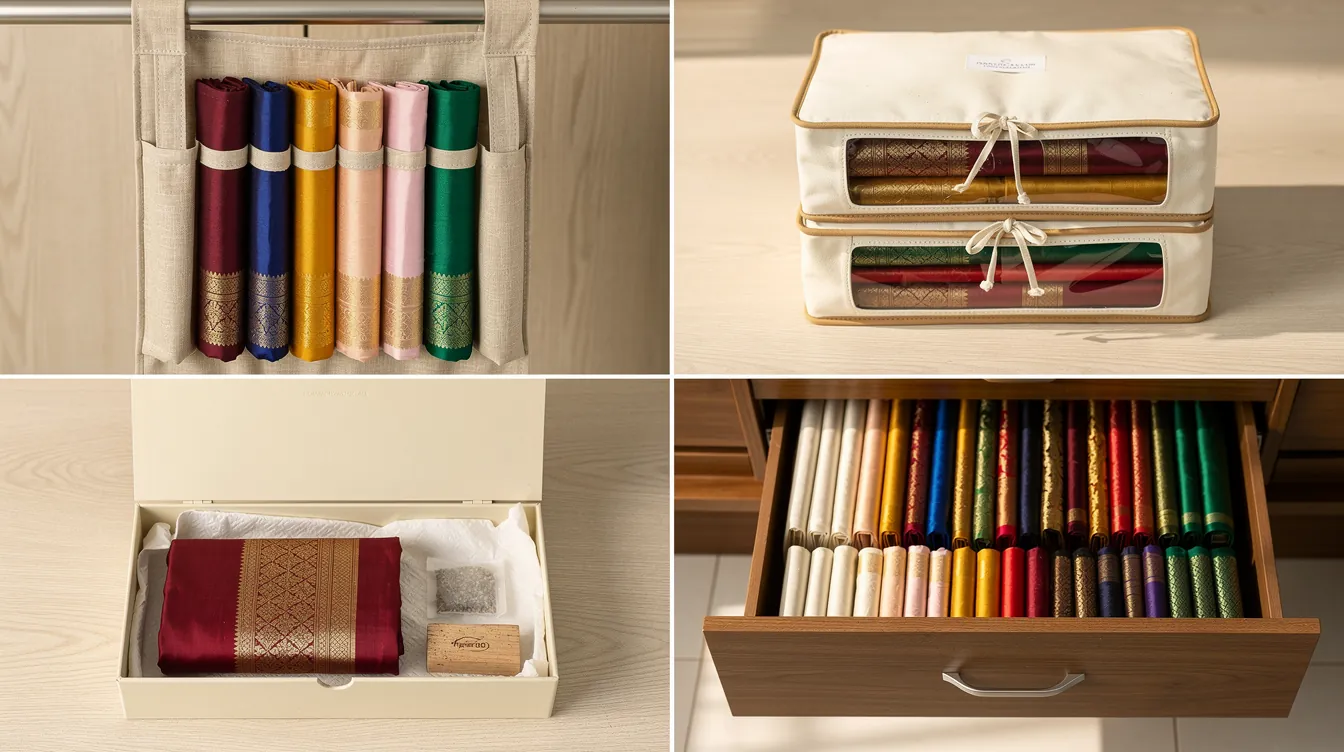
Four types of saree organisers displayed in a clean 2x2 grid: hanging fabric organiser with sarees, stackable cotton canvas bags with transparent windows, an open rigid storage box with a preserved heirloom saree, and a pull-out drawer system inside a warm wood-toned wardrobe — styled for Bangalore wardrobes by Tidy Blueprints

Types of Saree Organisers: What Works for Your Collection

Choosing the right saree organiser depends on your collection size, fabric mix, available wardrobe space, and how often you wear each piece. Here is what works — and what does not — for each storage format.

Hanging Saree Organisers

Fabric hanging organisers with individual slots give instant visibility and zero-crush access. Best for 10–30 frequently-worn sarees. Pros: retrieval in under 5 seconds, no folding required, easy to rotate. Cons: requires hanging rod space and is unsuitable for heavy silk sarees that stretch on hangers.

Stackable Saree Bags & Covers

Individual cotton canvas or non-woven bags with transparent windows and zip closures. Best for mixed collections stored on shelves. Cotton canvas breathes and prevents mildew; non-woven is budget-friendly but less durable; plastic should be avoided entirely in humid Bangalore. Stack 6–8 bags max per shelf to prevent crushing.

Saree Storage Boxes

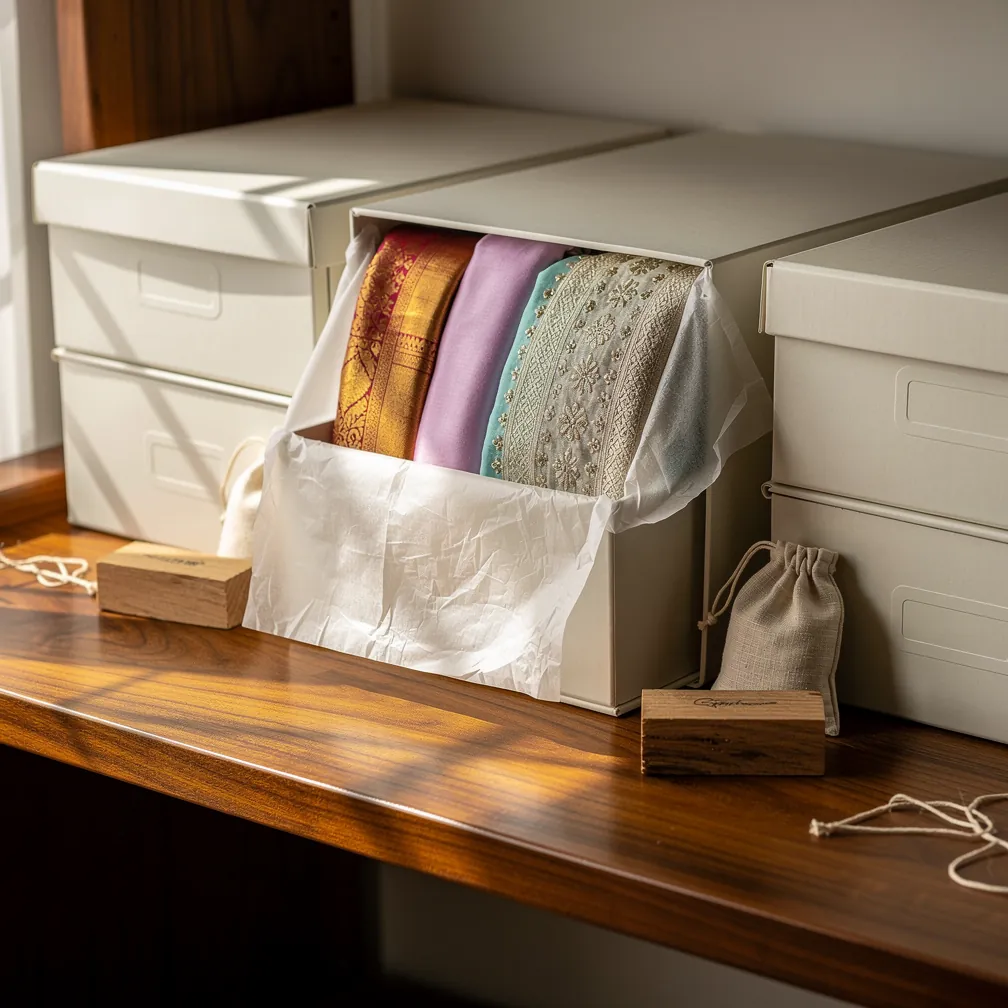
Rigid boxes with acid-free tissue dividers, silica gel packets, and cedar blocks. Best for long-term preservation of heirloom pieces, wedding sarees, and seasonal items worn once or twice a year. Not ideal for daily access — these are preservation tools, not everyday organisers.

Read our guide to Saree Storage Boxes →

Drawer-Based & Custom Systems

Pull-out drawer systems, custom-built wardrobe interiors, and vertical saree racks. The premium solution for collections of 50+ sarees. Designed around Bangalore apartment wardrobe dimensions — maximising every inch of limited space. Tidy Blueprints specialises in designing these systems for real Indian wardrobes.

How to Choose the Right Saree Organiser: A Simple Decision Framework

1

Step 1: Count and Categorise Your Collection

Sort every saree by fabric type (silk, cotton, chiffon, blended), occasion (wedding, festive, daily, work), and frequency of use. Different fabrics need different storage — silk requires breathable, crush-proof storage; cotton handles more airflow; chiffon snags easily and needs careful handling. This categorisation is the foundation of every system we design at Tidy Blueprints.

2

Step 2: Measure Your Available Space

Document your hanging rod length, shelf depth, drawer dimensions, and any under-bed or overhead storage potential. Bangalore apartments typically have compact wardrobes with 4–6 feet of hanging space and 2–3 shelves — the organiser must fit the space, not the other way around. A common mistake is buying organisers first and measuring later.

3

Step 3: Match Organiser Type to Your Needs

Small collection + frequent use → hanging organiser. Large collection + mixed fabrics → stackable cotton bags with labels. Heirloom and wedding pieces → preservation boxes with acid-free tissue. 50+ saree collections → custom drawer system. Most collections need a combination — daily sarees in hanging organisers, seasonal pieces in bags, and heirloom sarees in boxes. If this sounds complex, that is exactly why professional help exists.

5 Common Saree Storage Mistakes (And How to Avoid Them)

Every saree lover has made at least three of these. The good news: each one has a straightforward fix — and a professional saree organiser eliminates all of them at once.

Mistake #1: Using Plastic Covers in a Humid Climate

It feels like common sense — seal your sarees in plastic to keep them clean. But in Bangalore, plastic is the enemy. It traps moisture, creating a microclimate where mildew thrives and zari tarnishes within weeks. Multiple saree owners report opening plastic pouches to find their silk smelling "like a wet towel." The solution: breathable cotton or muslin covers that allow air circulation while protecting against dust. If you have used plastic until now, switch to cotton covers and air out your collection immediately.

Mistake #2: Stacking Too Many Sarees on One Shelf

When 10 or 12 heavy silk sarees sit stacked on a single shelf, the bottom pieces get crushed under the weight. The pallu develops permanent creases, embroidery gets flattened, and the fabric loses its drape. The solution: limit stacks to 6–8 sarees maximum, use shelf dividers to create vertical sections, or switch to hanging or drawer-based storage for frequently-worn pieces.

Mistake #3: Never Refolding or Airing Out Sarees

Sarees stored untouched for years develop permanent fold lines that no iron can fix. They also attract pests and fade unevenly along exposed edges. The solution: air out your sarees every 4–6 months in indirect sunlight for a few hours, refold them along different crease lines each time, and inspect for any signs of damage. This is part of the maintenance schedule we provide every Tidy Blueprints client.

Mistake #4: Forgetting What You Own

Without labels, a catalog, or any organisational system, sarees get buried. You forget you own a particular piece — and end up buying it again. This is surprisingly common: multiple women have admitted to purchasing the same red silk twice because the first one was invisible at the bottom of a pile. The solution: label every storage bag with fabric type, colour, and occasion. Photograph your collection. A simple digital catalog — which we can create for you — makes this effortless.

Mistake #5: Using One Organiser Type for Everything

Hanging a heavy Kanjivaram silk stretches the fabric. Folding a delicate chiffon creates wrinkles that are impossible to remove. Different fabrics demand different storage methods. A professional saree organiser assesses each piece individually — silk goes in padded hangers or breathable boxes, cotton tolerates stacking, chiffon needs tissue-wrapped folding — rather than applying a one-size-fits-all approach that damages half the collection.

The average person spends one full year of their life searching for lost items. An organised wardrobe eliminates roughly 40% of housework related to clothing management — which for a regular saree wearer means recovering dozens of hours every month.
Our Professional Saree Organiser Service in Bangalore

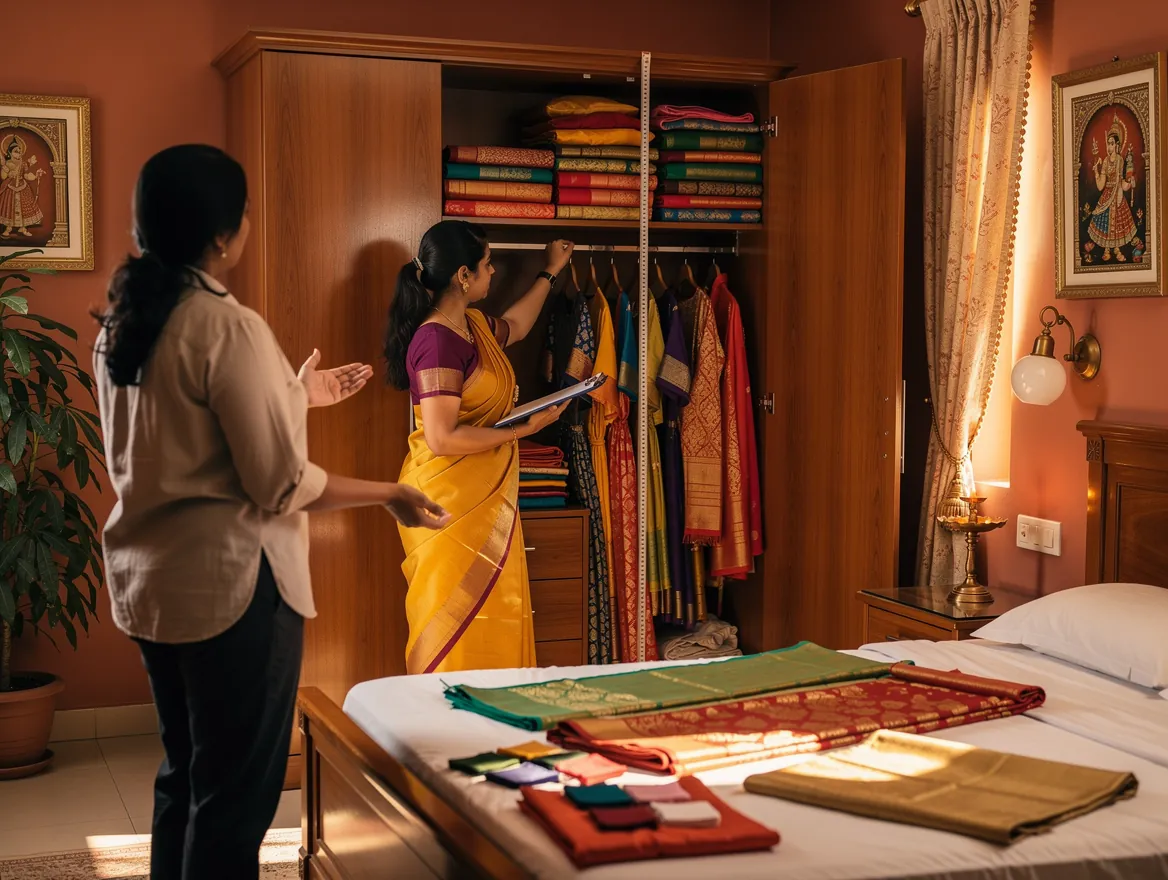
  • In-home consultation and full collection assessment — we visit your home, evaluate every saree, and understand how you use your wardrobe
  • Custom system design based on your space, fabric types, and lifestyle — not a cookie-cutter solution
  • Product recommendations with sourcing guidance — we help you find the right organisers for your specific needs
  • Professional implementation — sorting, folding, labelling, and organising every piece in your collection
  • Optional digital catalog creation — a searchable photo inventory of your sarees with fabric, occasion, and value tags
  • Personalised maintenance schedule — seasonal rotation, airing reminders, and refolding guidance to keep your system intact long-term
  • Clear scope based on your collection size, agreed with you after your free online consultation — no surprises
Tidy Blueprints professional organizer conducting in-home saree collection assessment in a Bangalore apartment, measuring wardrobe space and cataloguing sarees

Saree Organisers vs. Storage Boxes: Making the Right Choice

Many people assume an organiser and a storage box are the same thing. They are not — and using the wrong one causes the very damage you are trying to prevent.

When to Use an Organiser (and When to Use a Box)

Saree organisers — hanging organisers, stackable bags, drawer inserts — are for frequent access. If you reach for a saree weekly, it belongs in an organiser where you can see it, grab it in seconds, and return it without disrupting the system. Organisers prioritise visibility and speed.

Saree storage boxes — rigid containers with acid-free tissue, silica gel, and cedar blocks — are for preservation. Wedding sarees worn once, heirloom Kanjivarams passed down through generations, seasonal pieces you wear two months a year. Boxes prioritise protection and longevity over quick access.

Trying to preserve a daily-wear cotton saree in a sealed box is inconvenient; storing a priceless heirloom in a hanging organiser is neglectful. Most collections need both.

Building a Complete System

The ideal wardrobe uses organisers and boxes together:

  • Daily and weekly sarees → hanging organisers for instant visibility and zero-crush access
  • Occasional and seasonal sarees → labelled cotton bags stacked on shelves, rotated as seasons change
  • Heirloom, bridal, and rarely-worn pieces → preservation boxes with acid-free tissue, stored in cool, dark sections of the wardrobe

For a deeper dive into preservation methods, fabric-specific care requirements, and long-term storage science, read our complete guide: Saree Storage Boxes in Bangalore. That page covers everything from moth deterrents to folding techniques by fabric type — topics that deserve their own space.

What Our Clients Say

smruti sandhya

Local Guide

Thanks Vidhi & team for this wonderful initiative. It was a great experience to have them. For busy people like me, its really helpful. They not only arranged my wardrobe but also labelled it. Tbh, its a technical way of organising your clothes, bags, shoes and Vidhi knows it really well. I highly recommend the service to anyone who is looking for organising their wardrobe and looking for a peace of mind.

Response from the owner

Dear Smruti, We're so happy to hear that our service made such a positive difference for you. Your comment about finding "peace of mind" through organization is exactly what motivates us! Thank you for your wonderful feedback!

View on Google

Ayushi Jain

Awesome work done by vidhi and her team.. just loved how my closet looks like.. it is a dream closet right now.. she understood our requirement very clearly and precisely managed everything.. will definitely reach out to her again and again for next house projects..

View on Google

Shravya P

I had an amazing experience working with Tidy Blueprints. My wardrobe was a complete mess before, and now everything is organized in a way that’s simple and easy for me to maintain. I can actually find what I need without stress. Highly recommend! The whole experience was seamless.

Response from the owner

Thank you so much for this wonderful review! 🌟 It truly means a lot to us to hear that your wardrobe transformation has made such a difference in your day-to-day life. You were an absolute pleasure to work with, and we hope your organised wardrobe continues to bring you ease and calm every single morning!

View on Google

Frequently Asked Questions About Saree Organisers

How many sarees fit in one organiser?

It depends on the type. A fabric hanging organiser typically holds 5–10 sarees per unit across individual slots. A single cotton cover bag holds 1 heavy silk saree or 2 light cotton sarees. Jumbo covers (9-inch depth) hold 6–8 sarees. A pull-out drawer system in a custom-built wardrobe can hold 15–25 sarees per drawer depending on depth. We assess your collection during consultation and recommend the right capacity for each category.

Which material is best for saree covers — cotton, non-woven, or plastic?

Cotton canvas is the best choice for Bangalore's climate. It breathes, prevents moisture buildup, and is durable enough to last years. Non-woven fabric is more affordable but less durable and less breathable — it works for short-term storage in dry conditions. Plastic covers should be avoided entirely in humid climates like Bangalore; they trap moisture and cause mildew, musty odours, and zari tarnishing within a single monsoon season.

Can I wash my saree organiser covers?

Yes — most cotton canvas and non-woven covers are machine-washable on a gentle cycle with cold water. Do not use fabric softener, as it coats the fibres and reduces breathability. Air dry in shade (never in direct sunlight, which can cause shrinkage). Inspect covers for wear every 6 months and replace any showing thinning, tears, or zipper damage — typically every 2–3 years with regular use.

How much does professional saree organisation cost in Bangalore?

The cost depends on the size of your collection and the storage system it needs, from a few standard organisers to custom drawer systems. [Book a free online consultation](/book-an-appointment/) to discuss your sarees and space; you'll know the scope before any work begins.

Do you service areas outside central Bangalore?

Yes — Tidy Blueprints serves the entire Bangalore metropolitan area including Sarjapur Road, Whitefield, Electronic City, Koramangala, Indiranagar, Jayanagar, HSR Layout, and surrounding localities. If you are unsure whether we cover your area, reach out with your location and we will confirm within 24 hours.

How long does the organisation system stay tidy?

With the maintenance schedule we provide, a professionally designed system stays organised indefinitely. Most clients need only 10–15 minutes per week to maintain it. Without maintenance, entropy returns in 6–12 months regardless of how good the initial setup was. The difference between a system that lasts and one that collapses is whether it was designed for real life — which is what professional organisation ensures.

Ready to Transform Your Saree Wardrobe?

Every saree in your collection deserves to be visible, accessible, and protected. Book a consultation with our Bangalore-based organisers to design a custom system that fits your space, your collection, and your life.

Book Appointment